Get your free personalized podcast brief
We scan new podcasts and send you the top 5 insights daily.
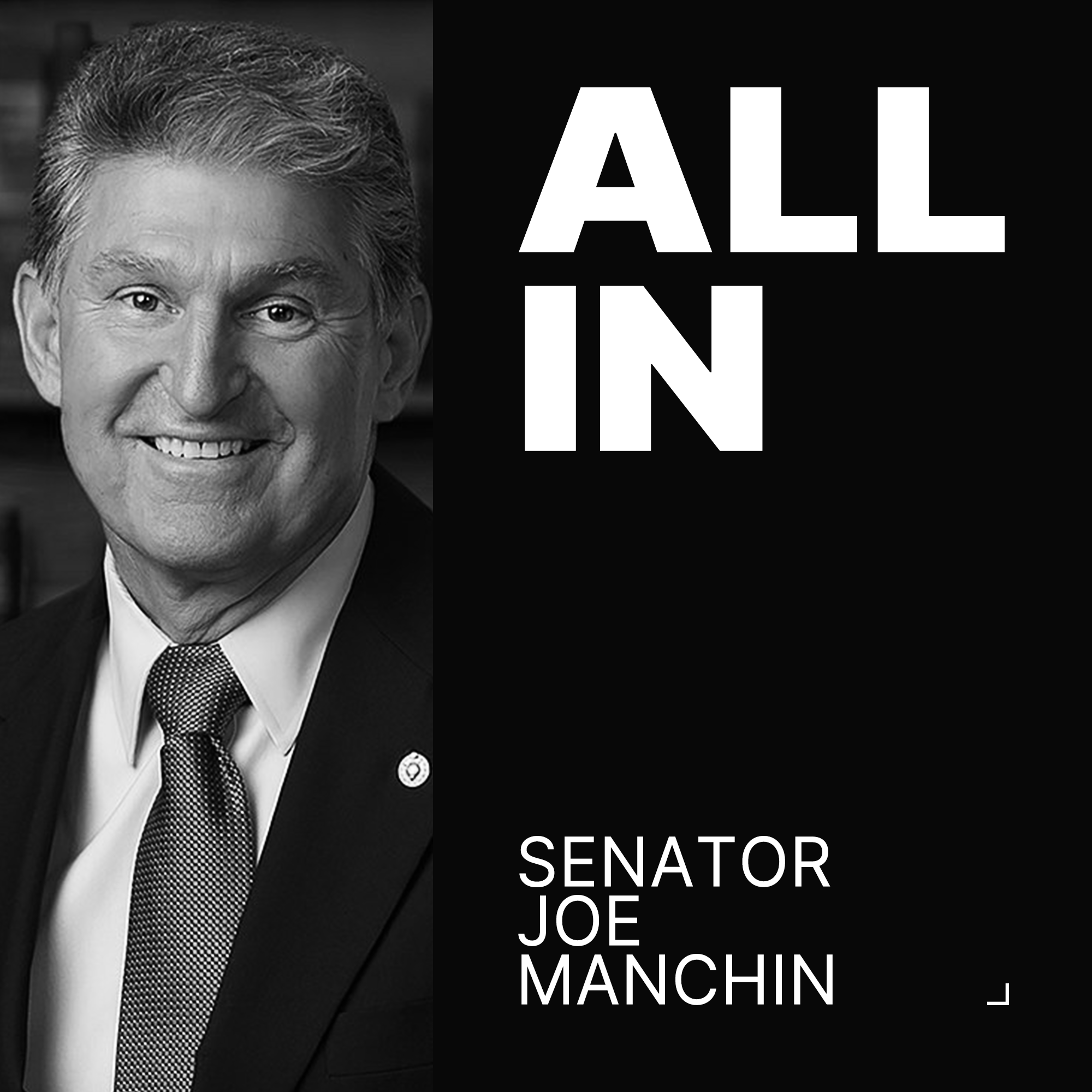
Manchin claims President Biden's agenda was controlled by an extremely liberal staff assembled by Ron Klain. He asserts this prevented follow-through on moderate agreements made directly with the President, suggesting the staff—not the President—was driving the policy train.
Related Insights
White House AI czar David Sachs used a Brookings report to claim AI job loss fears are exaggerated. The report's own author publicly clarified that while short-term impact is low, long-term disruption is underestimated, revealing a political motivation to downplay near-term job loss.

Manchin contrasts presidential styles, noting he spoke with Trump more in two years than with Obama in eight. He found Trump and Bill Clinton to be highly engaging and inquisitive, while characterizing Obama as elusive and less inclined to communicate directly with legislators.
During the Build Back Better debate, Manchin alleges he faced an organized pressure campaign, not just from voters. Protestors outside his residence were reportedly paid hourly, and he believes White House Chief of Staff Ron Klain orchestrated the effort to push him left.
Drawing on an analogy from George Washington, Manchin describes the Senate's purpose as cooling the 'hot tea' of partisan bills from the House. He views the 60-vote filibuster as the essential mechanism for forcing deliberation and bipartisan compromise, not just as an obstructionist tool.
Ideological loyalty is an illusion in politics. Once in power, parties will quickly abandon the very groups that propelled them there if it is politically expedient. Examples include the UK's Labour Party turning on unions and Democrats ignoring BLM after the 2020 election. Power, not principle, is the goal.

Manchin's core opposition to the Build Back Better bill was philosophical. He argued to President Biden that passing it would fundamentally change the American psyche from one of civic contribution to one of entitlement, a direct reversal of John F. Kennedy's famous inaugural challenge.
A new, informal caucus of liberal senators, dubbed the 'Fight Club,' is challenging the party's establishment leadership. Rather than demanding resignations, they are pushing to back candidates who directly challenge corporate interests and party orthodoxy. This internal movement signals a deep, strategic battle for the party's future soul and direction.
Manchin pinpoints the decline of the Democratic party in his state to its aggressive anti-coal stance, which lacked a viable economic transition plan for workers. He compares the treatment of coal miners to that of forgotten Vietnam veterans who were asked to serve and then discarded.
The US has historically benefited from a baseline level of high competence in its government officials, regardless of party. This tradition is now eroding, being replaced by a focus on loyalty over expertise. This degradation from competence to acolytes poses a significant, underrecognized threat to national stability and global standing.

The best political outcomes emerge when an opposing party acts as a 'red team,' rigorously challenging policy ideas. When one side abandons substantive policy debate, the entire system's ability to solve complex problems degrades because ideas are no longer pressure-tested against honest opposition.
