Get your free personalized podcast brief
We scan new podcasts and send you the top 5 insights daily.
Koah discovered that a basic RAG system for ad serving is ineffective. Embedding models can match keywords (e.g., 'Civil War' query to a 'Civil War' game) but fail to grasp the user's underlying intent (e.g., homework vs. entertainment). True contextual relevance requires more sophisticated AI.

Related Insights
While familiar metrics like ROAS and CPC will persist, AI search advertising requires a new approach. Instead of focusing on discrete keywords, advertisers must broaden their strategy to target entire conversational contexts and semantic categories to capture richer user intent.
For years, recommendation progress came from abstract, "illegible" embedding models that correlate items, not from a deep understanding of user interests like "surfing." Only now are LLMs enabling a shift towards semantic understanding by describing these abstract data clusters in plain language.
Standard Retrieval-Augmented Generation (RAG) systems often fail because they treat complex documents as pure text, missing crucial context within charts, tables, and layouts. The solution is to use vision language models for embedding and re-ranking, making visual and structural elements directly retrievable and improving accuracy.
OpenAI envisions an advertising platform that merges the high-intent nature of Google Search with the personal context and memory from a user's entire conversation history. By knowing who a user is and what they want in real-time, OpenAI believes it can create a highly potent and effective ad platform to fund free access for the world.

OpenAI plans to personalize ads not just on immediate queries but by analyzing a user's entire chat history. This creates a powerful hybrid of Google's intent-based advertising and Meta's interest-based profiling, going beyond simple sponsored links to offer deeply contextual promotions.

Vector similarity does not equal relevance. A lightweight re-ranker model, placed between retrieval and generation, rescores search results for usefulness. This significantly improves performance on ambiguous queries and is one of the highest-impact additions to a RAG pipeline.
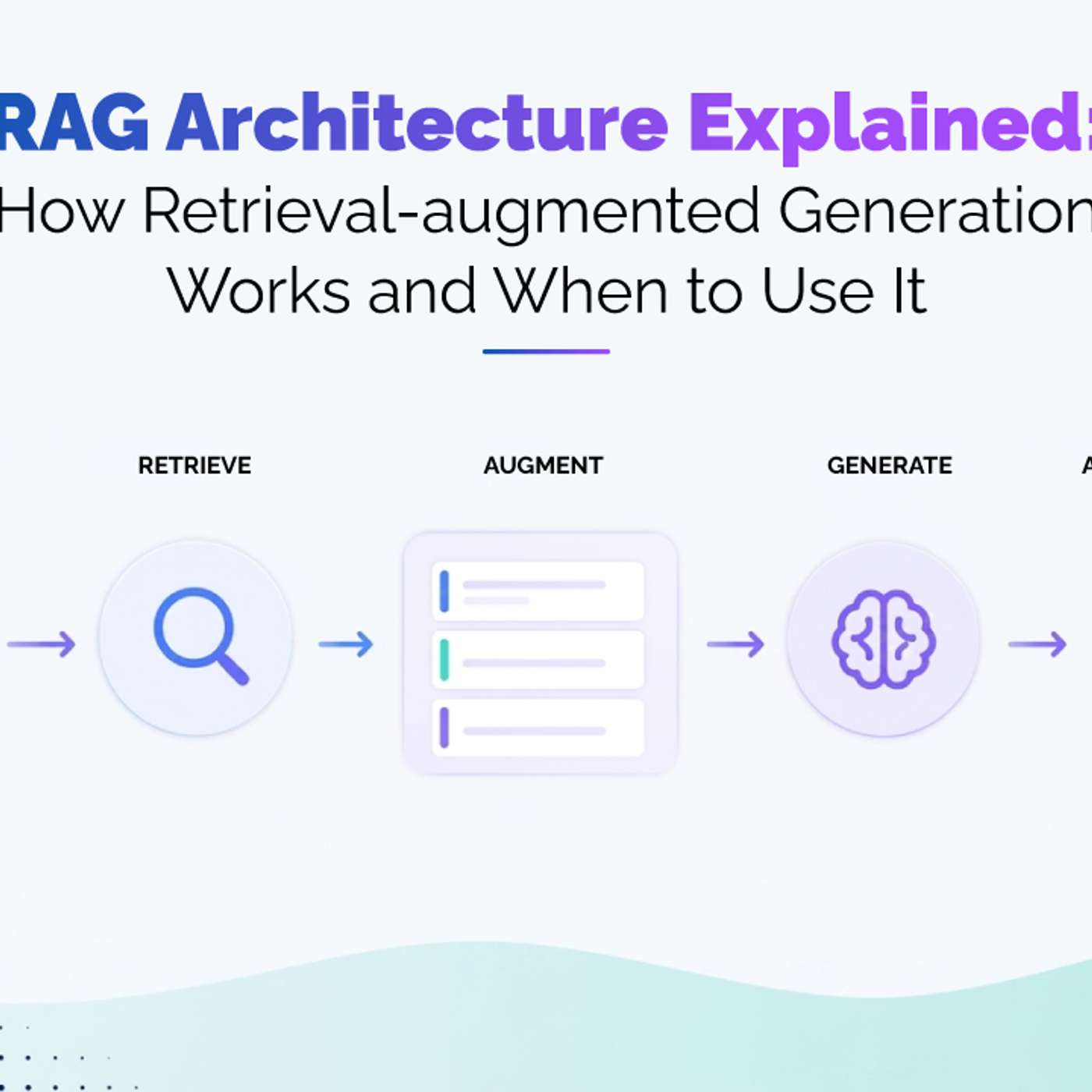
Relying solely on semantic clustering (RAG) is inaccurate for complex domains like code. Blitzy combines a deep, relational knowledge graph with semantic understanding to accurately retrieve context, using the semantic match as a map to the source of truth rather than the truth itself.

RAG systems are limited to direct retrieval and can't make spontaneous, abstract connections. This human-like ability to notice related but unasked-for concepts can only emerge from knowledge internalized within model weights, forming an associative memory.

As users delegate tasks to AI agents, a new targeting framework emerges. Instead of targeting based on keywords or past behavior, brands can target users based on the specific task they are trying to accomplish (e.g., "write a report," "plan a trip"). This allows for hyper-relevant, solution-oriented advertising.

Advanced contextual advertising has moved beyond primitive keyword matching. AI now analyzes the sentiment, mood, and overall theme of content, allowing brands to align their message with an audience's mindset, not just the topic they are currently reading about.