Get your free personalized podcast brief
We scan new podcasts and send you the top 5 insights daily.
OpenAI hired Google's Noam Shazir, a co-author of the foundational "transformer paper." This is a strategic move to bolster its pre-training capabilities, an area where it has historically lagged behind competitors like Google and Anthropic, signaling that foundational model improvement is still a primary focus.

Related Insights
The constant shuffling of key figures between OpenAI, Anthropic, and Google highlights that the most valuable asset in the AI race is a small group of elite researchers. These individuals can easily switch allegiances for better pay or projects, creating immense instability for even the most well-funded companies.

Reports that OpenAI hasn't completed a new full-scale pre-training run since May 2024 suggest a strategic shift. The race for raw model scale may be less critical than enhancing existing models with better reasoning and product features that customers demand. The business goal is profit, not necessarily achieving the next level of model intelligence.

A key to OpenAI's innovation is hiring young talent who grew up thinking natively about AI. These individuals "hold the model weights in their brains," enabling creative breakthroughs. The team behind the video model Sora, for instance, has a median age in the low twenties.
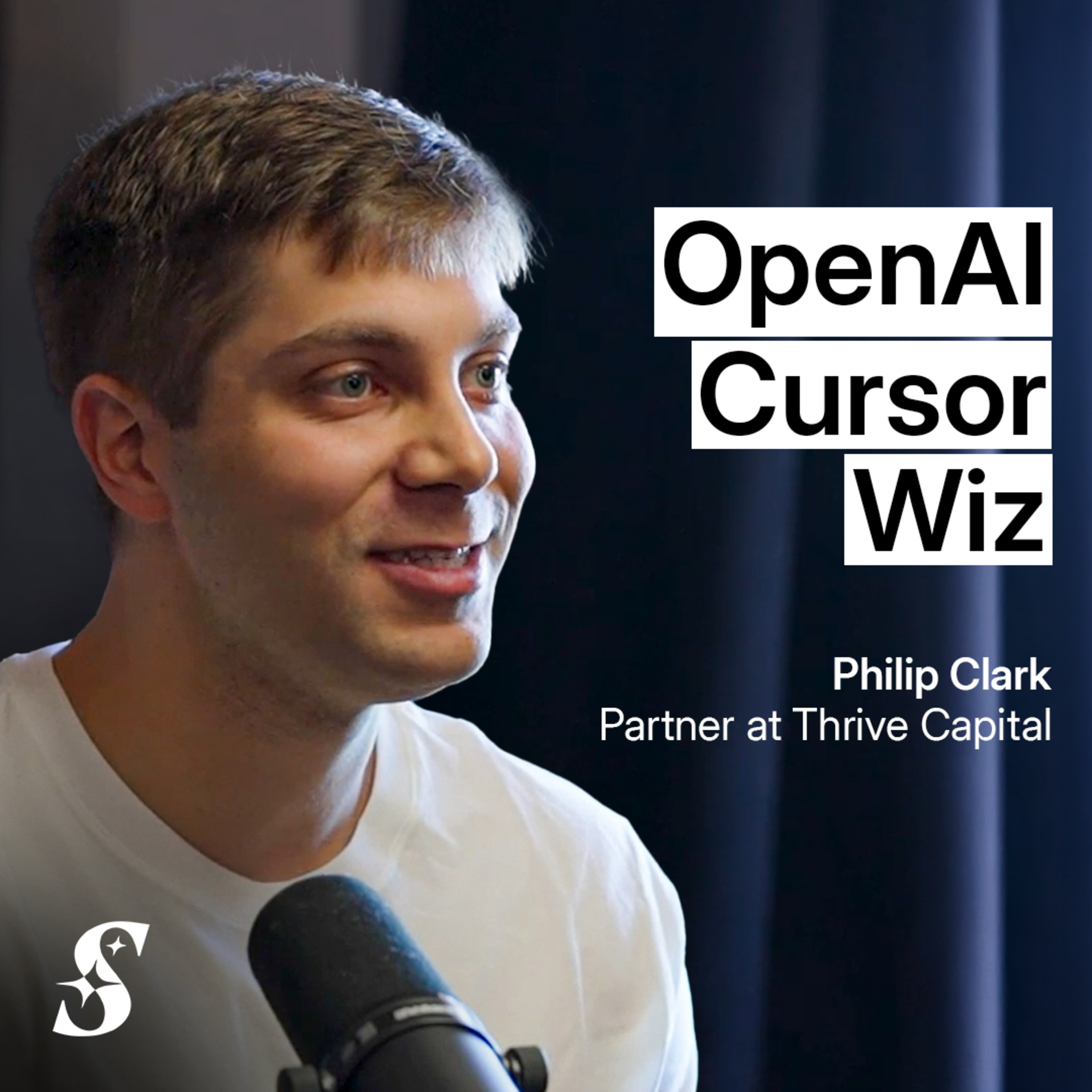
Despite massive investment, the race to build advanced AI models is narrowing to just three serious US competitors: OpenAI, Anthropic, and Google. Competitors like Meta and Elon Musk's xAI are falling behind due to internal chaos and strategic resets, concentrating power among a few key players.

Companies like OpenAI and Anthropic are not just building better models; their strategic goal is an "automated AI researcher." The ability for an AI to accelerate its own development is viewed as the key to getting so far ahead that no competitor can catch up.
Analyst Doug O'Loughlin questions why OpenAI hasn't announced a new, scaled-up base model pre-training run, unlike competitors such as Google with Gemini 3. He speculates this could indicate underlying issues, such as instability with NVIDIA's new GB200 chips, preventing them from successfully completing the next major training effort and potentially stalling their progress on the capability frontier.

The 'Valinor' metaphor for AI talent's destination has flipped. It once signified leaving big labs for well-funded startups like Thinking Machines. Now, as those startups face turmoil, Valinor represents a return to the stability and immense resources of established players like OpenAI, which are re-attracting top researchers.
Andrej Karpathy, a founding OpenAI member, joined competitor Anthropic to lead a team using its own AI (Claude) to accelerate model pre-training. This move signals a deep focus on recursive self-improvement, a critical step towards AGI, and suggests Karpathy believes Anthropic is best positioned to crack it.
OpenAI's model development isn't about isolated releases. A new pre-trained base model like 'Spud' acts as a new foundation. It allows two years' worth of accumulated but previously unrealized research in areas like reinforcement learning and fine-tuning to finally come to fruition, creating a step-change in capability.

Karpathy's new pre-training team at Anthropic will focus on having AI models improve themselves. This recursive learning could create a new Moore's law, leading to an order of magnitude improvement in model quality annually and a significant competitive advantage.
