Get your free personalized podcast brief
We scan new podcasts and send you the top 5 insights daily.
The FAA's campaign to hire gamers for air traffic control should target specific genres. Real-Time Strategy (RTS) games like Starcraft cultivate skills in macro-management and multitasking, which are more directly applicable to controlling air traffic than the reactive skills of First-Person Shooters (FPS).

Related Insights
Instead of developing proprietary systems, the military adopts video game controllers because gaming companies have already invested billions perfecting an intuitive, easy-to-learn interface. This strategy leverages decades of private-sector R&D, providing troops with a familiar, optimized tool for complex, high-stakes operations.
Mind sports like poker and strategic board games intuitively teach crucial business skills, such as making decisions under uncertainty and decoupling the quality of a decision from its outcome. They provide a low-cost way to develop executive decision-making capabilities.

Masad intuits that people who played video games early on have a higher 'clock speed' and can react faster. He cites research showing that surgeons who are gamers have better reaction times, making it a desirable, if informal, trait for high-performance teams.

GI is not trying to solve robotics in general. Their strategy is to focus on robots whose actions can be mapped to a game controller. This constraint dramatically simplifies the problem, allowing their foundation models trained on gaming data to be directly applicable, shifting the burden for robotics companies from expensive pre-training to more manageable fine-tuning.

In games too complex for a clean search tree (e.g., StarCraft), AIs use 'neural fictitious self-play.' They train specialized model-free RL agents to be a 'best response' against specific, fixed opponents. These specialists are then distilled into a single, robust policy that averages across many opponents.

Shifting from a one-pilot-per-drone model, Zipline now employs "Fleet Commanders" who oversee up to 100 aircraft. Inspired by "Ender's Game," this role focuses on strategic system management rather than direct control, representing a significant evolution in human oversight of large-scale autonomous systems.

The Army's outreach at esports events targets kids younger than the legal recruitment age, not for immediate sign-ups, but to build long-term brand familiarity and positive association, making the Army a viable career option years later.
Large Language Models are uniquely suited for complex strategy games like Civilization. Their strength lies not in calculation, where traditional AI excels, but in maintaining long-term narrative consistency and strategic coherence, which is the actual bottleneck for game mastery.

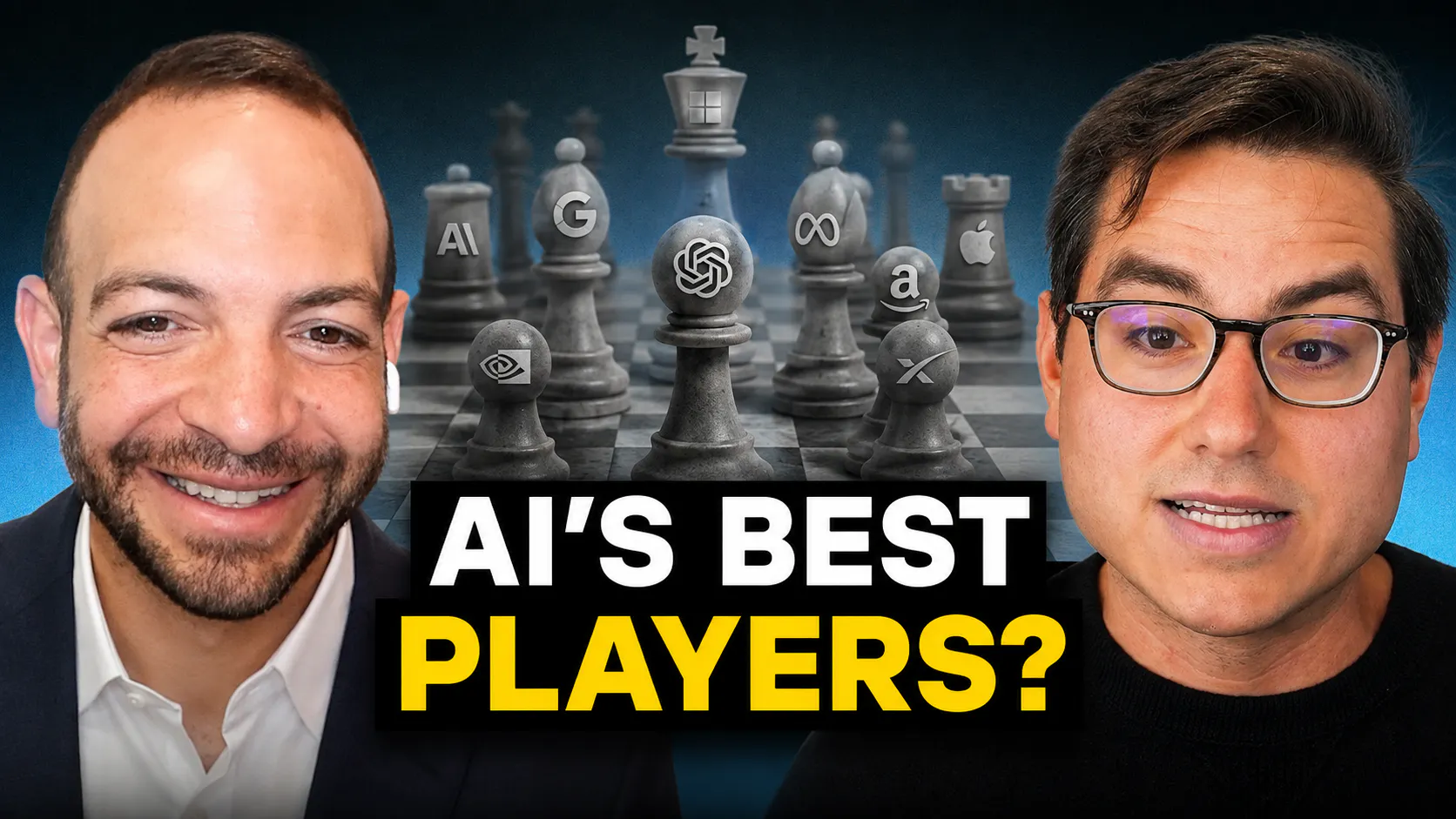
Chess is a poor metaphor for the AI competition. A better model is the video game Starcraft, which emphasizes real-time resource allocation (talent, compute, capital) and managing unique factional strengths (company capabilities). The winner isn't just the best strategist, but the best resource manager.
Intuition Robotics' core bet is that the transfer from simulated to physical worlds is unlocked by a shared action interface. Since many real-world robots like drones and arms are already operated with game controllers, an agent trained in diverse gaming environments only needs to adapt to a new visual world, not an entirely new action space.
