Get your free personalized podcast brief
We scan new podcasts and send you the top 5 insights daily.
The energy needed for a defender to deflect an incoming "relativistic kill vehicle" (RKV) is vastly less than the energy an attacker must spend to launch it. This fundamental asymmetry makes large-scale conquest economically unviable, as the attacker expends far more resources than they could ever hope to gain.

Related Insights
Focusing on the cost of a single cheap drone versus an expensive interceptor missile is a flawed analysis. It ignores the total operational cost (fuel, personnel), the immense value of the asset being protected (e.g., a warship), and the catastrophic cost of mission failure.

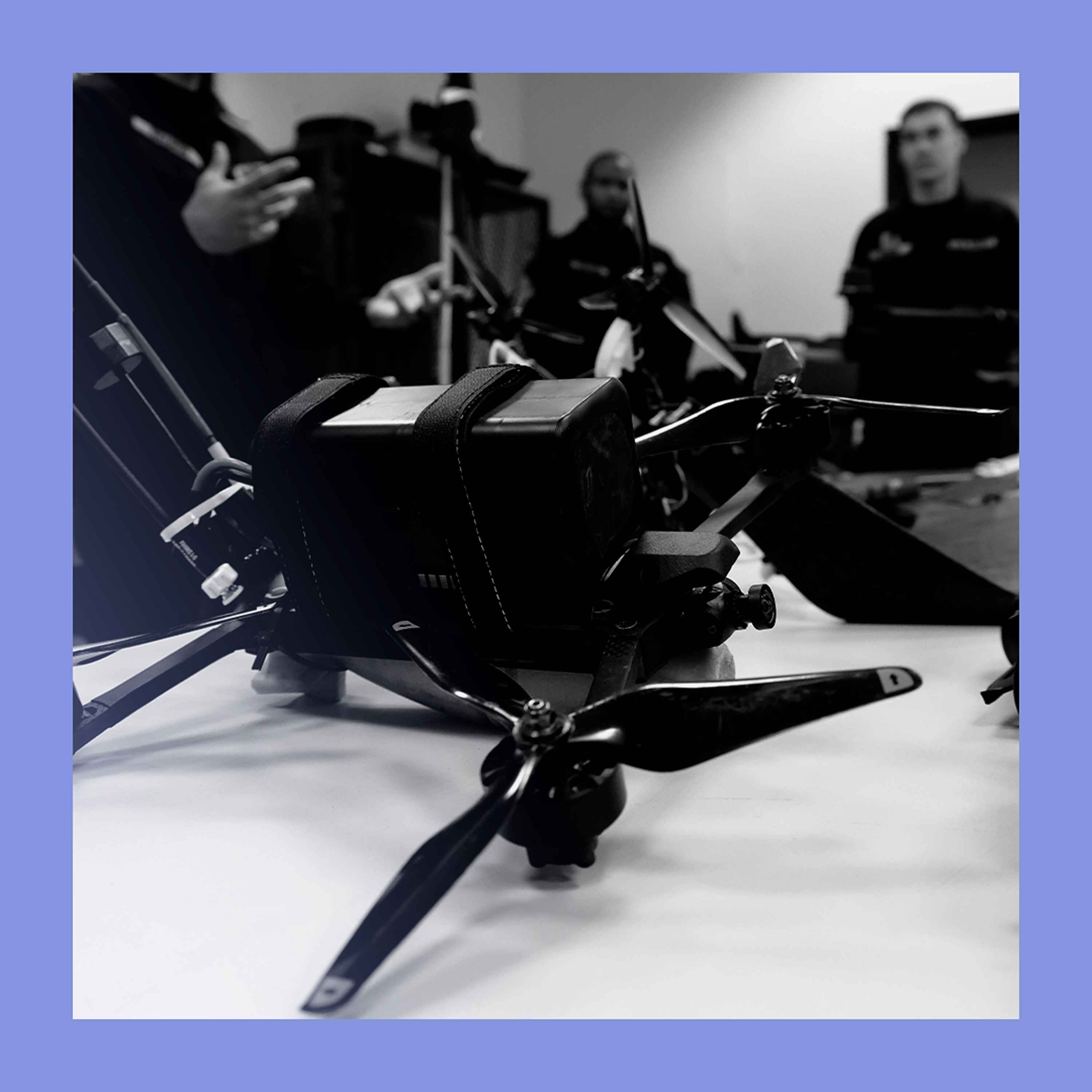
Modern conflicts demonstrate that low-cost drones can effectively neutralize multi-million dollar missiles. This economic imbalance creates a massive market opportunity for tech companies that can produce cheaper, high-volume, and effective weapons systems.
Because mature, distributed civilizations are nearly impossible to dislodge due to defensive advantages, the long-term control of galaxies is determined by who colonizes them first. This brief "settlement phase" has permanent consequences, making the actions of nascent spacefaring species like humanity incredibly impactful.
Low-cost, mass-produced drones create strategic advantage by forcing a disproportionately expensive defensive response ($4M missiles for $20K drones). This 'weaponized financial asymmetry' can extend conflicts by draining an opponent's budget, even if the drones are successfully intercepted.

Combat in space or on the moon will be swift and catastrophic because spaceships and habitats are inherently fragile. Due to severe mass and volume constraints, they cannot be armored effectively. The winning strategy is not to withstand a hit, but to avoid detection, targeting, and being fired upon entirely.

The "Dark Forest" theory posits that civilizations must preemptively destroy others to survive. However, the immense defensive advantages in intergalactic space make conquest economically irrational and nearly impossible. This suggests the universe will likely settle into a stable patchwork of isolated civilizations, not a state of constant war.
Nations like Iran and Russia deploy vast numbers of cheap drones (around $55,000 each), forcing defenders to use multi-million dollar missiles. This creates a severe cost imbalance, making traditional, high-end air defense economically unsustainable over time.

Modern asymmetric warfare is less about ground skirmishes and more about economic attrition through missile technology. Adversaries use extremely cheap drones and mines to exhaust the multi-million-dollar missile defense systems of better-equipped powers, creating a lopsided cost exchange.
The primary function of missile defense is not to achieve victory but to prevent a rapid defeat by thwarting initial attacks. This buys crucial time for offensive forces to neutralize threats by other means. While its absence can lose a war quickly, its presence alone is not a winning strategy.
The conflict with Iran highlights a new reality in warfare. Inexpensive, easily produced drones create an asymmetrical threat, as defense systems are vastly more expensive to deploy per incident, making traditional defense economically unsustainable.
