Get your free personalized podcast brief
We scan new podcasts and send you the top 5 insights daily.
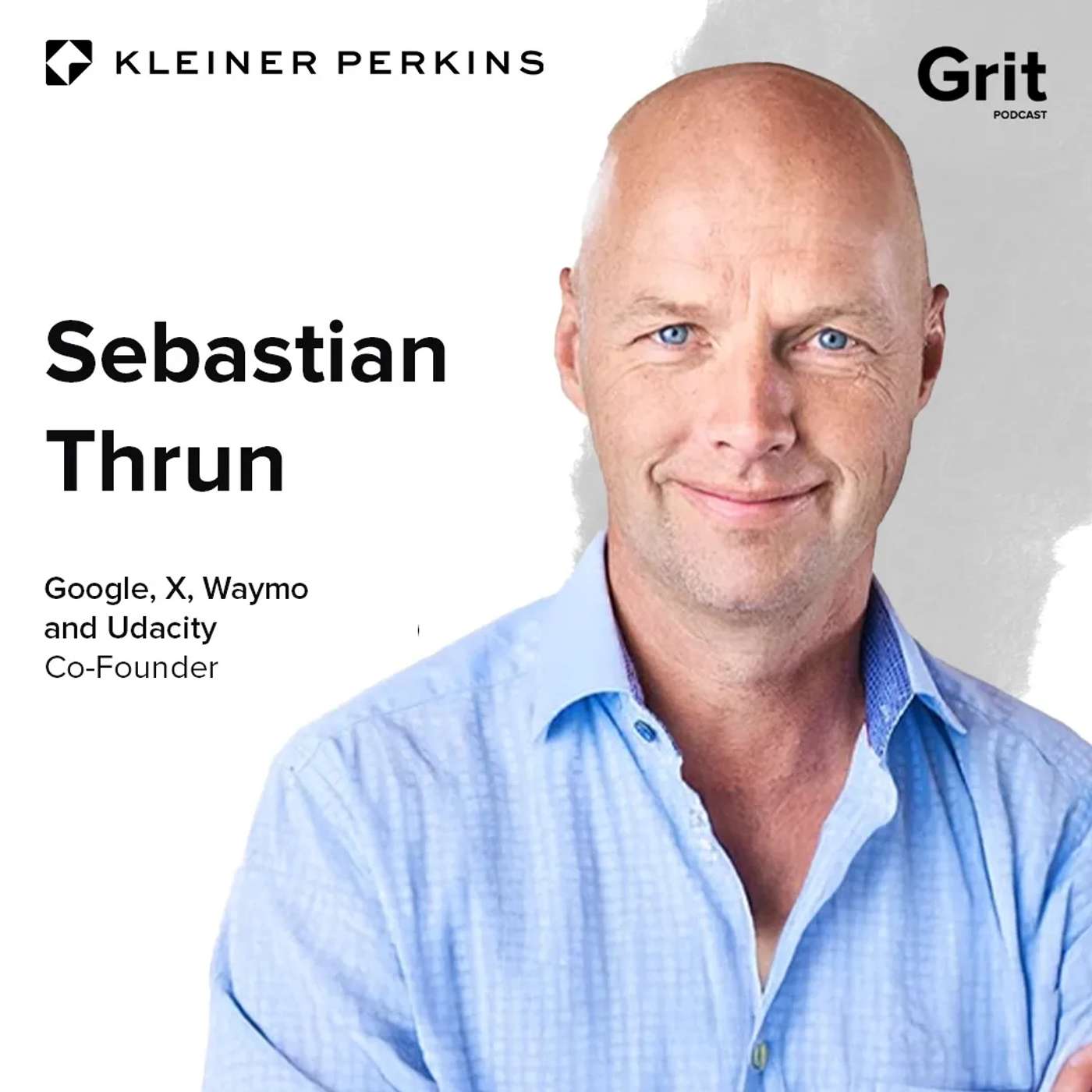
Sebastian Thrun points out a startling fact: even a highway at a standstill is 92% empty space due to inefficient car spacing and lane design. This illustrates the immense, untapped capacity in our infrastructure that could be unlocked by the precision of coordinated, self-driving vehicles.
Related Insights
Sebastian Thrun, a top expert, initially dismissed city-based self-driving cars as impossible. This taught him that experts are often blind to disruptive change, as their knowledge is rooted in past paradigms, making them ill-equipped to envision a radically different future.
After proving its robo-taxis are 90% safer than human drivers, Waymo is now making them more "confidently assertive" to better navigate real-world traffic. This counter-intuitive shift from passive safety to calculated aggression is a necessary step to improve efficiency and reduce delays, highlighting the trade-offs required for autonomous vehicle integration.

While LLMs dominate headlines, Dr. Fei-Fei Li argues that "spatial intelligence"—the ability to understand and interact with the 3D world—is the critical, underappreciated next step for AI. This capability is the linchpin for unlocking meaningful advances in robotics, design, and manufacturing.

Early self-driving cars were too cautious, becoming hazards on the road. By strictly adhering to the speed limit or being too polite at intersections, they disrupted traffic flow. Waymo learned its cars must drive assertively, even "aggressively," to safely integrate with human drivers.
Unlike a solid speed bump, a 'speed cushion' is a traffic calming device with wheel-wide gaps. This simple design innovation effectively slows down standard cars while allowing wider-axle vehicles like ambulances and fire trucks to pass through without slowing down, prioritizing emergency response.

The evolution of Tesla's Full Self-Driving offers a clear parallel for enterprise AI adoption. Initially, human oversight and frequent "disengagements" (interventions) will be necessary. As AI agents learn, the rate of disengagement will drop, signaling a shift from a co-pilot tool to a fully autonomous worker in specific professional domains.

AI is developing spatial reasoning that approaches human levels. This will enable it to solve novel physics problems, leading to breakthroughs that create entirely new classes of technology, much like discoveries in the 1940s led to GPS and cell phones.

While AI may make energy and labor nearly free, it cannot eliminate all scarcity. Finite resources like physical space (e.g., Malibu real estate) and time will always exist. This ensures that economic principles and competition will remain relevant in any future.

A human driver's lesson from a mistake is isolated. In contrast, when one self-driving car makes an error and learns, the correction is instantly propagated to all other cars in the network. This collective learning creates an exponential improvement curve that individual humans cannot match.
Human intelligence is multifaceted. While LLMs excel at linguistic intelligence, they lack spatial intelligence—the ability to understand, reason, and interact within a 3D world. This capability, crucial for tasks from robotics to scientific discovery, is the focus for the next wave of AI models.
