Get your free personalized podcast brief
We scan new podcasts and send you the top 5 insights daily.
Daron Acemoglu argues that building AI simply to replace existing workers will fail to generate large-scale economic revolutions, potentially producing only 1.5% GDP growth over a decade. Economic expansion requires deploying AI to solve novel, previously intractable problems and empower workers with enhanced capabilities. Moving labor inputs around yields minimal aggregate output compared to enabling entirely new, value-additive tasks.

Related Insights
Despite rapid advances in AI models, Daron Acemoglu remains cautious about immediate productivity gains. He argues the real bottleneck is the sluggish development of user-friendly applications that allow small and medium-sized enterprises to adopt the technology, which is crucial for widespread economic impact.

Automation alone is insufficient for shared prosperity. Acemoglu argues that while automation is good for eliminating undesirable tasks, true economic progress requires a parallel focus on creating new, more complex tasks where human labor can be redeployed and find new opportunities.
The true disruption from AI is not a single bot replacing a single worker. It's the immense leverage granted to individuals who can deploy thousands of autonomous AI agents. This creates a massive multiplication of productivity and economic power for a select few, fundamentally altering labor market dynamics from one-to-one replacement to one-to-many amplification.
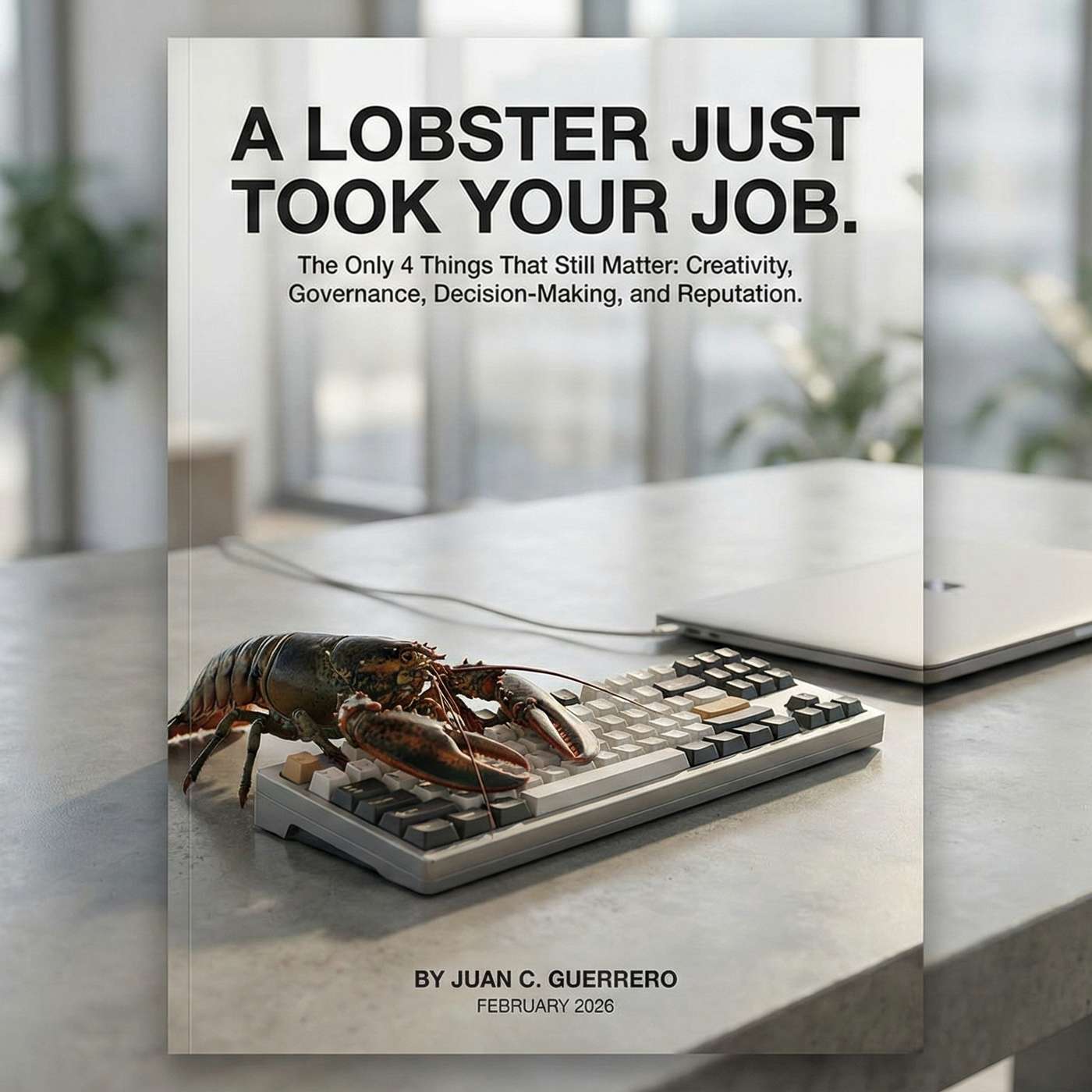
Companies won't use AI's productivity gains to fire most of their staff and maintain output. Instead, they will keep their teams and aim to 10x their business goals. This shifts the labor narrative from replacement to expansion and new job creation.

A simplistic view of AI replacing tasks is misleading. A more robust model treats the outcome as a race between three competing forces: the speed of AI diffusion versus labor rebalancing, task destruction versus new task creation, and lost labor income versus indirect wealth effects from capital gains.

The narrative of AI destroying jobs misses a key point: AI allows companies to 'hire software for a dollar' for tasks that were never economical to assign to humans. This will unlock new services and expand the economy, creating demand in areas that previously didn't exist.

Initial data from industries with high AI exposure shows productivity gains are driven by increased output, not reduced labor hours. This counters the common narrative that AI's primary effect will be immediate, widespread job displacement, suggesting a period of augmentation precedes automation.
The fear of AI-driven mass unemployment is a classic economic fallacy. Like past technologies, AI is a tool that raises the marginal productivity of individual workers. More productive workers don't work less; they take on more ambitious projects and create new kinds of jobs, increasing the overall demand for labor.

The consensus on AI's economic impact is fractured. Economist Daron Acemoglu forecasts a negligible 0.07% annual GDP increase over 10 years, treating AI as a rounding error. In stark contrast, other models predict double-digit growth driven by recursive self-improvement, highlighting profound disagreement among experts.

Just as electricity's impact was muted until factory floors were redesigned, AI's productivity gains will be modest if we only use it to replace old tools (e.g., as a better Google). Significant economic impact will only occur when companies fundamentally restructure their operations and workflows to leverage AI's unique capabilities.