Get your free personalized podcast brief
We scan new podcasts and send you the top 5 insights daily.
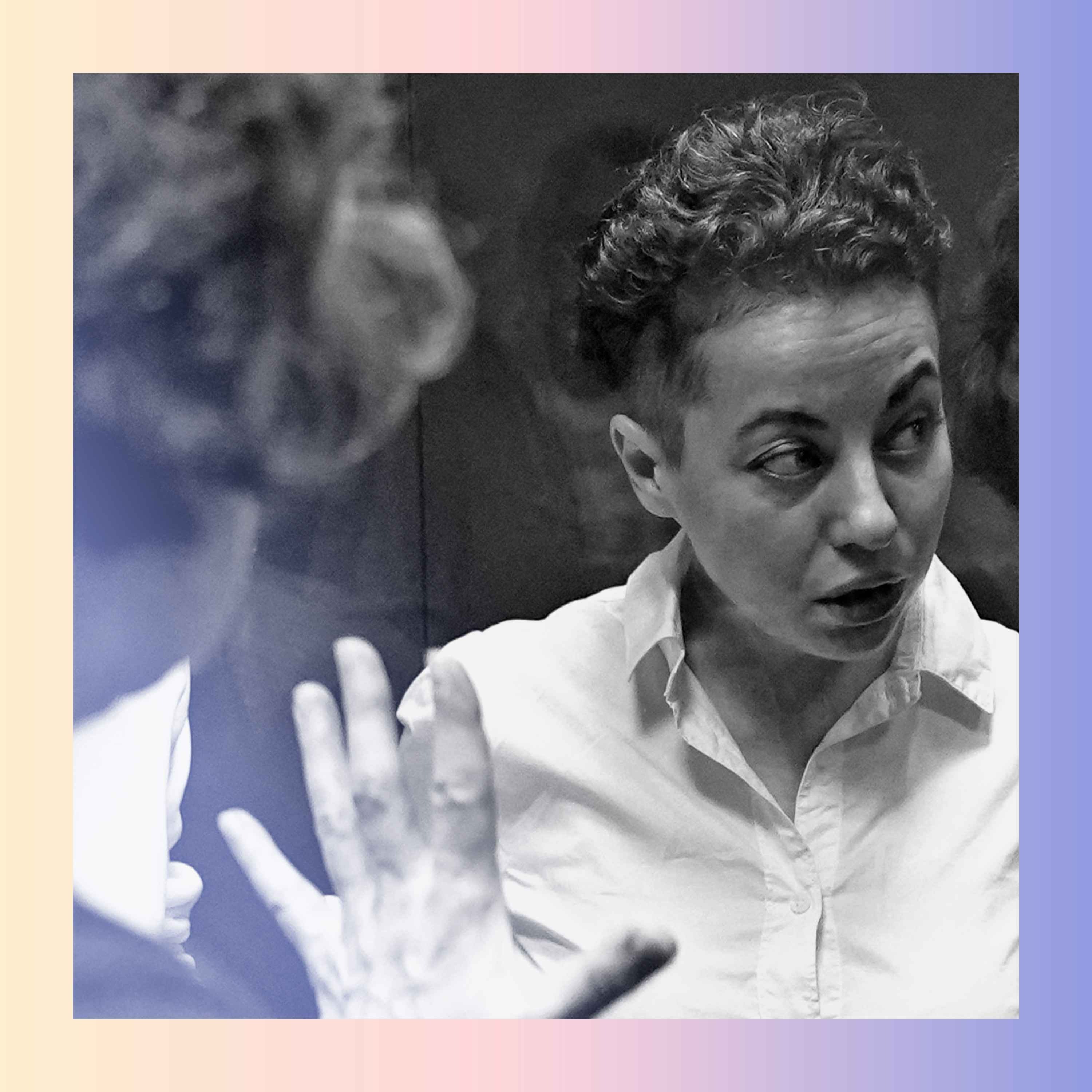
Director Evgenia Berkovich was not a political activist; she aimed to live a normal life and create art exploring human compassion. Her trial reveals that when a state becomes extremist, the simple act of portraying dignified, independent life free from state ideology is considered a subversive and criminal act.
Related Insights
The prosecution's secret witness argued that the play was criminal because its subtext implied that "Russian institutions of the state and society" were to blame for the characters' suffering. This legal theory makes any art not explicitly pro-state potentially illegal, as negative interpretations can be framed as a crime.
Facing a court that refused to watch or read the play in question, the defense team transformed the proceedings into a performance. They had actors read monologues from the play and scholars lecture on the nature of art, using the courtroom itself as a stage to highlight the trial's disconnect from reality.
The 'destructology' report used to convict Berkovich was rooted in a 2022 Putin executive order targeting "ideas and values alien to the Russian people." This shows a shift from prosecuting under existing law to creating ad-hoc ideological frameworks that serve as the foundation for politically motivated show trials.
Tsar Alexander III, promoting an ideology of Russian exceptionalism, used Tchaikovsky's work for political ends. By celebrating him as a distinctly 'Russian' composer and bestowing state honors, the regime transformed his art into a tool for advancing a nationalist agenda of cultural separation from Western Europe.

While many free-thinking Russians either fled the country or fell silent after the 2022 invasion, Evgenia Berkovich chose a third path: she stayed in Russia while continuing to write and create, including anti-war poetry. Her refusal to conform to the state-imposed dichotomy of exile or submission made her an intolerable example.
Legal frameworks to punish 'hate speech' are inherently dangerous because the definition is subjective and politically malleable. Advocating for such laws creates a tool that will inevitably be turned against its creators when political power shifts. The core principle of free speech is protecting even despicable speech to prevent this tyrannical cycle.
The prosecution's case against Evgenia Berkovich relied almost entirely on an expert report from a non-existent scientific field called "destructology." This tactic creates an unchallengeable, pseudo-objective basis for a politically motivated verdict, bypassing traditional legal evidence and argumentation.
Citing thousands of arrests for "malicious communication" in the UK and Germany, the hosts frame Europe's crackdown on speech as a cautionary tale. They note similar legislation was narrowly vetoed in California, highlighting a real threat to American free speech principles.
The indictment of former FBI Director James Comey highlights a strategy where the legal process itself is the punishment. The goal is not to win in court but to intimidate opponents by forcing them into expensive, time-consuming legal battles, creating a chilling effect on dissent regardless of the case's merits.

The value of free speech is a practical mechanism for progress. Open debate allows bad ideas to be discarded and good ideas to be refined through opposition. In contrast, censorship protects flawed ideas from scrutiny, freezes society in ignorance, and requires violent enforcement to suppress dissent.
