Get your free personalized podcast brief
We scan new podcasts and send you the top 5 insights daily.
The core task of translating ideas into computer instructions has been effectively automated by LLMs. Humanity has been "out-competed" in a skill that commanded salaries of $600,000. Top engineers now focus on high-level architecture, rendering manual coding obsolete for most production tasks.
Related Insights
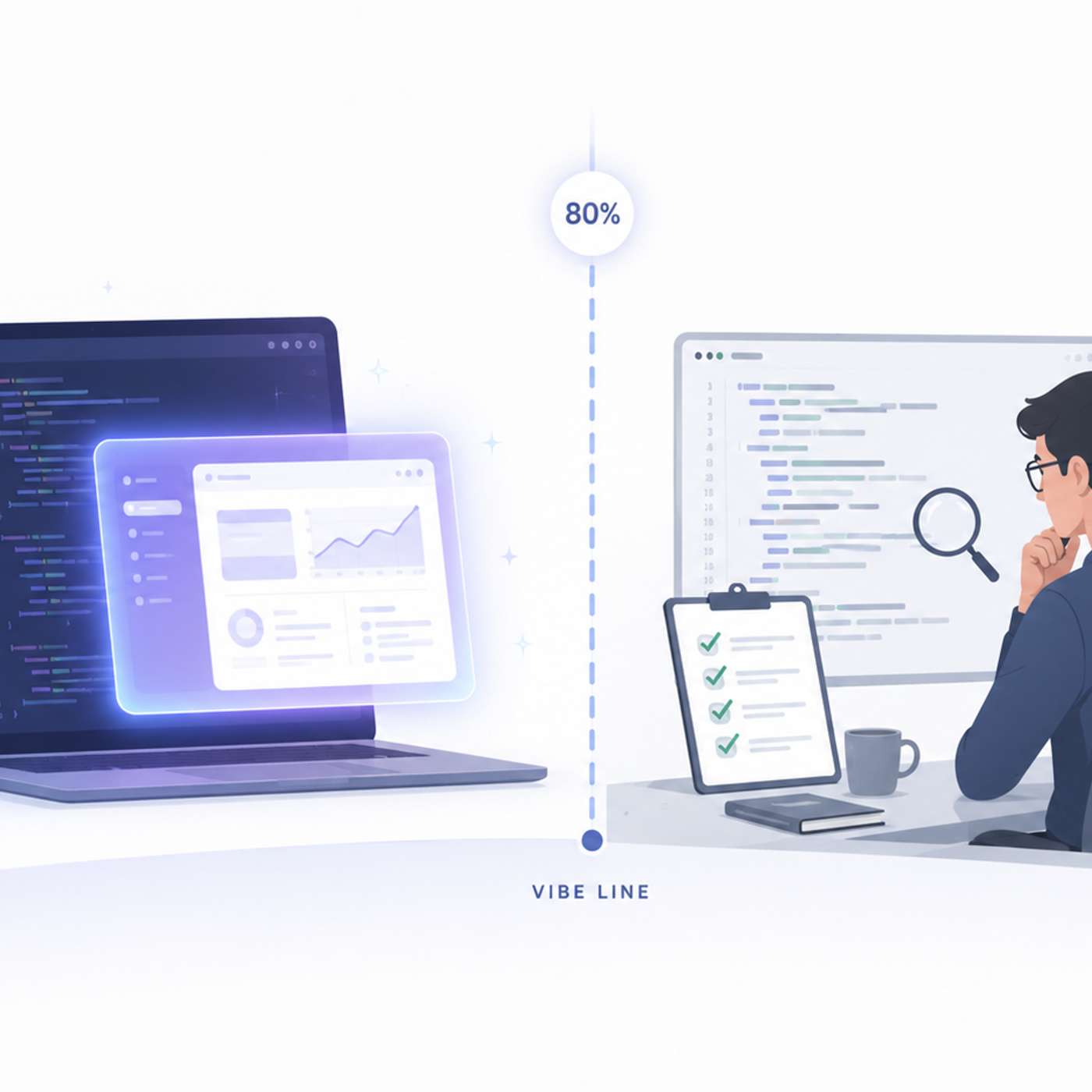
AI tools commoditize initial code generation, the 'easy 80%'. The true value of an engineer is now their ability to determine when AI-generated code is correct, safe, and trustworthy—the crucial final 20% of the work where human judgment is irreplaceable.
The cost of generating code with AI is trivial, shifting the primary expense to its maintenance, validation, and deployment. This inverts the traditional software engineering model where human code production was the main bottleneck, making code's complexity a liability.

With AI handling a large percentage of code generation, the core work of an engineer is evolving. The job now involves spending more time planning what code to generate and carefully reviewing the AI's output, a significant shift from the traditional focus on manually writing code.

The value of manual tasks like coding is plummeting. The new, crucial skill for career success is directing swarms of AI agents and productively spending computational resources. The challenge is no longer about building by hand but about harnessing immense leverage to create value.

The role of a software engineer is evolving from a detail-oriented coder into a conceptual manager who directs a "team of AI agents." This shift prioritizes judgment and problem selection over granular coding expertise, rendering deep technical skills acquired just a few years ago, such as systems programming, potentially obsolete.

Generative AI is making the task of writing syntactically correct code obsolete. The core value of a software engineer is shifting away from implementation details and towards the higher-level "thinking" tasks: understanding user needs and designing robust systems.

AI tools like Claude Code and OpenAI's Codex generate high-quality code so efficiently and cheaply that small firms may no longer have a business case for hiring junior developers, effectively removing the bottom rung of the career ladder.

AI coding tools democratize development, making simple 'coding' obsolete. However, this expands the amount of software created, which in turn increases the need for sophisticated 'engineering' to manage new layers of complexity and operations. The field gets bigger, not smaller.
AI is automating the task of writing code, leading to a decline in "programming" jobs. Simultaneously, demand for "software engineering" roles, which involve higher-level system design and managing AI tools, is growing. This signals a fundamental reskilling shift from pure coding to architectural oversight.

Contrary to popular belief, AI's initial disruptive impact is not on low-level clerical work but on the core tasks of average software developers. While elite AI talent commands unprecedented salaries, the broad base of software engineering is becoming a commoditized skill.
