Get your free personalized podcast brief
We scan new podcasts and send you the top 5 insights daily.
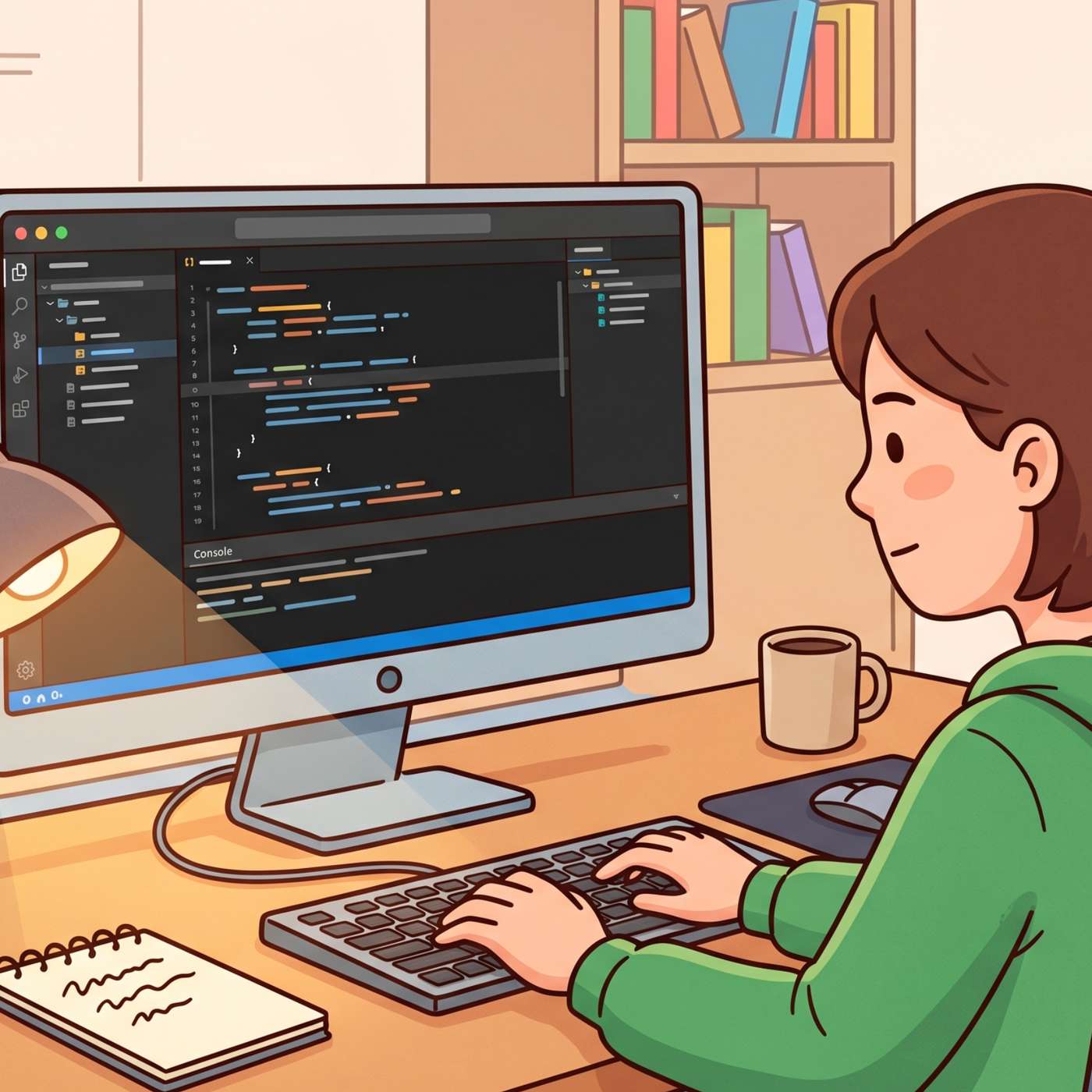
Data from the Stack Overflow Developer Survey shows VS Code's daily usage increased to 75.9%. This suggests developers are using new AI tools like Cursor and Claude Code alongside their primary IDE, rather than replacing it, solidifying the IDE's role as the central workspace.
Related Insights
The narrative of one AI tool 'killing' another is misleading. The rapid, concurrent growth of both Cursor and Claude Code demonstrates that the entire market for AI-native development tools is expanding. The dynamic is not about market share cannibalization but about capturing new, growing demand.

Despite hype across many categories, data shows coding and software development tools account for 55% of all enterprise end-user spending on AI. This makes the developer tool market the current epicenter and most valuable battleground of the enterprise AI revolution.

AI tools provide quantifiable productivity gains in technical fields. Developers using GitHub Copilot, for instance, finish tasks approximately 55% faster. Furthermore, 88% of these developers report feeling more productive, demonstrating that AI augmentation leads to significant and measurable improvements in workflow efficiency and employee satisfaction.
The perception of AI coding assistants has shifted. They are no longer just tools for a productivity boost but are becoming a fundamental, non-negotiable part of the modern developer's workflow. This implies an eventual market penetration approaching 100%, drastically changing the market size calculation.
Despite the rise of terminal-based AI, IDEs remain essential because source code is meant for human consumption. Visual interfaces are the best way for developers to review, understand, and build context around what AI agents produce, preventing the 'death of the IDE'.

The lines between IDEs and terminals are blurring as both adopt features from the other. The future developer workbench will be a hybrid prioritizing a natural language prompting interface, relegating direct code editing to a secondary, fallback role.

Shopify's CTO reveals that AI tool usage by employees surged dramatically around December, reaching nearly 100% daily active users. Interestingly, command-line interface (CLI) based tools are seeing faster growth than traditional integrated development environment (IDE) tools like GitHub Copilot.
Instead of becoming obsolete, IDEs like IntelliJ will be repurposed as highly efficient, background services for AI agents. Their fast indexing and incremental rebuild capabilities will be leveraged by AIs, while the human engineer works through a separate agent-native interface.

For over a decade, software development fragmented into siloed roles (PM, Design, Eng) with their own tools. AI code editors are collapsing these boundaries by creating a unified workspace where a single "maker" or a streamlined team can build, iterate, and ship, much like in the early days of computing.

Traditional Integrated Development Environments (IDEs) are functionally obsolete. Their core value propositions—code intelligence, autocompletion, and symbol navigation—have been entirely subsumed and surpassed by AI capabilities. While some engineers may cling to them for control, they no longer represent the future of software development.
