Get your free personalized podcast brief
We scan new podcasts and send you the top 5 insights daily.
Despite being standard of care, bone marrow cytogenetics at CML diagnosis are often skipped in community practice. This overlooks additional aberrations that identify high-risk patients who may require early transplant, a crucial distinction missed by simpler blood tests.

Related Insights
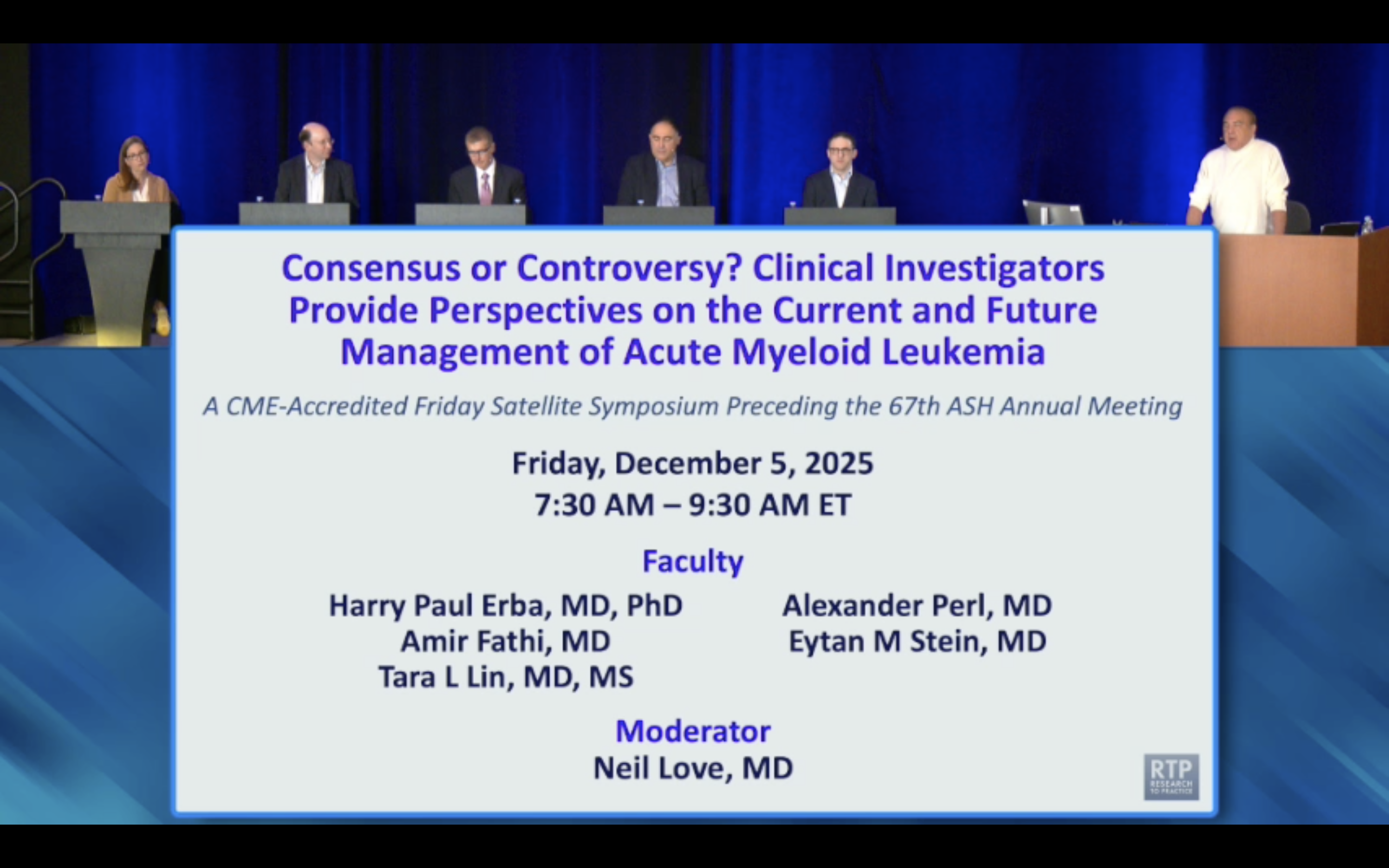
While newer, less toxic therapies like HMA-Venetoclax empower community oncologists to treat AML, this creates a new risk: failing to refer younger, curable patients to tertiary centers for allogeneic transplant, which remains the only curative option for many adverse-risk patients.
Contrary to common belief, low biomarker testing rates (30-60%) are not just a community oncology problem; even academic medical centers are "guilty" of failing to test all eligible GI cancer patients. This highlights a systemic challenge in implementing personalized medicine, requiring proactive strategies at all levels of care.

A proactive clinical practice is to refer all newly diagnosed myelofibrosis patients for a transplant consultation, irrespective of their initial risk score. This preemptive step helps overcome significant logistical delays in finding a suitable donor, which is particularly crucial for patients from diverse ethnic backgrounds where donor availability is limited.

Counter to the assumption that maximum therapy is always best for high-risk cancers, the new guidelines recommend *not* proceeding with an allogeneic transplant in the first remission for most AYA ALL patients. This significant recommendation is contingent on performing minimal residual disease (MRD) assessment, prioritizing less toxic approaches where possible.
The standard of care for AML has shifted from immediate induction chemotherapy to a "wait and profile" approach. Rushing to treat with a general therapy like HMA-Venetoclax before getting molecular results can be detrimental if the patient has a subtype highly curable with specific intensive chemotherapy.
Despite NCCN guidelines placing POLE testing first in the hierarchy, many US institutions do not perform it routinely because it currently does not alter standard-of-care treatment. Clinicians often only order the send-out test when a specific clinical trial (like RAINBO) requires it to de-escalate care.

The NCI-supported MyeloMatch trial is pioneering a new standard for AML diagnostics, providing comprehensive genomic, FISH, and karyotype analysis within 72 hours. This rapid turnaround allows for immediate risk stratification and assignment to appropriate clinical trials.
While tyrosine kinase inhibitors (TKIs) reduced overall CML transplants, a dangerous trend has emerged. Clinicians are waiting too long to transplant high-risk patients, often until after they reach an advanced disease state, which significantly worsens outcomes compared to an early transplant in the chronic phase.
Standard cytogenetics miss complex genetic rearrangements. Advanced techniques like Optical Genome Mapping (OGM) are identifying "cryptic" fusions (e.g., involving KMT2A, NUP98) in patients who appear to be wild-type. This expands the eligible patient pool for menin inhibitors beyond those with classic mutations.
Risk stratification in CML is moving beyond BCR-ABL. Additional mutations like ASXL1 are now known to predict poorer outcomes and reduced response to asciminib, while others like GATA2 are favorable, pushing for routine, broader genetic sequencing at diagnosis to personalize therapy.