Get your free personalized podcast brief
We scan new podcasts and send you the top 5 insights daily.
While newer, less toxic therapies like HMA-Venetoclax empower community oncologists to treat AML, this creates a new risk: failing to refer younger, curable patients to tertiary centers for allogeneic transplant, which remains the only curative option for many adverse-risk patients.

Related Insights
The sequence of therapies like bispecifics and CAR-T critically impacts future options and outcomes. This necessitates early, strategic collaboration between community oncologists and academic centers to plan a patient's entire treatment journey, not just the next immediate step.

Despite impressive data supporting HMA/Venetoclax, its application in younger, fit patients must be cautious. The pivotal VIALE-A trial excluded key subgroups like FLT3, core binding factor, and certain NPM1 patients, for whom intensive chemotherapy remains the standard.
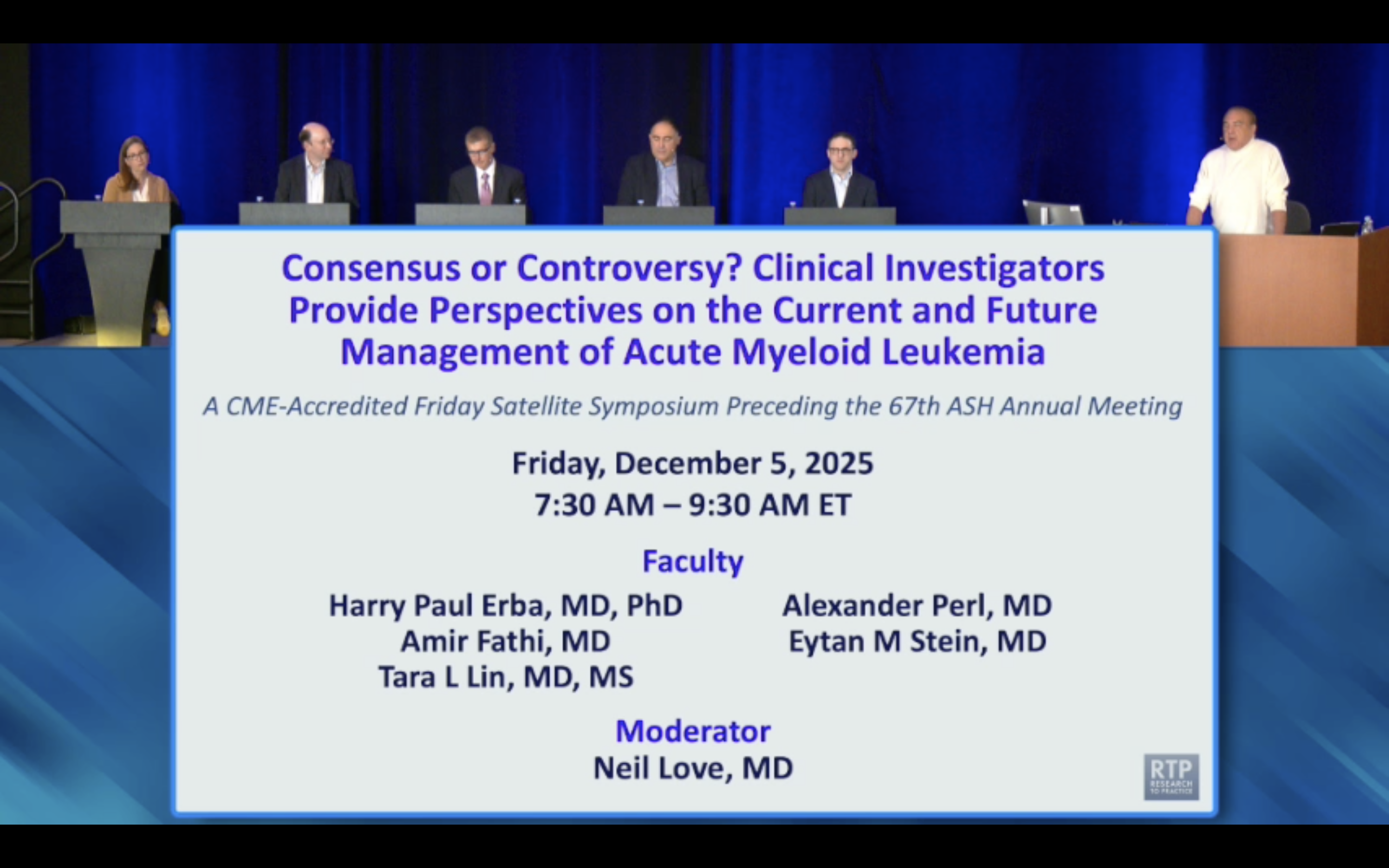
The PARADIGM trial, showing Aza/Venetoclax is superior to intensive chemo for younger, fit patients, is not a universal finding. It explicitly excluded patients with favorable-risk cytogenetics and FLT3 mutations, meaning it applies mainly to a higher-risk subset.

Counter to the assumption that maximum therapy is always best for high-risk cancers, the new guidelines recommend *not* proceeding with an allogeneic transplant in the first remission for most AYA ALL patients. This significant recommendation is contingent on performing minimal residual disease (MRD) assessment, prioritizing less toxic approaches where possible.
The FLAG-IDA plus venetoclax regimen achieves very high MRD-negative remission rates. However, its similar efficacy in both frontline and first salvage settings suggests it might be more strategically deployed as a salvage therapy, avoiding its high toxicity in all patients upfront.
While the Paradigm study validated HMA-Venetoclax for fit, adverse-risk AML patients, it didn't alter practice at tertiary centers focused on curative transplant. However, it significantly empowered community oncologists by providing a viable, less toxic option beyond just referring patients to a specialty center or hospice.
The standard of care for AML has shifted from immediate induction chemotherapy to a "wait and profile" approach. Rushing to treat with a general therapy like HMA-Venetoclax before getting molecular results can be detrimental if the patient has a subtype highly curable with specific intensive chemotherapy.
While adding a menin inhibitor to the azacitidine/venetoclax doublet for older/unfit AML patients increases response rates, it leaves little reserve for marrow function. This can lead to increased risk of early, fatal complications like infection or bleeding, requiring careful dose management.

The future standard of care for AML could move towards all-oral triplet therapies. Citing promising data from the SAVE trial, the speaker suggests these better-tolerated, outpatient regimens could replace harsh inpatient chemotherapy for many patients, improving quality of life.
In treating elderly AML patients, safety is paramount. The current standard, venetoclax, has an early (30-60 day) mortality rate of around 7%. Early data for mesutoclax shows zero early deaths in over 40 patients. This, combined with shorter durations of severe cytopenias, suggests a superior safety profile that could be a more important clinical differentiator than efficacy alone.