Get your free personalized podcast brief
We scan new podcasts and send you the top 5 insights daily.
The standard of care for AML has shifted from immediate induction chemotherapy to a "wait and profile" approach. Rushing to treat with a general therapy like HMA-Venetoclax before getting molecular results can be detrimental if the patient has a subtype highly curable with specific intensive chemotherapy.

Related Insights
Despite impressive data supporting HMA/Venetoclax, its application in younger, fit patients must be cautious. The pivotal VIALE-A trial excluded key subgroups like FLT3, core binding factor, and certain NPM1 patients, for whom intensive chemotherapy remains the standard.
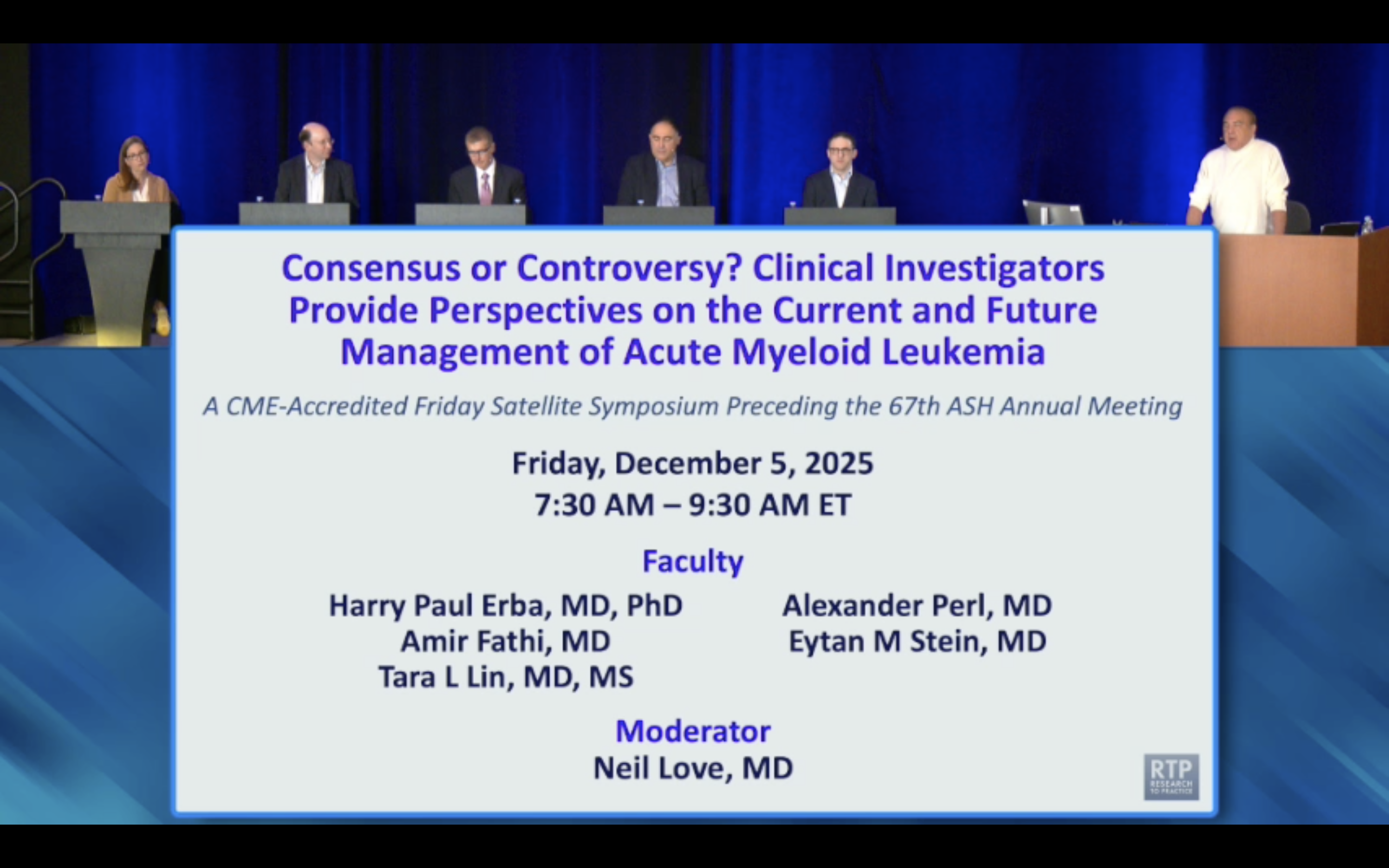
The PARADIGM trial, showing Aza/Venetoclax is superior to intensive chemo for younger, fit patients, is not a universal finding. It explicitly excluded patients with favorable-risk cytogenetics and FLT3 mutations, meaning it applies mainly to a higher-risk subset.

The FLAG-IDA plus venetoclax regimen achieves very high MRD-negative remission rates. However, its similar efficacy in both frontline and first salvage settings suggests it might be more strategically deployed as a salvage therapy, avoiding its high toxicity in all patients upfront.
The modern practice of waiting for detailed diagnostic and genetic information before starting AML therapy provides a crucial, previously unavailable window of time for clinicians to conduct thorough fitness and geriatric assessments on their older patients.
To combat the significant myelosuppression from the standard 28-day venetoclax cycle in AML, many clinicians are adopting a strategy of performing a bone marrow biopsy around day 21 and pausing the drug if blast clearance is achieved to allow for hematologic recovery.
When an AML patient presents with multiple targetable mutations (FLT3, NPM1, IDH), clinicians follow a treatment hierarchy. FLT3-targeted therapy is typically the first choice due to its aggressive phenotype. Menin inhibitors for NPM1 are next, followed by IDH inhibitors, guiding treatment decisions in complex cases.

Similar to FLT3 inhibitors like midostaurin, which failed in the relapsed setting but succeeded upfront, menin inhibitors are expected to show dramatically better efficacy when combined with standard induction or HMA/Venetoclax in newly diagnosed patients.
The future standard of care for AML could move towards all-oral triplet therapies. Citing promising data from the SAVE trial, the speaker suggests these better-tolerated, outpatient regimens could replace harsh inpatient chemotherapy for many patients, improving quality of life.

The NCI-supported MyeloMatch trial is pioneering a new standard for AML diagnostics, providing comprehensive genomic, FISH, and karyotype analysis within 72 hours. This rapid turnaround allows for immediate risk stratification and assignment to appropriate clinical trials.
Because menin inhibitors work by inducing cell differentiation rather than immediate cell death, clinicians must not expect rapid blast clearance. Complete remission may take two or more cycles to achieve, a significant departure from cytotoxic therapy timelines.