Get your free personalized podcast brief
We scan new podcasts and send you the top 5 insights daily.
Early data on Surivatamig, a novel CD19-targeting bispecific antibody, reveals higher rates of neurotoxicity than seen with CD20-targeting bispecifics. This toxicity profile mirrors that of CD19 CAR T-cell therapies, suggesting that the biological target itself—CD19—may be intrinsically linked to neurological side effects, regardless of the therapeutic modality used to engage it.

Related Insights
Drugs like cervatimig are engineered for improved safety. They feature a silenced Fc portion to prevent prolonged toxicity and a low-affinity CD3 binder that engages T-cells more physiologically. This design reduces the likelihood of high-grade cytokine release syndrome (CRS) and neurotoxicity.

Developing CAR T-cell therapies for solid tumors is difficult because many tumor-associated antigens are also expressed on normal tissues. This creates a significant risk of "on-target, off-tumor" effects, causing severe toxicity. Mitigating this risk, for instance with engineered "kill switches," is as crucial as preserving the therapy's efficacy.

Unlike some targeted therapies that lead to antigen loss, treatment with the CD19-directed antibody tafasitamab does not appear to eliminate CD19 expression on lymphoma cells. This is a critical finding, as it preserves the target for subsequent potent therapies like CD19-directed CAR T-cells.
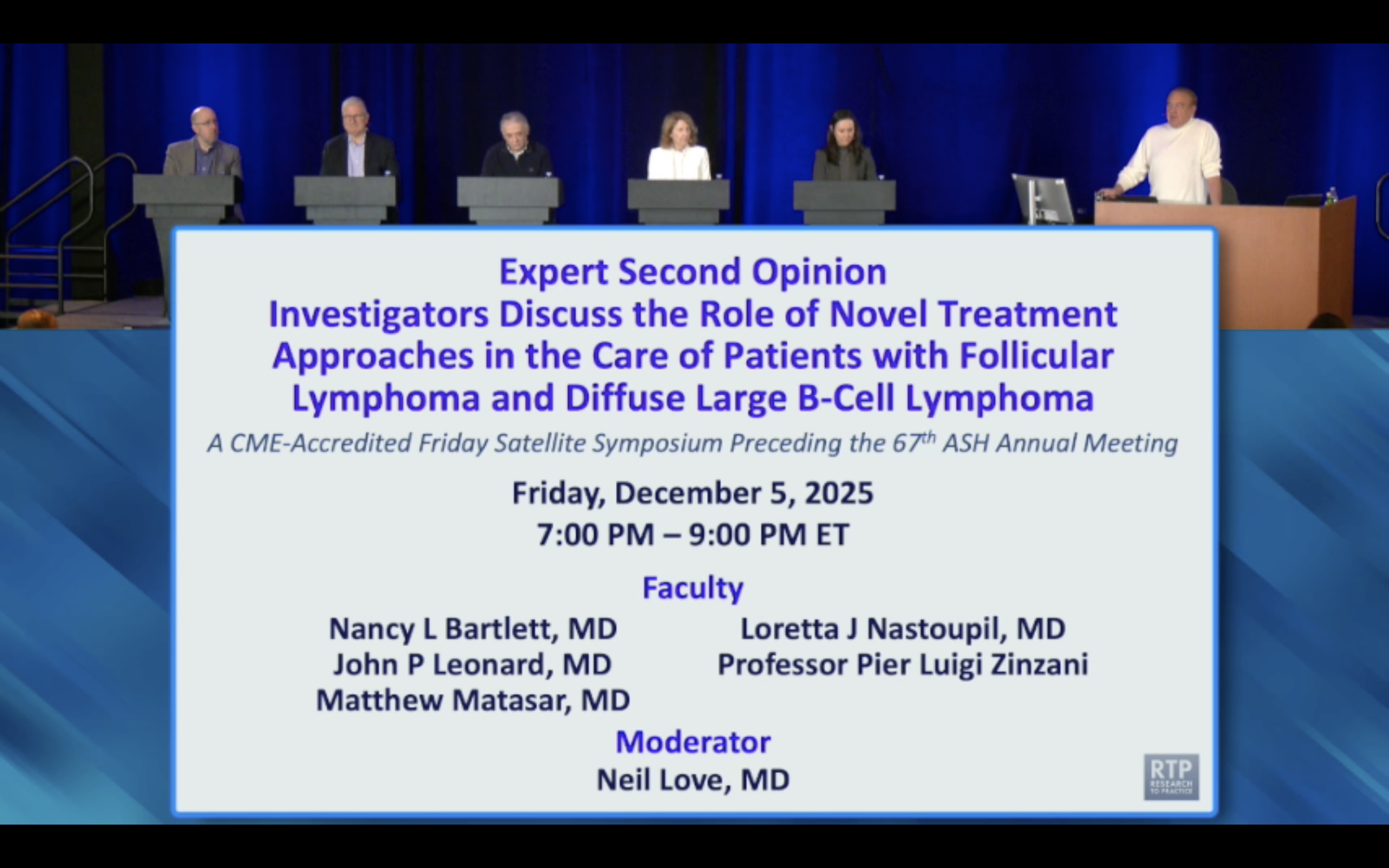
New BiTEs like Survatamig are achieving high response rates (73-78%) in heavily pre-treated ALL patients, including those who have already relapsed after receiving blinatumomab or CAR-T cell therapy. This indicates that resistance to one CD19-targeting agent does not preclude a deep response to another with a different molecular design.
With highly effective treatments like CAR-T and bispecifics moving into earlier lines of therapy for multiple myeloma, the clinical focus must evolve. While efficacy benchmarks have been met, the next advancement requires vigilant attention to safety, particularly infection risks and other side effects of new paradigms.
Clinicians should not be deterred from using CD19 CAR T-cell therapy in patients who have previously received other CD19-targeting agents like tafasitamab. Preclinical and retrospective clinical data suggest prior exposure does not impair CAR T efficacy, and therefore re-testing for CD19 expression is unnecessary.

A key clinical concern with CD19-directed therapies is antigen loss, which could prevent future CAR T-cell treatments. Data from the INMIND trial alleviates this fear, showing that 23 of 24 post-treatment lymphoma samples retained CD19 expression, suggesting tofacitimab does not preclude subsequent CAR-T therapy.
The first successful CAR T-cells targeted CD19, a protein on leukemia cells but also on healthy B-cells. The therapy worked because humans can live without B-cells. This "tolerable collateral damage" was serendipitous and highlights the primary challenge for other cancers: finding targets that won't cause fatal damage to healthy organs.

When choosing between BCMA-directed therapies, using CAR-T therapy first may be strategically advantageous. Early evidence suggests continuous T-cell engager (bispecific) therapy may exert more selective pressure, leading to a higher risk of BCMA target loss through mutation or deletion compared to one-time CAR-T infusions.

Bi-specific T-cell engagers (BiTEs) are highly immunogenic because the mechanism activating T-cells to kill cancer also primes them to mount an immune response against the drug itself. This 'collateral effect' is an inherent design challenge for this drug class.
