Get your free personalized podcast brief
We scan new podcasts and send you the top 5 insights daily.
A savvy marketing tactic involves running paid ads with the goal of acquiring members for a Facebook Group, rather than sending traffic directly to a website. This builds a concentrated community of highly-engaged fans, leading to more successful product launches and higher lifetime value.

Related Insights
Before manufacturing a large batch of a product, validate demand by running inexpensive Meta ads to a small audience. This 'fire a bullet before you fire a cannonball' approach lets you gauge real customer interest by tracking clicks, proving the concept works before making a large financial commitment.

Use Facebook or LinkedIn ads to target decision-makers in a specific city and industry, inviting them to an exclusive, curated dinner. This "high school party" concept positions you as a thought leader and gives you a captive audience for a low all-in cost, generating high-quality leads.

Stop spending money to test ads. Instead, publish a high volume of organic social content and identify what naturally gains traction. Then, convert only those proven, high-performing pieces into paid ads. This model dramatically lowers customer acquisition costs by ensuring ad spend only scales winners.
A successful launch doesn't require webinars or video sales letters. Entrepreneur Devin built a major launch using only an engaged Facebook community, a waitlist offering special perks, and an email marketing campaign. Deep community engagement can outperform complex, high-production funnels.

Don't guess what ads will work. Monitor organic social media for posts that get disproportionately high engagement. These posts have already proven resonance with your audience. Turn these validated content pieces directly into paid ads for a higher probability of success and better ROI.

In its early days, Ninety's entire paid acquisition budget was a mere $500/month on Facebook. This minimal spend was highly effective because it supplemented a primary strategy of deep engagement within the EOS coaching and entrepreneurial communities, which drove most of the growth.

Against typical advice, Dad Gang spent its initial ad budget boosting Instagram posts for "profile visits," not website clicks. This built a large, engaged community that was ready to buy when products dropped, proving the value of prioritizing audience growth over immediate sales for community-driven brands.
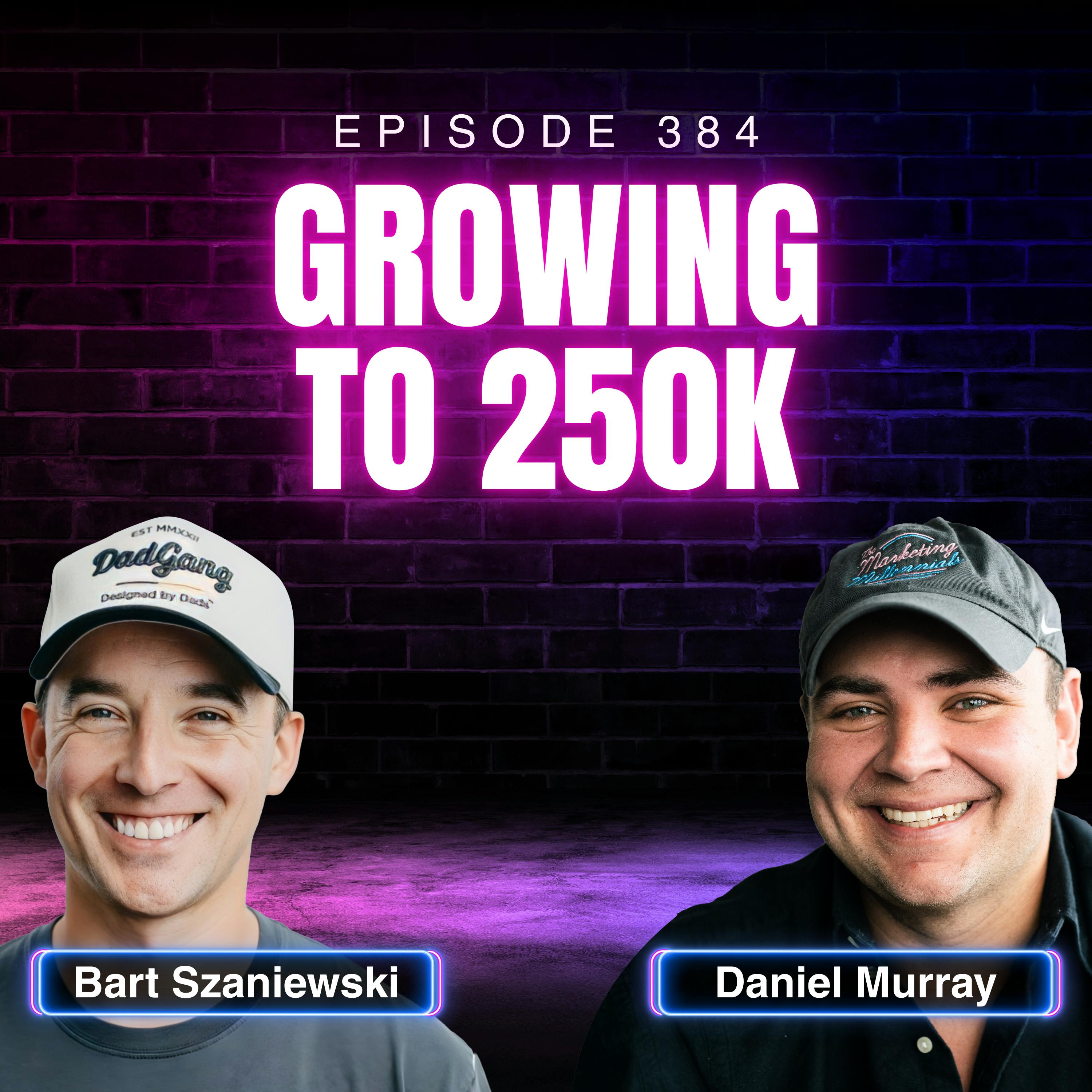
Dad Gang uses its 11,000-person private Facebook group to bypass social media algorithms. The group acts as a direct line to engaged customers for gathering feedback on new hat designs, fostering co-ownership, and granting exclusive early access to launches, ensuring new products are validated before release.
The highest-reaching organic social content has already been validated by algorithms and audiences for relevance. Taking these proven posts, slightly tweaking them for a call-to-action, and running them as paid ads yields far better results than creative developed in a vacuum for A/B testing.
Counterintuitively, dedicating budget to campaigns optimized for engagements, follows, and shares can be a powerful brand-building tool. This approach reaches more people less expensively than conversion campaigns, building an audience and 'searing memories' that lead to future demand, complementing direct response efforts.
