Get your free personalized podcast brief
We scan new podcasts and send you the top 5 insights daily.
Despite the excellent prognosis associated with a negative post-operative MRD test, oncologists are not yet comfortable omitting adjuvant chemotherapy for younger, high-risk stage II colon cancer patients. The current data is not considered sufficient to justify de-escalation based on a negative ctDNA result alone outside of a clinical trial setting.

Related Insights
Despite emerging trial data, clinicians are not yet ready to change therapy based on ctDNA positivity alone. Key concerns cited include the absence of a proven survival benefit from early intervention, the potential to use future treatment lines prematurely, and overall feasibility. The consensus is that while promising, the technology is not yet ready for routine clinical decision-making.

While the DYNAMIC-2 trial confirmed a ctDNA-guided approach is non-inferior for Stage II colon cancer and reduces chemotherapy use, the DYNAMIC-3 trial in Stage III patients failed to prove non-inferiority for de-escalation or show benefit for escalation. This highlights a critical, stage-dependent limitation in using current MRD assays.

The practice-changing DYNAMIC trial showed that a ctDNA-guided strategy for stage II colorectal cancer reduces adjuvant chemotherapy use by 50%. Despite this significant de-escalation of treatment, patient outcomes and survival rates were identical to the standard-of-care approach.

Despite the success of ctDNA-guided de-escalation in Stage II disease, the DYNAMIC-3 trial in Stage III patients showed that ctDNA-negative patients had worse outcomes with de-escalated therapy. This serves as a critical warning against this de-escalation strategy in higher-risk patients for now.
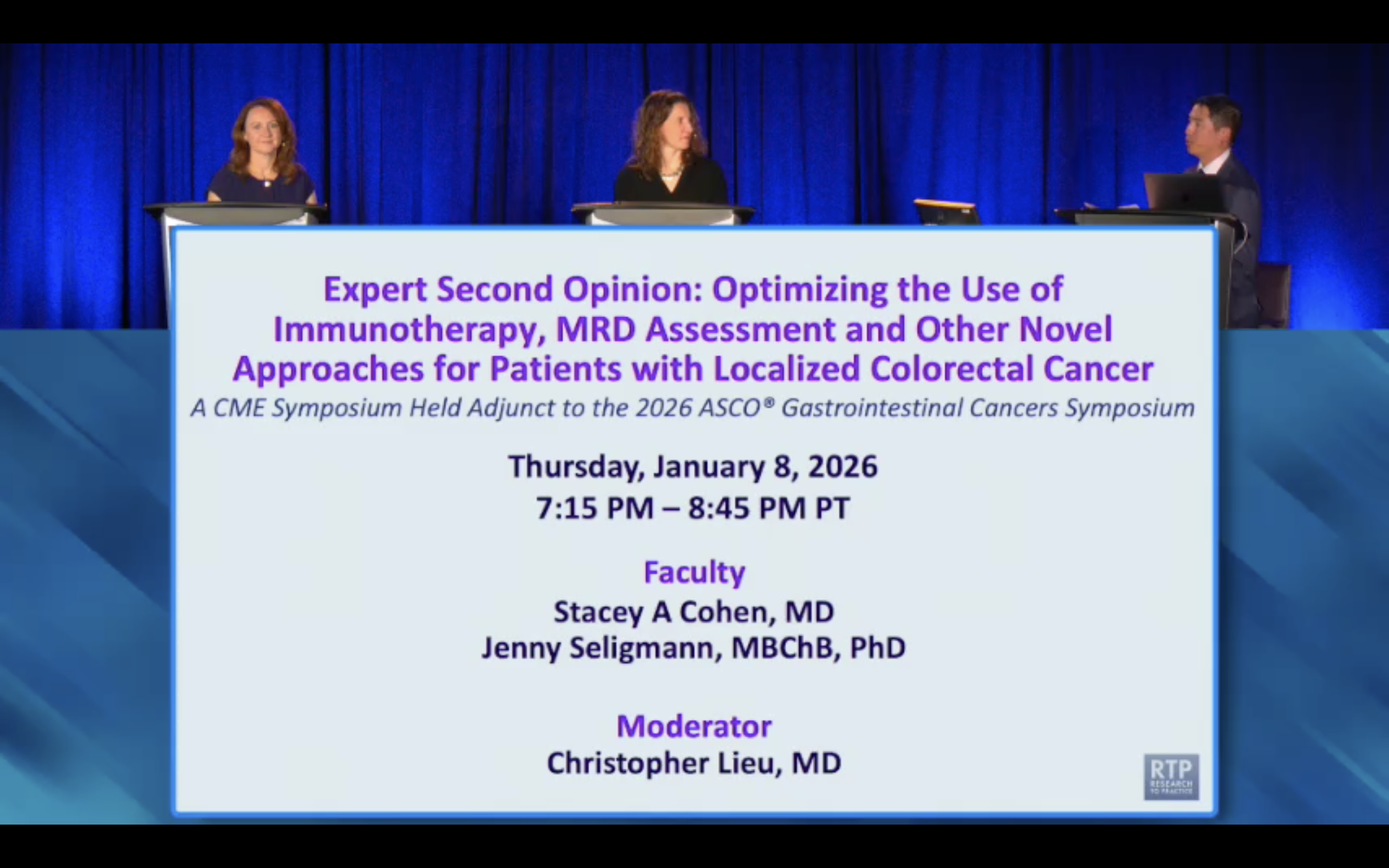
Oncologists are more comfortable using a positive ctDNA test to escalate care (e.g., recommend chemo for a low-risk Stage II patient). However, they are more hesitant to use a negative test to de-escalate or withhold standard chemo for higher-risk patients, pending more definitive trial data.
Clinical trial data provides a clear directive for using MRD testing. The DYNAMIC study showed that for stage 2 colon cancer, a ctDNA-guided approach halved chemotherapy use with identical outcomes. In contrast, the DYNAMIC-3 study found that de-escalating chemo for high-risk stage 3 patients based on a negative ctDNA result led to worse outcomes.

A critical warning for clinicians: data showing that ctDNA-negative patients can skip *adjuvant* therapy (InVigor011) should not be extrapolated to the *neoadjuvant* setting. Stopping the post-operative portion of a perioperative EV-Pembro regimen based on a negative ctDNA result is unsupported by data and risks under-treating patients.
Many deaths from colon cancer occur in patients with Stage II disease not offered adjuvant therapy due to a lack of traditional risk factors. Post-surgical ctDNA testing can identify a ~10% subset with minimal residual disease who are at high risk of recurrence and would benefit from chemotherapy.

Observational data from the BESPOKE study showed that the survival benefit from adjuvant chemotherapy was only seen in patients who tested positive for ctDNA post-surgery. In contrast, ctDNA-negative patients had overlapping survival curves whether they received chemotherapy or not, questioning its utility for that group.
While a positive ctDNA test clearly signals the need for adjuvant therapy, a negative result is less actionable for deciding initial treatment. The key prognostic value comes from being *serially* undetectable over time, information that is not available when the immediate post-surgery treatment decision must be made.
