Get your free personalized podcast brief
We scan new podcasts and send you the top 5 insights daily.
Firefly Aerospace is deploying NVIDIA AI chips on its lunar missions to process imagery and sensor data on-orbit. This "edge computing" model for space sends back only valuable insights, not raw data, overcoming the massive transmission bottleneck and creating a new commercial service for space-based analytics.

Related Insights
Projections based on SpaceX's launch cost reductions indicate that deploying AI data centers in space will become as economical as building them on Earth by 2035. This transforms a science fiction concept into a near-term business reality, driven by advantages like superior cooling and unlimited solar power.

The shift to a moon base isn't just about faster space colonization. It's a strategic move to build massive AI and quantum computing data centers off-planet. This bypasses terrestrial energy regulations and solves the immense cooling requirements for these systems, positioning SpaceX to dominate the AI landscape.

The two largest physical costs for AI data centers—power and cooling—are essentially free and unlimited in space. A satellite can receive constant, intense solar power without needing batteries and use the near-absolute zero of space for cost-free cooling. This fundamentally changes the economic and physical limits of large-scale computation.

The expansion of humanity to the Moon and Mars, using robotics for base-building and mining, will necessitate vast, local computing resources. It is more efficient to process data in space than to transmit it to Earth, creating an inevitable new frontier for data infrastructure.

The merger combines SpaceX's rocketry with XAI's AI development. The official rationale is to build cost-effective, environmentally friendly data centers in space to meet the massive compute demands of future AI, a vision that leverages SpaceX's continually falling launch costs to make space-based supercomputing feasible.

The primary advantage of orbital data centers isn't cost, but speed to market. Building on Earth involves years of real estate, permitting, and power grid challenges. The space-based model can turn manufactured chips into operational compute within weeks by treating deployment as an industrial manufacturing and launch problem.

The merger leverages SpaceX's heavy launch capabilities to deploy space-based data centers for xAI, capitalizing on abundant solar power and the vacuum of space for cooling. This creates a massive competitive advantage by eliminating terrestrial energy and real estate costs.
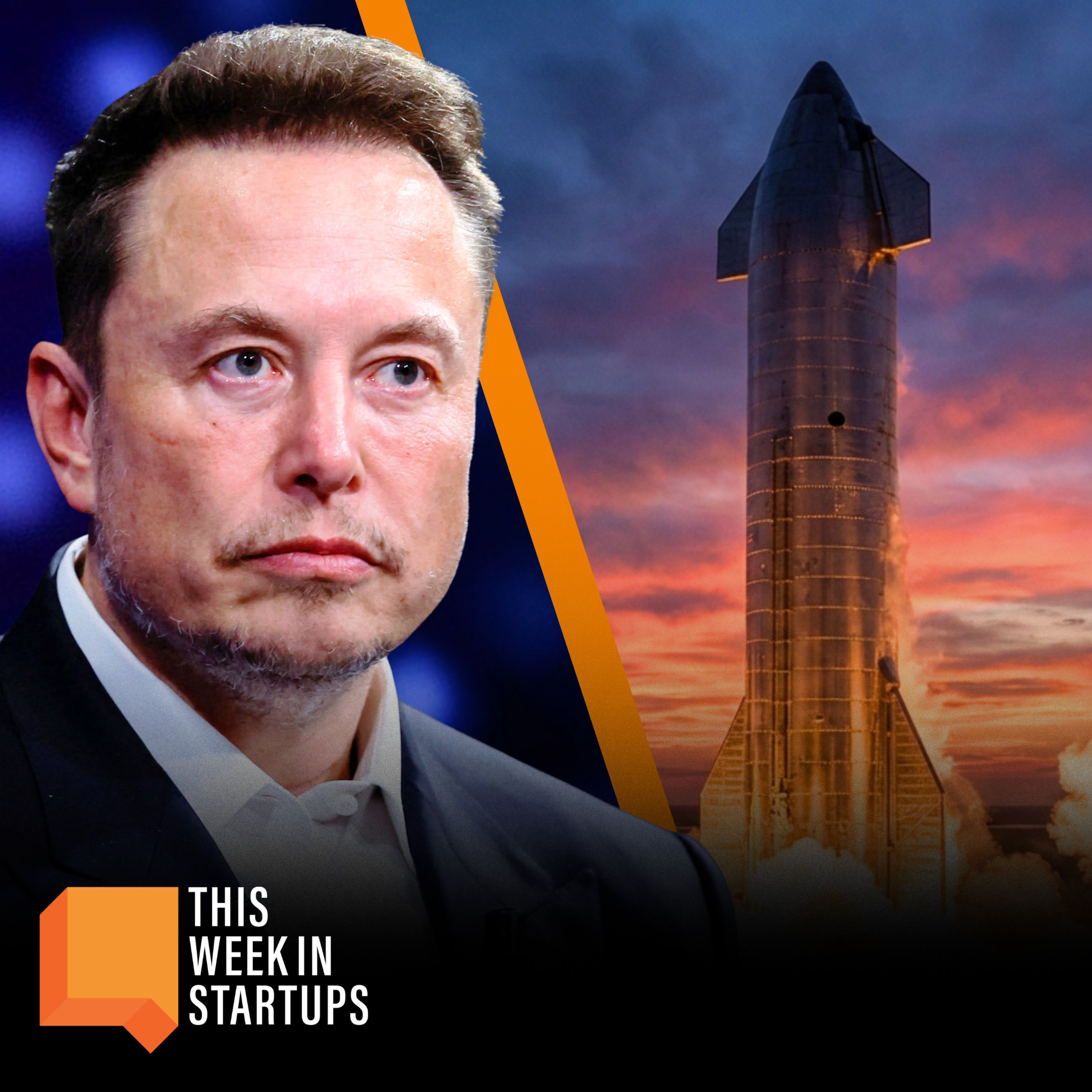
The exponential growth of AI is fundamentally constrained by Earth's land, water, and power. By moving data centers to space, companies can access near-limitless solar energy and physical area, making off-planet compute a necessary step to overcome terrestrial bottlenecks and continue scaling.

Leaders from Google, Nvidia, and SpaceX are proposing a shift of computational infrastructure to space. Google's Project Suncatcher aims to harness immense solar power for ML, while Elon Musk suggests lunar craters are ideal for quantum computing. Space is becoming the next frontier for core tech infrastructure, not just exploration.

The astronomical power and cooling needs of AI are pushing major players like SpaceX, Amazon, and Google toward space-based data centers. These leverage constant, intense solar power and near-absolute zero temperatures for cooling, solving the biggest physical limitations of scaling AI on Earth.