Get your free personalized podcast brief
We scan new podcasts and send you the top 5 insights daily.
The model that powered ChatGPT was not new; its world-changing potential was unlocked by a simple application experiment (RLHF for instruction following). This proves massive opportunities are often hidden in plain sight, requiring not a breakthrough invention but the willingness to 'do the damned experiment.'
Related Insights
Wet lab experiments are slow and expensive, forcing scientists to pursue safer, incremental hypotheses. AI models can computationally test riskier, 'home run' ideas before committing lab resources. This de-risking makes scientists less hesitant to explore breakthrough concepts that could accelerate the field.

The history of AI, such as the 2012 AlexNet breakthrough, demonstrates that scaling compute and data on simpler, older algorithms often yields greater advances than designing intricate new ones. This "bitter lesson" suggests prioritizing scalability over algorithmic complexity for future progress.

When OpenAI started, the AI research community measured progress via peer-reviewed papers. OpenAI's contrarian move was to pour millions into GPUs and large-scale engineering aimed at tangible results, a strategy criticized by academics but which ultimately led to their breakthrough.

The core technology behind ChatGPT was available to developers for two years via the GPT-3 API. Its explosive adoption wasn't due to a sudden technical leap but to a simple, accessible UI, proving that distribution and user experience can be as disruptive as the underlying invention.
The PC revolution was sparked by thousands of hobbyists experimenting with cheap microprocessors in garages. True innovation waves are distributed and permissionless. Today's AI, dominated by expensive, proprietary models from large incumbents, may stifle this crucial experimentation phase, limiting its revolutionary potential.

The initial magic of GitHub's Copilot wasn't its accuracy but its profound understanding of natural language. Early versions had a code completion acceptance rate of only 20%, yet the moments it correctly interpreted human intent were so powerful they signaled a fundamental technology shift.

Luckey's invention method involves researching historical concepts discarded because enabling technology was inadequate. With modern advancements, these old ideas become powerful breakthroughs. The Oculus Rift's success stemmed from applying modern GPUs to a 1980s NASA technique that was previously too computationally expensive.
![Palmer Luckey - Inventing the Future of Defense - [Invest Like the Best, CLASSICS] thumbnail](https://megaphone.imgix.net/podcasts/f7c9aa8e-cb8d-11f0-828e-0b281809c10a/image/cc07f91ec47f95abbde771a4956b37b7.jpg?ixlib=rails-4.3.1&max-w=3000&max-h=3000&fit=crop&auto=format,compress)
AI development has evolved to where models can be directed using human-like language. Instead of complex prompt engineering or fine-tuning, developers can provide instructions, documentation, and context in plain English to guide the AI's behavior, democratizing access to sophisticated outcomes.

Current LLMs fail at science because they lack the ability to iterate. True scientific inquiry is a loop: form a hypothesis, conduct an experiment, analyze the result (even if incorrect), and refine. AI needs this same iterative capability with the real world to make genuine discoveries.

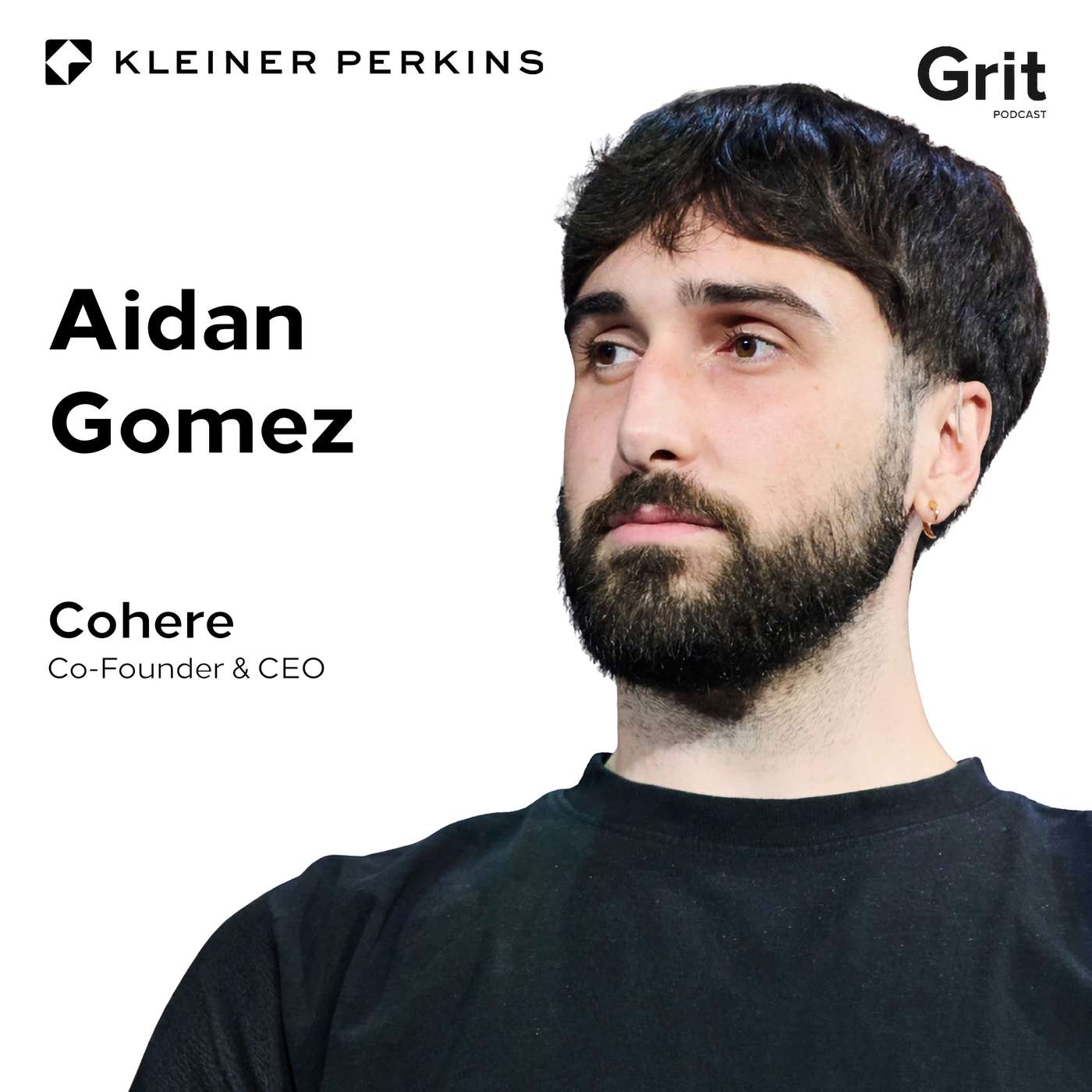
Cohere's CEO believes if Google had hidden the Transformer paper, another team would have created it within 18 months. Key ideas were already circulating in the research community, making the discovery a matter of synthesis whose time had come, rather than a singular stroke of genius.