Get your free personalized podcast brief
We scan new podcasts and send you the top 5 insights daily.
The Axios NPM package hack illustrates the extreme risk in modern software development. Despite the malicious code being detected by security firm Socket in just six minutes, that was ample time for automated systems to pull and install the compromised version, infecting countless projects due to the package's massive dependency graph.

Related Insights
The attack on the widely used LightLLM package demonstrates a major software supply chain vulnerability. Malicious code inserted into a routine update silently stole credentials from countless AI tools, a risk that will be amplified by autonomous AI agents.

A key threshold in AI-driven hacking has been crossed. Models can now autonomously chain multiple, distinct vulnerabilities together to execute complex, multi-step attacks—a capability they lacked just months ago. This significantly increases their potential as offensive cyber weapons.

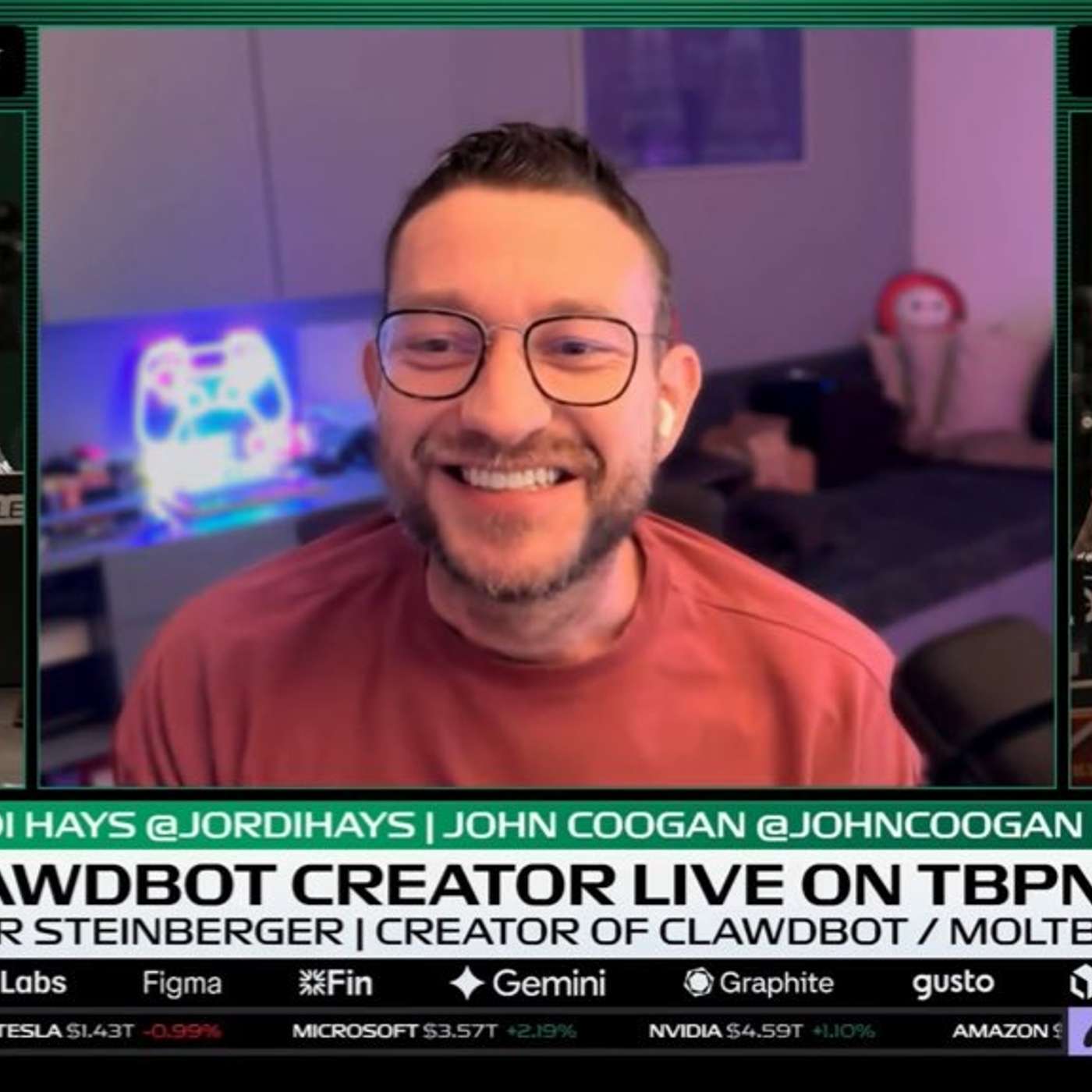
A personal project built for trusted environments can become a major security liability when it goes viral. Moltbot's creator now faces a barrage of security reports for unintended uses, like public-facing web apps. This highlights a critical, often overlooked challenge for solo open-source maintainers.
Unlike human attackers, AI can ingest a company's entire API surface to find and exploit combinations of access patterns that individual, siloed development teams would never notice. This makes it a powerful tool for discovering hidden security holes that arise from a lack of cross-team coordination.

The next wave of cyberattacks involves malware that is just a prompt dropped onto a machine. This prompt autonomously interacts with an LLM to execute an attack, creating a unique fingerprint each time it runs. This makes it incredibly difficult to detect, as it never needs to "phone home" to a central server.

As powerful open-source AI models from China (like Kimi) are adopted globally for coding, a new threat emerges. It's possible to embed secret prompts that inject malicious or corrupted code into software at a massive scale. As AI writes more code, human oversight becomes impossible, creating a significant vulnerability.

A former OpenAI security expert argues that even if AI makes codebases more secure, hacking won't become harder. Attackers exploit the entire system—runtime behavior, configurations, authentication—not just static code. Looking only at code is like seeing a dinosaur's bones; you miss the muscles, feathers, and behavior that define the real-world attack surface.

The sophistication of attacks like the Axios NPM compromise necessitates a shift to AI-driven defense. Tools like Cognition's Devin Review are reportedly catching malware before public disclosure, indicating that organizations must adopt AI security tools to counter the rising threat of automated, AI-powered attacks.
AI tools drastically accelerate an attacker's ability to find weaknesses, breach systems, and steal data. The attack window has shrunk from days to as little as 23 minutes, making traditional, human-led response times obsolete and demanding automated, near-instantaneous defense.

This sophisticated threat involves an attacker establishing a benign external resource that an AI agent learns to trust. Later, the attacker replaces the resource's content with malicious instructions, poisoning the agent through a source it has already approved and cached.