Get your free personalized podcast brief
We scan new podcasts and send you the top 5 insights daily.
The "console war" is over not because one side won, but because the key players' strategies have diverged. Microsoft's Xbox is now console-agnostic and platform-focused, while Sony's PlayStation remains centered on exclusive hardware, meaning they no longer compete for the same territory.

Related Insights
While some competitors prioritize winning over ROI, Nadella cautions that "at some point that party ends." In major platform shifts like AI, a long-term orientation is crucial. He cites Microsoft's massive OpenAI investment, committed *before* ChatGPT's success, as proof of a long-term strategy paying off.

Initially, Microsoft's go-to-market strategy was not to displace competitors but to displace customers' own internal development teams. They framed their software's price as a fraction of a company's fixed in-house engineering budget, a powerful value proposition that defined a new category of B2B sales.

Satya Nadella redefines the competitive landscape for gaming, stating that the primary battle is for attention against platforms like TikTok, not just against other gaming companies. This perspective forces a strategic shift towards creating new forms of interactive media to compete for user engagement time.
Unlike competitors focused on vertical integration, Microsoft's "hyperscaler" strategy prioritizes supporting a long tail of diverse customers and models. This makes a hyper-optimized in-house chip less urgent. Furthermore, their IP rights to OpenAI's hardware efforts provide them with access to cutting-edge designs without bearing all the development risk.
While Silicon Valley idolizes new companies, the most impressive feat is sustained relevance. A company like Microsoft surviving and re-capturing dominance across multiple technological generations is statistically harder and more remarkable than a single startup's initial success.
While many investors hunt for pure monopolies, most tech markets naturally support a handful of large players in an oligopoly structure. Markets like payments (Stripe, Adyen, PayPal) demonstrate that multiple large, successful companies can coexist, a crucial distinction for market analysis and investment strategy.
While network effects drive consolidation in tech, a powerful counter-force prevents monopolies. Large enterprise customers intentionally support multiple major players (e.g., AWS, GCP, Azure) to avoid vendor lock-in and maintain negotiating power, naturally creating a market with two to three leaders.

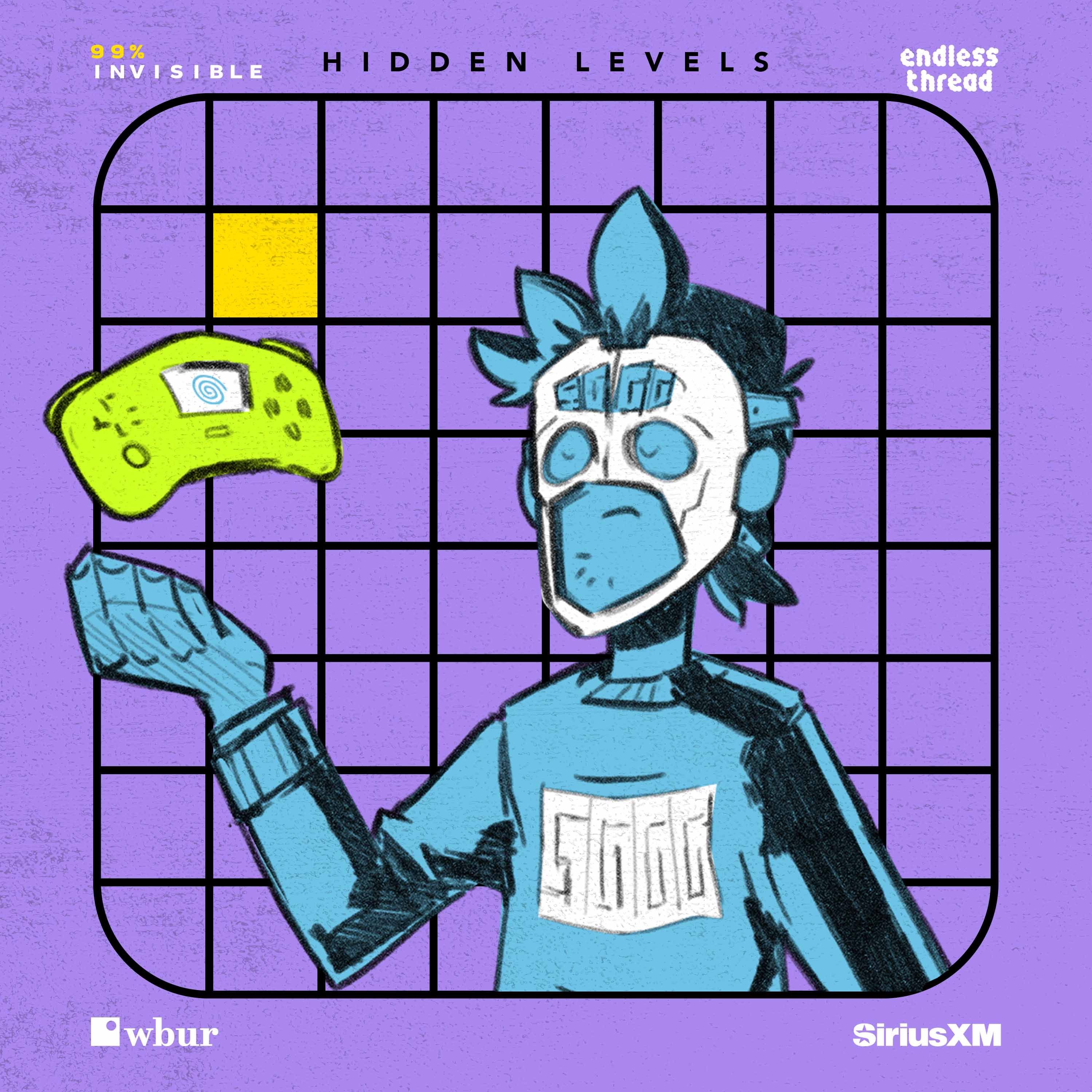
During its struggle in the "console wars," Sega approved *Sega Gaga*, a game by developer Tez Okano that was a meta-commentary on the company's failures. This act of self-parody showcased an unusual corporate culture willing to embrace creative risk and self-criticism as a last-ditch effort to innovate.
Instead of competing for market share, Jensen Huang focuses on creating entirely new markets where there are initially "no customers." This "zero-billion-dollar market" strategy ensures there are also no competitors, allowing NVIDIA to build a dominant position from scratch.
Sony neutralized Sega's technologically superior Dreamcast by pre-emptively marketing the upcoming PlayStation 2. They used evocative but abstract concepts like the "Emotion Engine" to convince consumers to wait, demonstrating how a powerful marketing narrative can defeat a superior product already on the market.