Get your free personalized podcast brief
We scan new podcasts and send you the top 5 insights daily.
Andromeda's strategy for FDA approval involves submitting a series of small, incremental software updates rather than one large, high-stakes submission for full autonomy. This makes each review more manageable for regulators and builds regulatory comfort over time.

Related Insights
To avoid failure, launch AI agents with high human control and low agency, such as suggesting actions to an operator. As the agent proves reliable and you collect performance data, you can gradually increase its autonomy. This phased approach minimizes risk and builds user trust.

Unlike general enterprise AI where a wrong answer is an inconvenience, errors in healthcare AI can be fatal. This high-stakes environment forces companies like Abridge to adopt extremely rigorous offline evaluation and phased, progressive rollouts, a far more cautious approach than typical "move fast" software development.
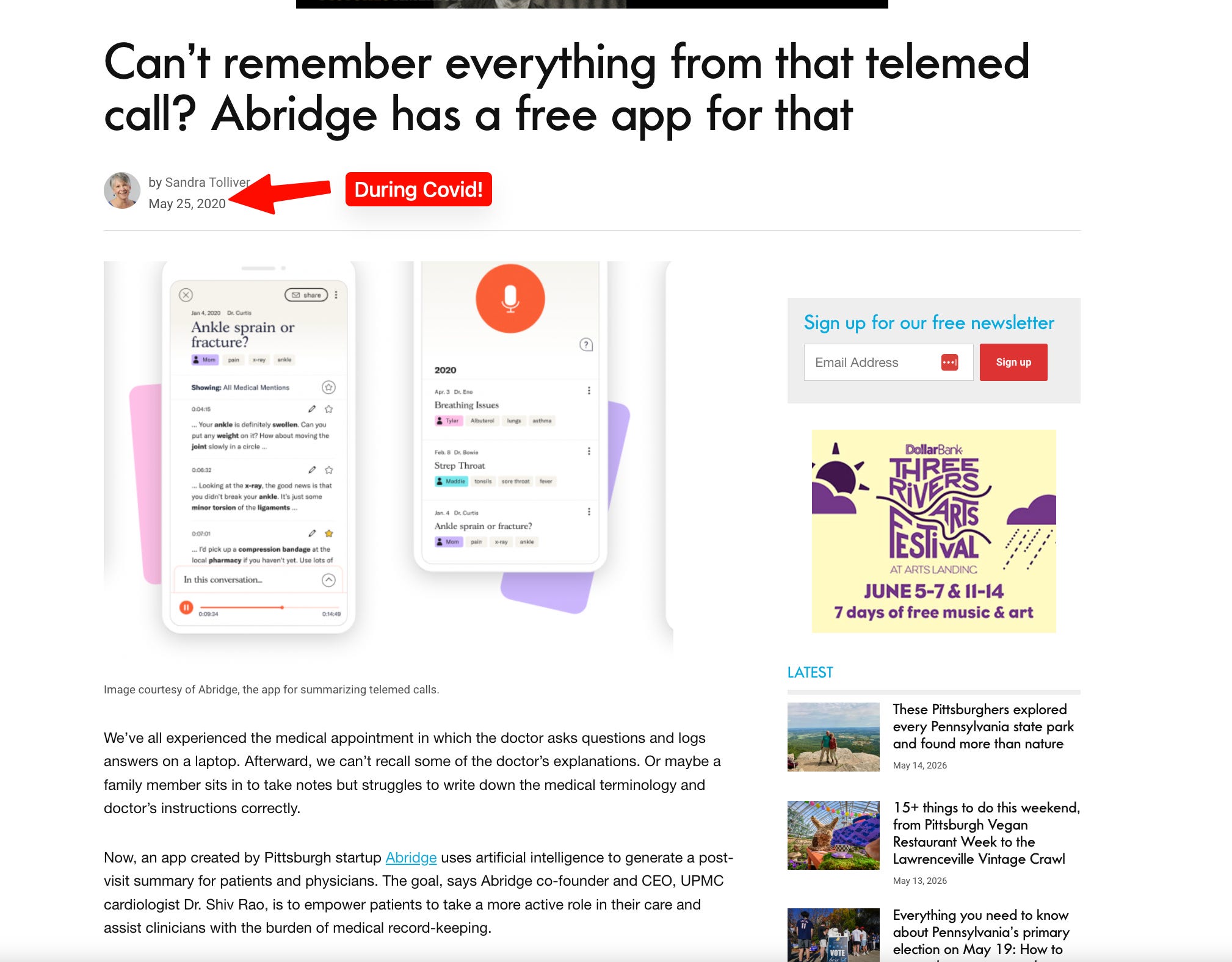
Waymo alternates major upgrades between hardware and software. Its 6th generation system introduces a custom vehicle and a cheaper, simpler sensor stack, but runs largely the same software as the 5th generation. This demonstrates software generalizability and de-risks the launch of new hardware.

By releasing new software features weekly based on direct feedback from surgeons in the clinic, Andromeda has compressed the typical multi-year MedTech development cycle into weeks. This rapid, customer-centric improvement loop is shocking to the traditionally slow-moving medical industry.
Avoid deploying AI directly into a fully autonomous role for critical applications. Instead, begin with a human-in-the-loop, advisory function. Only after the system has proven its reliability in a real-world environment should its autonomy be gradually increased, moving from supervised to unsupervised operation.

Enterprises with existing customers cannot afford the "Waymo" approach of building a fully autonomous system in secret before launch. Instead, they should follow the "Tesla" model: iteratively automate segments of their products, keeping humans in the loop while gradually building towards greater autonomy.

Waymo decouples major hardware and software upgrades. Its 6th generation platform introduces a new custom vehicle and a cheaper, simpler sensor stack, but runs the same proven 5th generation software. This "tick-tock" approach allows them to validate a new hardware platform while relying on a mature, generalizable software stack.

Instead of a binary human-in-the-loop decision, enterprises should use an "autonomy budget" for agents. Actions are classified by risk (e.g., irreversibility, financial impact) to determine the level of freedom, creating a spectrum from full autonomy to required human approval, avoiding agents becoming expensive suggestion boxes.

MedTech AI companies can speed up regulatory approval by building a trusted, real-time post-market surveillance system. This shifts the burden of proof from pre-market studies to continuous real-world evidence, giving regulators the confidence to approve innovations faster, turning them from blockers into partners.
Releasing models like GPT-4 isn't just about product development. It's a deliberate safety strategy to avoid the risk of deploying a powerful AGI with no real-world experience. Each release lets society and OpenAI adapt to unforeseen misuses, like medical spam, before the stakes get higher.
