Get your free personalized podcast brief
We scan new podcasts and send you the top 5 insights daily.
A-muto's CEO argues that shaving months off discovery isn't the real prize. The massive cost in drug development comes from late-stage clinical failures. By selecting highly disease-specific targets upfront, their platform aims to reduce the high attrition rate in clinical trials, which is the true driver of cost and delay.

Related Insights
AI modeling transforms drug development from a numbers game of screening millions of compounds to an engineering discipline. Researchers can model molecular systems upfront, understand key parameters, and design solutions for a specific problem, turning a costly screening process into a rapid, targeted design cycle.
Recursion's CEO outlines a two-pronged pipeline strategy. The first prong uses phenomics to uncover novel biological insights for new targets, like their FAP program. The second uses their AI-driven small molecule design platform to improve the therapeutic index for known but historically 'hard-to-drug' targets, like CDK7. This balanced portfolio approach de-risks development by leveraging different strengths of their end-to-end platform.
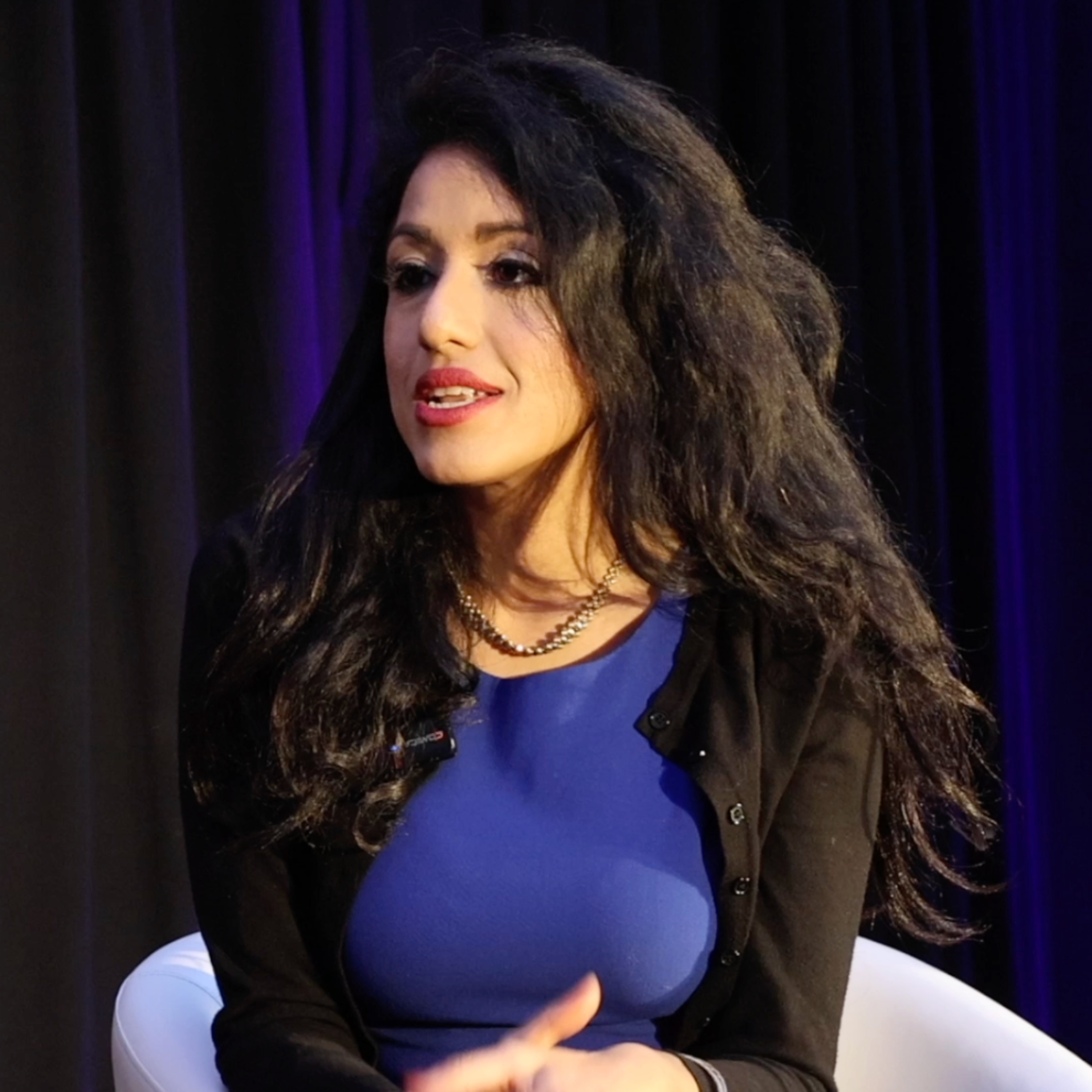
The company focuses on disease-specific 3D protein conformations, which exposes new binding sites (epitopes) not present on the same protein in healthy cells. This allows for highly selective drugs that avoid the toxicity common with targets defined by genetic sequence alone.
While AI can accelerate the ideation phase of drug discovery, the primary bottleneck remains the slow, expensive, and human-dependent clinical trial process. We are already "drowning in good ideas," so generating more with AI doesn't solve the fundamental constraint of testing them.

Biotech companies create more value by focusing on de-risking molecules for clinical success, not engineering them from scratch. Specialized platforms can create molecules faster and more reliably, allowing developers to focus their core competency on advancing de-risked assets through the pipeline.

A-muto suggests many drug programs fail due to toxicity from hitting the wrong epitope, not a flawed biological concept. By identifying and targeting a structural epitope unique to the diseased state of the same protein, these previously abandoned but promising therapies could be salvaged.
With over 5,000 oncology drugs in development and a 9-out-of-10 failure rate, the current model of running large, sequential clinical trials is not viable. New diagnostic platforms are essential to select drugs and patient populations more intelligently and much earlier in the process.

While most focus on AI for drug discovery, Recursion is building an AI stack for clinical development, where 70% of costs lie. By using real-world data to pinpoint patient locations and causal AI to predict responders, they are improving trial enrollment rates by 1.5x. This demonstrates a holistic, end-to-end AI strategy that addresses bottlenecks across the entire value chain, not just the initial stages.
The company intentionally makes its early research "harder in the short term" by using complex, long-term animal models. This counterintuitive strategy is designed to generate highly predictive data early, thereby reducing the massive financial risk and high failure rate of the later-stage clinical trials.
Titus believes a key area for AI's impact is in bringing a "design for manufacturing" approach to therapeutics. Currently, manufacturability is an afterthought. Integrating it early into the discovery process, using AI to predict toxicity and scalability, can prevent costly rework.