Get your free personalized podcast brief
We scan new podcasts and send you the top 5 insights daily.
Substack's CEO Chris Best is addressing low-quality AI content by focusing on transparency. The platform integrated Pangram's AI detector to combat "Clod Fishing"—the deceptive practice of passing off AI-generated text as authentic human work. The goal is to preserve the reader's expectation of a genuine human connection, not to ban AI tools altogether.

Related Insights
Creating reliable AI detectors is an endless arms race against ever-improving generative models, which often have detectors built into their training process (like GANs). A better approach is using algorithmic feeds to filter out low-quality "slop" content, regardless of its origin, based on user behavior.

Medium's CEO argues the true measure of success against spam is not the volume of "AI slop" received, but how little reaches end-users. The fight is won through sophisticated recommendation and filtering algorithms that protect the reader experience, rather than just blocking content at the source.
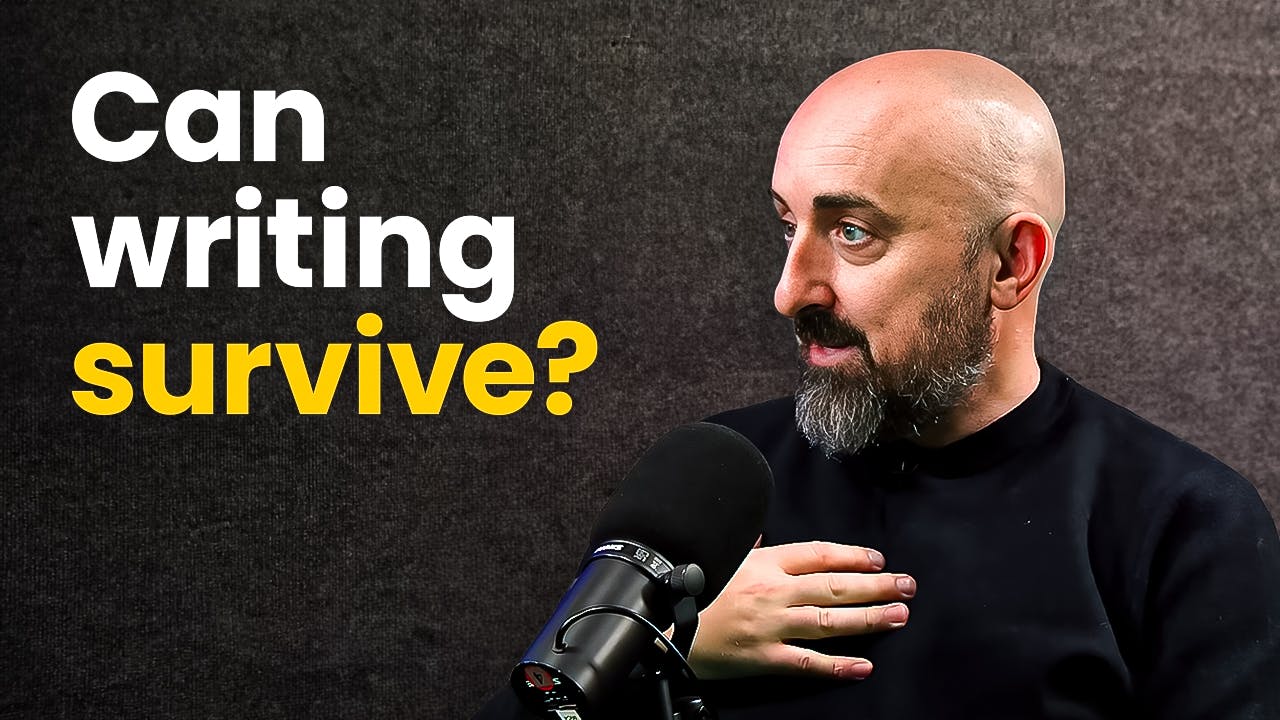
The CEO of Superhuman argues that the threshold for acceptable AI use in writing is situational. AI detection tools should be used not to enforce a universal ban, but to assess if the level of AI generation aligns with the context and the audience's expectations, much like calculator use varies by exam.

Pangram Labs' detector isn't hard-coded. It's a deep learning model trained on millions of examples. For each human text (e.g., a Yelp review), it sees an AI-generated equivalent, learning the subtle, often inarticulable, differences in word choice and structure that separate them.

For an AI detection tool, a low false-positive rate is more critical than a high detection rate. Pangram claims a 1-in-10,000 false positive rate, which is its key differentiator. This builds trust and avoids the fatal flaw of competitors: incorrectly flagging human work as AI-generated, which undermines the product's credibility.

VP of Growth Eoin Clancy identifies three signs of low-quality AI content: it offers no new "information gain," fails to match the brand's voice, and uses robotic tells like em dashes or formal words like "utilize."

As AI makes content creation ubiquitous, the internet is flooded with shallow, generic "AI slop." Consumers are adept at spotting it, with 59% saying it damages their trust in a brand. This creates a premium for human-crafted, authentic stories.

As AI-generated content becomes ubiquitous, a counter-movement is emerging where creators explicitly state their work is AI-free. This disclosure provides comfort to consumers who have had negative experiences with low-effort AI content. "Human-made" is becoming a valuable differentiator, creating a new premium for authenticity in the creator economy.
In the age of AI, 'slop' is not defined by typos or poor formatting, but by well-structured content that lacks a person's unique insight, critical thinking, and accountability. It's the absence of a real, defensible human author behind the words, a problem reviewers can now easily spot.

There is a growing business need for tools that detect AI-generated 'slop.' This goes beyond academia, with platforms like Quora paying for API access to maintain content quality. This creates a new market for 'external AI safety' focused on preserving authenticity on the internet.