Get your free personalized podcast brief
We scan new podcasts and send you the top 5 insights daily.
Nadella predicts the traditional, vertically integrated SaaS stack is being broken apart by AI. While underlying data and logic remain valuable, the UI is less so. SaaS vendors must expose their core components for agents to consume, creating new, usage-based business models beyond per-seat licenses.

Related Insights
As AI agents become primary software users, SaaS companies like Salesforce are building "headless" versions where the API is the UI. This fundamentally breaks the traditional B2B SaaS business model based on pricing per human user, forcing a shift towards consumption-based, agent-native pricing models.

The traditional SaaS model of bundling data, logic, and UI is being challenged. To stay relevant, SaaS companies must unbundle their core assets—like semantic models and business logic—so they can be consumed by AI agents, not just humans via a UI. This creates new agent-driven usage and business models.
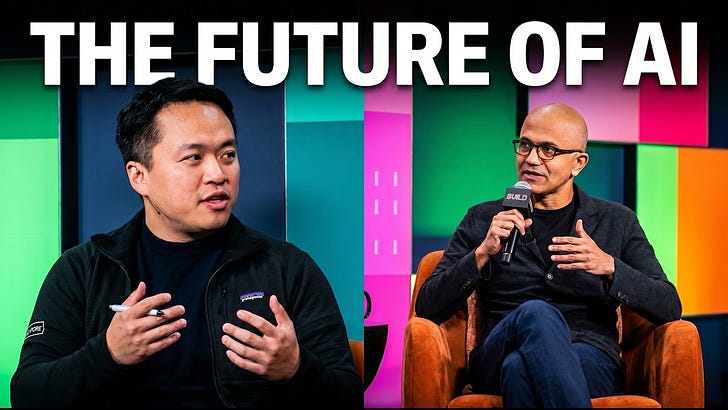
Satya Nadella suggests a fundamental shift in enterprise software monetization. As autonomous AI agents become prevalent, the value unit will move from the human user ("per seat") to the AI itself. "Agents are the new seats," signaling a future where companies pay for automated tasks and outcomes, not just software access for employees.

AI is becoming the new UI, allowing users to generate bespoke interfaces for specific workflows on the fly. This fundamentally threatens the core value proposition of many SaaS companies, which is essentially selling a complex UX built on a database. The entire ecosystem will need to adapt.

The dominant per-user-per-month SaaS business model is becoming obsolete for AI-native companies. The new standard is consumption or outcome-based pricing. Customers will pay for the specific task an AI completes or the value it generates, not for a seat license, fundamentally changing how software is sold.

The traditional per-seat SaaS model is becoming a "tax on productivity" in an agent-driven world. As companies buy agents to do work instead of software for humans, the model shifts. Sam Altman's comment that every company is now an API company reflects this move from user-based pricing to value-based, programmatic access.
As AI agents become the primary users of software, interacting via APIs instead of graphical interfaces, the traditional moat of a sticky UI disappears. SaaS companies like Salesforce are going "headless," betting that future defensibility lies in the underlying data layer, operational logic, and real-world execution capabilities.

In a world where AI agents perform tasks, the value of a SaaS product is no longer its user-friendly interface but the robustness of its APIs. The core differentiator becomes the proprietary business logic, security, and data governance embedded within the API layer.

Traditional SaaS platforms derive value from their UI over a database. AI's primary threat is its ability to create personalized UIs and automate workflows on top of any database, rendering expensive, one-size-fits-all SaaS interfaces obsolete. The software becomes a commoditized backend.

As AI agents perform more work and human headcount decreases, the traditional seat-based pricing model becomes obsolete. The value is no longer tied to human users. SaaS companies must transition to consumption-based models that charge for the automated work performed and value generated by AI.
