Get your free personalized podcast brief
We scan new podcasts and send you the top 5 insights daily.
AI prototyping allows product managers to build out every feature of an idea cheaply. This process of externalizing the full scope often reveals which features are unnecessary. This rapid iteration helps them 'detox' from initial over-scoping and arrive at the core value proposition before involving engineering.

Related Insights
Capable AI coding assistants allow PMs to build and test functional prototypes or "skills" in a single day. This changes the product development philosophy, prioritizing quick validation with users over creating detailed UI mockups and specifications upfront.

The traditional product management workflow (spec -> engineer build) is obsolete. The modern AI PM uses agentic tools to build, test, and iterate on the initial product, handing a working, validated prototype to engineering for productionalization.
![Building a Personal AI Model Map [AI Operators Bonus Episode] thumbnail](https://d3t3ozftmdmh3i.cloudfront.net/staging/podcast_uploaded_nologo/41472609/41472609-1752234663609-8665756a468e5.jpg)
The product manager's role is evolving beyond traditional spec documents and static screenshots. With AI coding assistants, PMs can now create functioning prototypes themselves. This allows for more dynamic, hands-on feedback from stakeholders and users much earlier in the development cycle.

The primary beneficiaries of AI prototyping are not developers, but Product Managers. These tools give PMs a 'get-out-of-no-developers' card, allowing them to independently create functional prototypes for user testing and ideation without waiting for engineering resources.

In AI, low prototyping costs and customer uncertainty make the traditional research-first PM model obsolete. The new approach is to build a prototype quickly, show it to customers to discover possibilities, and then iterate based on their reactions, effectively building the solution before the problem is fully defined.

AI tools like Vibe Coding remove the traditional dependency on design and engineering for prototyping. Product managers without coding expertise can now build and test functional prototypes with customers in hours, drastically accelerating problem-solution fit validation before committing development resources.

Historically, resource-intensive prototyping (requiring designers and tools like Figma) was reserved for major features. AI tools reduce prototype creation time to minutes, allowing PMs to de-risk even minor features with user testing and solution discovery, improving the entire product's success rate.
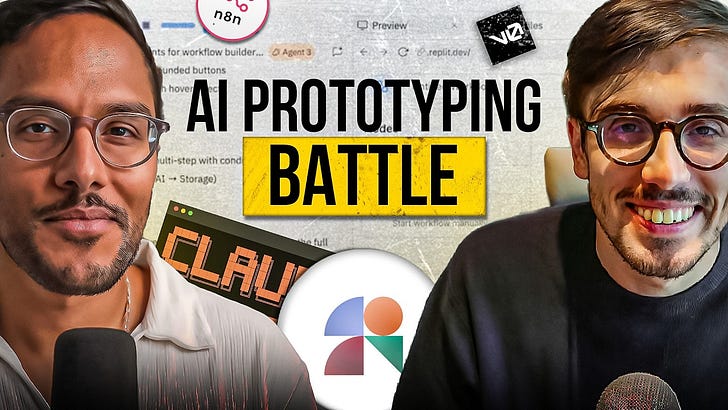
The product management workflow is evolving from documentation to creation. With AI tools lowering the barrier to build, PMs can now develop and share functional prototypes to communicate ideas and test assumptions, a much higher-fidelity approach than traditional written documents.
The product development cycle has shifted. Instead of writing a spec, Product Managers use AI coding tools like Bolt.new to build the initial working version of a product. They then hand this functional prototype to engineers for hardening, security, and scaling, dramatically accelerating the process.
Traditionally, implementation was expensive, so teams de-risked ideas with docs. With AI, building is cheap, so teams now create numerous prototypes first and then curate them. The process is now "build then decide," not "decide then build," with curation and taste becoming the most expensive part.