Get your free personalized podcast brief
We scan new podcasts and send you the top 5 insights daily.
While AI assistants accelerate code writing, they create a downstream problem: engineers are now shipping 50x more code for the same feature. This massive volume overwhelms traditional continuous integration (CI) systems, breaking testing and merging pipelines and creating a critical new bottleneck in software development.

Related Insights
While AI accelerates code generation, it creates significant new chokepoints. The high volume of AI-generated code leads to "pull request fatigue," requiring more human reviewers per change. It also overwhelms automated testing systems, which must run full cycles for every minor AI-driven adjustment, offsetting initial productivity gains.

As AI agents and copilots accelerate code creation from numerous sources, the primary challenge for engineering teams becomes validating this massive influx of pull requests. This makes the code review process the new critical choke point in the software development lifecycle.

As AI generates vast quantities of code, the primary engineering challenge shifts from production to quality assurance. The new bottleneck is the limited human attention available to review, understand, and manage the quality of the codebase, leading to increased fragility and "slop" in production.
The ease of creating PRs with AI agents shifts the developer bottleneck from code generation to code validation. The new challenge is not writing the code, but gaining the confidence to merge it, elevating the importance of review, testing, and CI/CD pipelines.
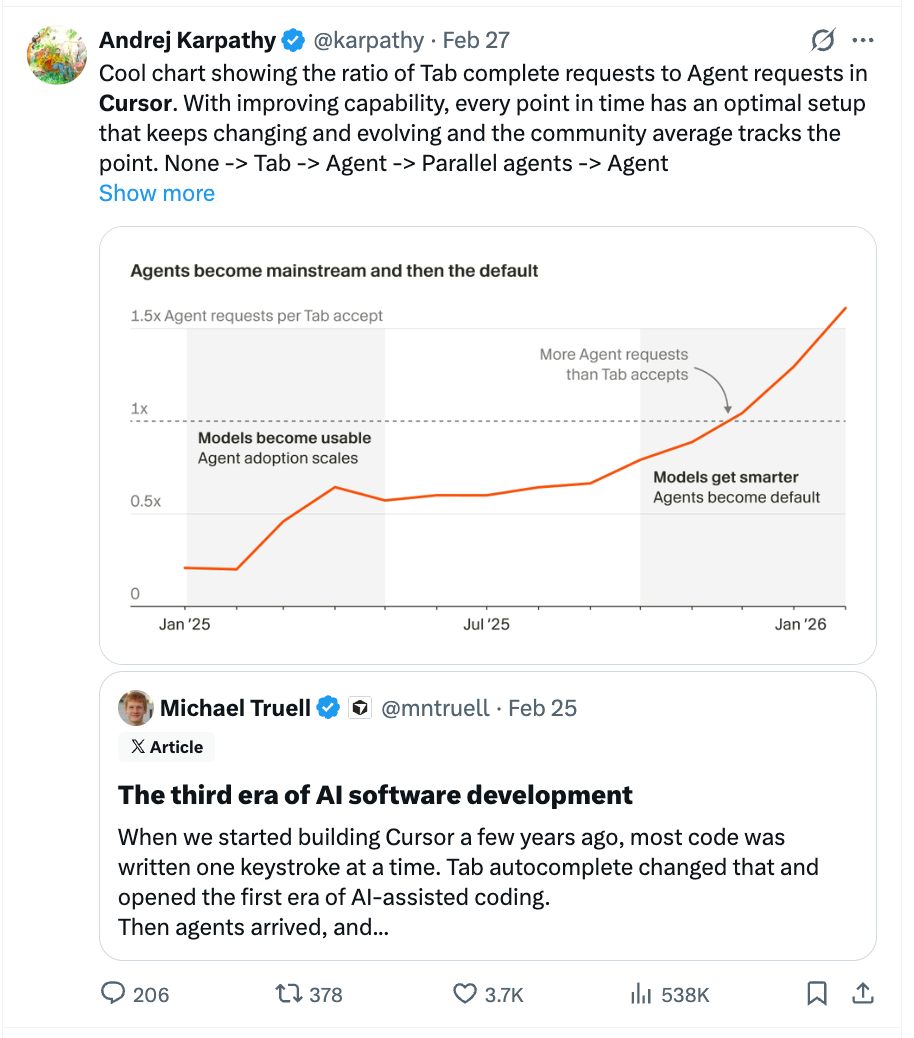
By fully automating the "inner loop" of coding, AI agents allow developers to bypass traditional upstream planning tools like Jira and overwhelm downstream processes like code review and CI/CD. This breaks the established software development lifecycle, creating new organizational bottlenecks that need to be addressed.
AI agents operate on a tight feedback loop. A slow CI/CD pipeline becomes the primary bottleneck, negating the speed benefits of AI-generated code. Fast CI is now a strategic necessity for any engineering team serious about leveraging AI.

With AI generating 1,300 pull requests weekly at Stripe, the critical path is shifting. When coding becomes a commodity, the bottleneck moves to human review and validation. Engineering teams must refocus from pure creation to oversight and quality assurance at scale.

Simply deploying AI to write code faster doesn't increase end-to-end velocity. It creates a new bottleneck where human engineers are overwhelmed with reviewing a flood of AI-generated code. To truly benefit, companies must also automate verification and validation processes.

The sheer volume of AI-generated code is causing Shopify's CI/CD pipelines to "start creaking." This bottleneck suggests that the entire paradigm of pull requests and Git—designed for human-scale development—may be obsolete in an "agentic world" and require a completely new design.

When every engineer generates 30,000-line changes in hours, the integration process breaks. The challenge shifts from resolving text conflicts to re-architecting one AI's entire change on top of another's equally massive change that was merged first. This is the next major unsolved obstacle.
