Get your free personalized podcast brief
We scan new podcasts and send you the top 5 insights daily.
The Chan Zuckerberg Initiative and US government partnership reflects a historic shift from academic universities toward big tech in medical research. Tech titans bring proprietary frontier models, compute, and capital to transform decades of public biological datasets into AI-ready discovery platforms.

Related Insights
When Mark Zuckerberg and Priscilla Chan proposed curing all disease, top scientists didn't cite scientific limits. Instead, they pointed to operational failures: data silos, unpublished information, and non-scalable tools. This revealed the core problem was engineering and infrastructure, not just pure science.

The "Genesis Mission" aims to use national labs' data and supercomputers for AI-driven science. This initiative marks a potential strategic shift away from the prevailing tech belief that breakthroughs like AGI will emerge exclusively from private corporations, reasserting a key role for government-led R&D in fundamental innovation.

Chai Discovery's partnership with Eli Lilly involves building a custom foundation model trained on Lilly's unique historical data. This signals a new collaboration model where AI firms act as specialized infrastructure builders, creating proprietary, data-moated AI for large pharmaceutical companies.

The next leap in biotech moves beyond applying AI to existing data. CZI pioneers a model where 'frontier biology' and 'frontier AI' are developed in tandem. Experiments are now designed specifically to generate novel data that will ground and improve future AI models, creating a virtuous feedback loop.

OpenAI is lobbying the federal government to co-invest in its Stargate initiative, offering dedicated compute for public research. This positions OpenAI not just as a private company but as a key partner for national security and scientific advancement, following the big tech playbook of seeking large, foundational government contracts.

In a significant policy shift, the White House is exploring a "partnership" with AI labs that could involve the government taking financial stakes. This idea, floated by both Senator Bernie Sanders and President Trump, signals a move towards treating frontier AI as a national strategic asset.

AI models are trained on large lab-generated datasets. The models then simulate biology and make predictions, which are validated back in the lab. This feedback loop accelerates discovery by replacing random experimental "walks" with a more direct computational route, making research faster and more efficient.
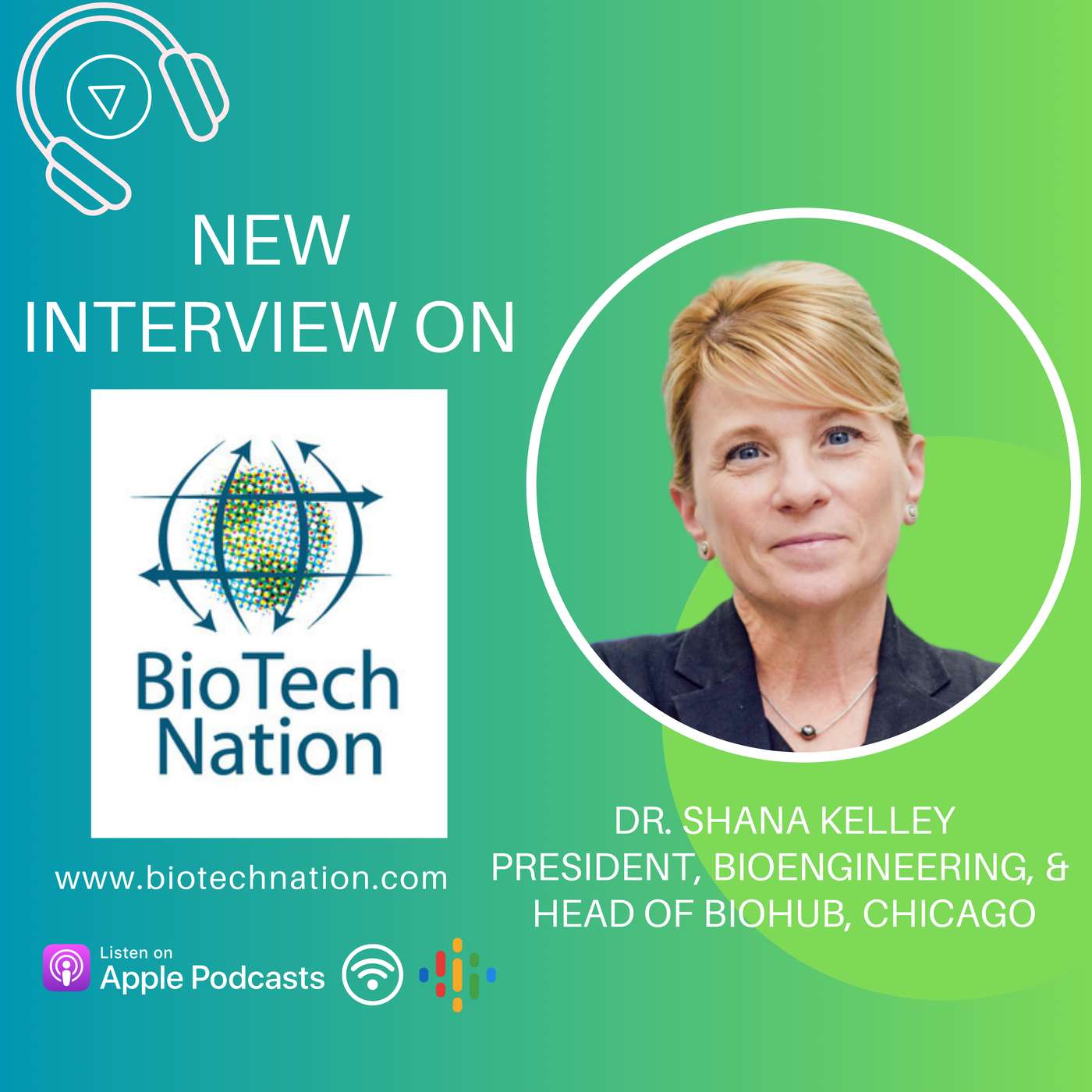
In a significant strategic move, the Chan Zuckerberg Initiative acquired Evolutionary Scale, a top AI-for-biology team. Evolutionary Scale's CEO will now lead the entire Biohub program, a clear signal that AI leadership is fundamental to the future of its integrated biological research.

Historically, the US government underwrote transformative infrastructure projects. Today, due to massive national debt, it cannot fund the AI revolution. This role has been taken over by the private sector, with companies like Nvidia, Google, and Microsoft putting the entire industrial buildout "on their back."

The innovation pipeline in biotech often starts in academia with fundamental breakthroughs like CRISPR or single-cell sequencing. Industry then provides the resources and engineering mindset to scale these technologies, robustify them, and generate the massive, high-quality datasets required to power AI-driven discovery.