Get your free personalized podcast brief
We scan new podcasts and send you the top 5 insights daily.
ButcherBox CEO Mike Salguero recounts VCs pressuring him to stick with a failing marketplace model, even threatening his future fundraising ability. He advises founders to prioritize the business's health over investor demands, even when it’s incredibly difficult and frightening.

Related Insights
Early on, investors pushed Flamingo Estate to pivot into supplements, a high-growth category. The founders rejected this advice because it felt completely wrong for their brand, which aims to elevate life, not solve medical problems. This shows the importance of sticking to your gut feel, even against lucrative advice.

Facing an AI threat, Product Fruits' founder emailed investors, declaring a full stop on the current product to rebuild from scratch around AI, explicitly warning them to expect a revenue decline. This radical transparency was rewarded with offers of more funding because investors value founders who aim to win their market, not just survive.

Knowing when and how to pivot isn't a data-driven process. It's a messy decision made with incomplete information when the current path is failing. Early customers often provide contradictory feedback, meaning the founder must rely on their intuition and a small circle of trusted advisors to choose the new direction.

During Kadence's pivot, new investors advised founder Dan Bladen to ditch his old Chargify investors and start fresh. He refused, viewing it as not "winning the right way," and instead undertook a complex restructuring to keep them on the cap table. This integrity-driven approach ultimately succeeded after pitching over 100 investors.

Founders must have conviction, as even their most sophisticated investors can fundamentally misjudge a bold strategic shift. A Sequoia Capital partner admits their own investors strongly opposed a pivotal move into logistics, demonstrating that founder vision must sometimes override expert consensus.

Investors often prefer that a founder who loses conviction in their initial idea pivot and use the remaining capital on a new approach, rather than shutting down. Returning a fraction of the investment is a worse outcome than betting on the founder's talent to find a new path in a large market. The money is a sunk cost; the founder is not.
VCs can handle pivots and financial struggles. Their primary nightmare is a founder who quits. A startup's ultimate survival hinges on the founder's psychological resilience and refusal to give up, not just market or product risk.

While fundraising in a collapsing market, Turbine's CEO faced immense pressure to pivot from a platform to a traditional biotech model. He credits their survival and success to sticking to their core vision, managing cash aggressively, and having the mental resilience to resist deviating.

While it's crucial to listen to markets and clients, founders must also be prepared to stick to their convictions when investors, who may not be specialists in their niche, offer conflicting advice. Knowing when to listen and when to hold firm is a key startup skill.
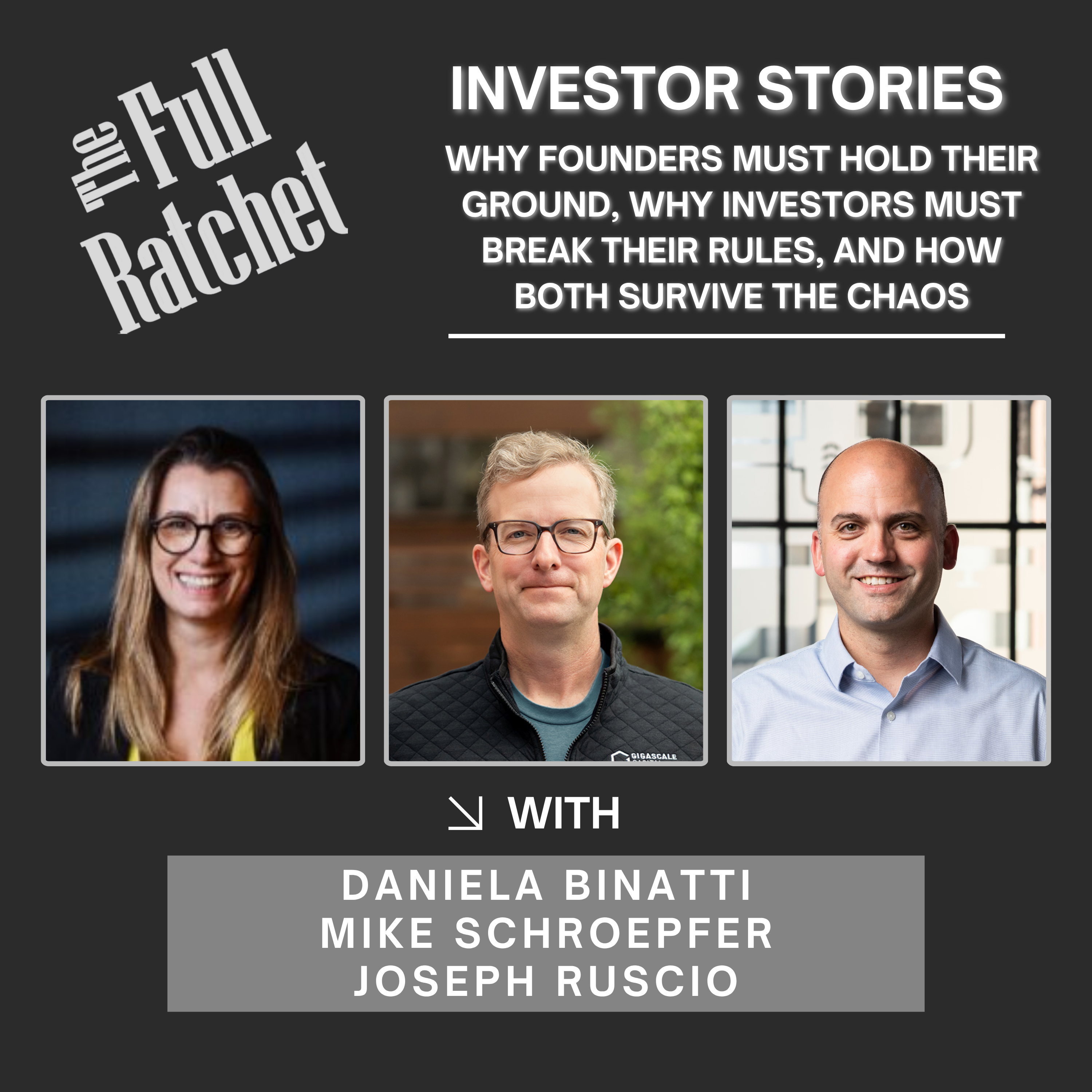
According to Mark Pincus, the hardest test of a founder's courage isn't standing against the world, but standing against their own team and investors. It requires the intellectual honesty to admit a promised direction was wrong and pivot, even if it creates internal friction and risks burning people out.
