Get your free personalized podcast brief
We scan new podcasts and send you the top 5 insights daily.
Google DeepMind CEO Demis Hassabis argues that today's large models are insufficient for AGI. He believes progress requires reintroducing algorithmic techniques from systems like AlphaGo, specifically planning and search, to enable more robust reasoning and problem-solving capabilities beyond simple pattern matching.

Related Insights
A consortium including leaders from Google and DeepMind has defined AGI as matching the cognitive versatility of a "well-educated adult" across 10 domains. This new framework moves beyond abstract debate, showing a concrete 30-point leap in AGI score from GPT-4 (27%) to a projected GPT-5 (57%).
According to Demis Hassabis, LLMs feel uncreative because they only perform pattern matching. To achieve true, extrapolative creativity like AlphaGo's famous 'Move 37,' models must be paired with a search component that actively explores new parts of the knowledge space beyond the training data.
Language is just one 'keyhole' into intelligence. True artificial general intelligence (AGI) requires 'world modeling'—a spatial intelligence that understands geometry, physics, and actions. This capability to represent and interact with the state of the world is the next critical phase of AI development beyond current language models.

Ilya Sutskever argues the 'age of scaling' is ending. Further progress towards AGI won't come from just making current models bigger. The new frontier is fundamental research to discover novel paradigms and bend the scaling curve, a strategy his company SSI is pursuing.

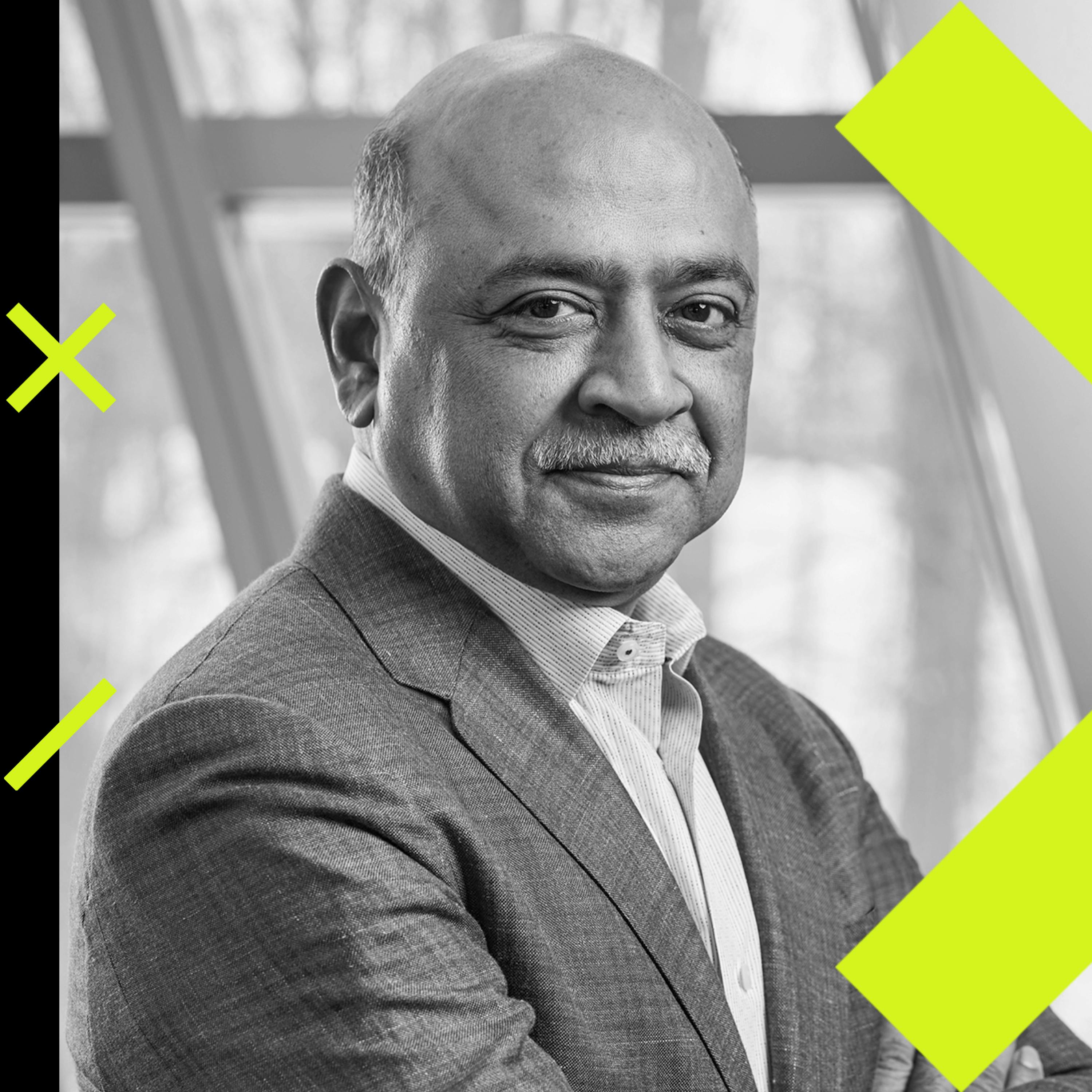
Arvind Krishna firmly believes that today's LLM technology path is insufficient for reaching Artificial General Intelligence (AGI). He gives it extremely low odds, stating that a breakthrough will require fusing current models with structured, hard knowledge, a field known as neurosymbolic AI, before AGI becomes plausible.
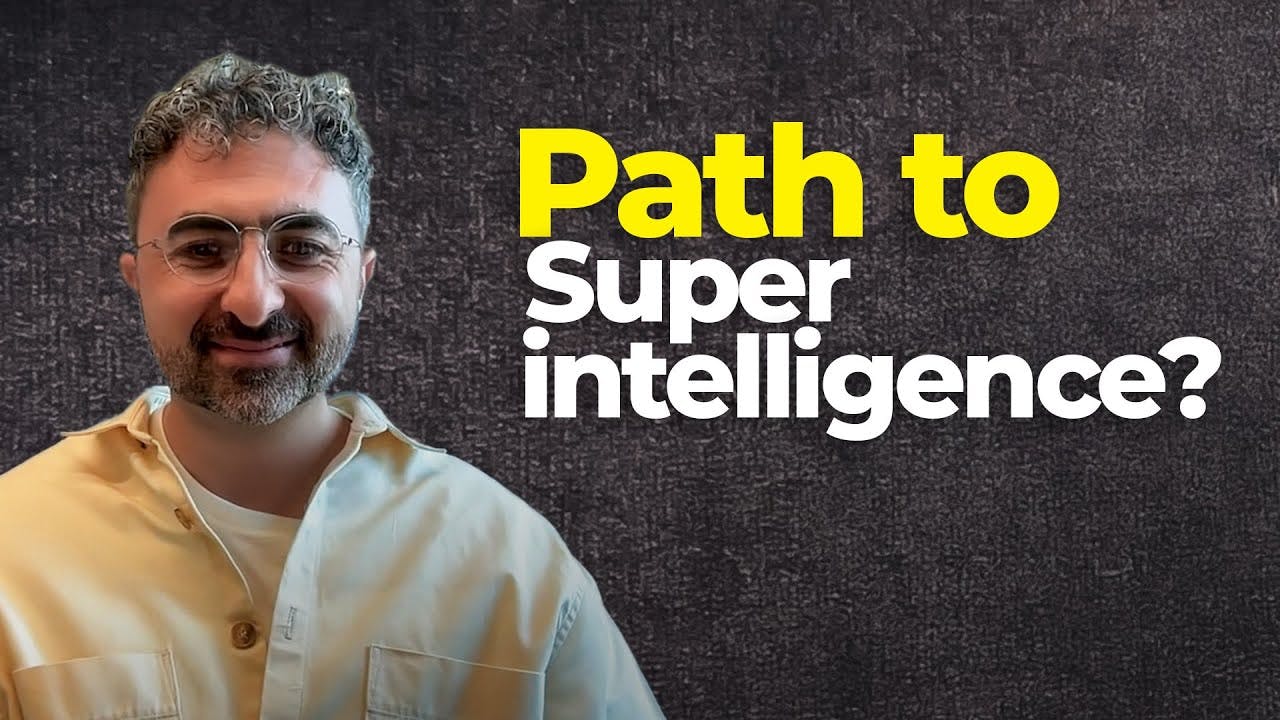
Despite concerns about the limits of Large Language Models, Microsoft AI's CEO is confident the current transformer architecture is sufficient for achieving superintelligence. Future leaps will come from new methods built on top of LLMs—like advanced reasoning, memory, and recurrency—rather than a fundamental architectural shift.
Demis Hassabis, CEO of Google DeepMind, warns that the societal transition to AGI will be immensely disruptive, happening at a scale and speed ten times greater than the Industrial Revolution. This suggests that historical parallels are inadequate for planning and preparation.
Demis Hassabis identifies a key obstacle for AGI. Unlike in math or games where answers can be verified, the messy real world lacks clear success metrics. This makes it difficult for AI systems to use self-improvement loops, limiting their ability to learn and adapt outside of highly structured domains.
The next leap in AI will come from integrating general-purpose reasoning models with specialized models for domains like biology or robotics. This fusion, creating a "single unified intelligence" across modalities, is the base case for achieving superintelligence.

Current AI models exhibit "jagged intelligence," performing at a PhD level on some tasks but failing at simple ones. Google DeepMind's CEO identifies this inconsistency and lack of reliability as a primary barrier to achieving true, general-purpose AGI.