Get your free personalized podcast brief
We scan new podcasts and send you the top 5 insights daily.
Co-CEO Tekedra Mawakana argues Waymo's industry lead stems from methodical discipline and humility around safety, not from being first or fastest. She believes the ultimate winner will be decided by consumers' long-term trust, which can only be earned slowly and deliberately.

Related Insights
Tesla's camera-only system gives it a significant cost advantage over Waymo's LiDAR-equipped vehicles. However, current data shows a Waymo vehicle crashes every 400,000 miles, while Tesla's crashes every 50,000. Tesla's ability to scale hinges entirely on proving its cheaper technology can become as safe.

In contrast to the 'move fast' ethos of tech rivals, GM views its intense focus on safety as a core business strategy. The company believes that building and retaining customer trust is paramount for new technologies like autonomous driving. It sees a single major incident as catastrophic to public perception, making a slower, safer rollout a long-term competitive advantage.
Unlike typical tech development that focuses on capabilities first, Waymo embeds safety as a "non-negotiable foundation" from the start. This means building safety into the model architecture and team mindset, as the approach to achieving 90% performance is fundamentally different from reaching the final "nines" of reliability.
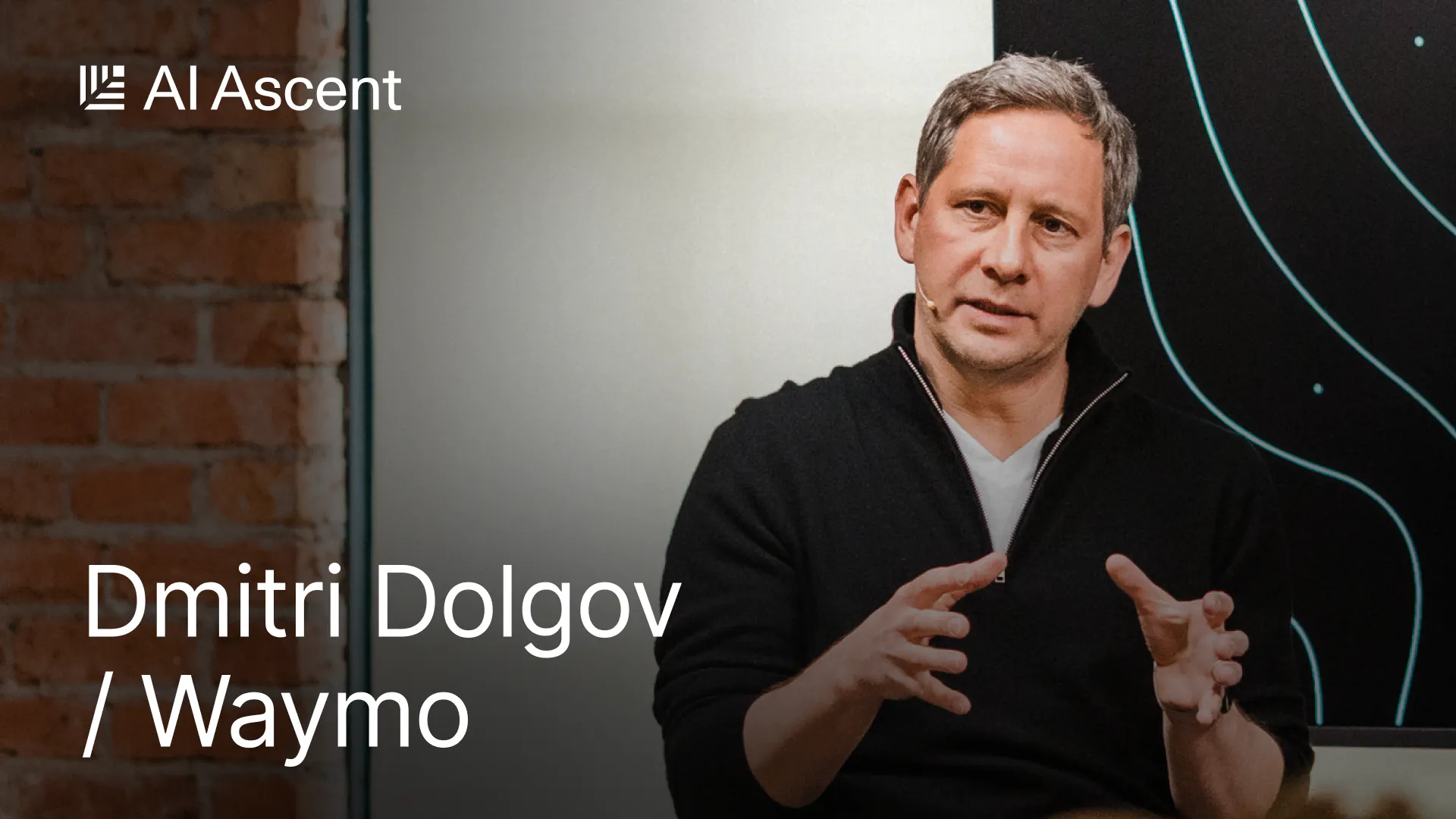
According to its co-CEO, Waymo has moved beyond fundamental research and development. The company believes its core technology is sufficient to handle all aspects of driving. The current work is an engineering challenge of specialization, validation, and data collection for new environments like London, signaling a shift to commercial deployment.
Instead of only focusing on regulators, Waymo allies with organizations like Mothers Against Drunk Driving and groups aiding the visually impaired. This frames their technology as a new tool for long-standing causes, leveraging existing community trust to accelerate public acceptance.
Early self-driving cars were too cautious, becoming hazards on the road. By strictly adhering to the speed limit or being too polite at intersections, they disrupted traffic flow. Waymo learned its cars must drive assertively, even "aggressively," to safely integrate with human drivers.
In safety-critical fields like autonomous driving, leadership's primary challenge is managing the dual pressures of rapid innovation and deliberate caution. The goal is to maximize speed without compromising the necessary slowness required for safety, making this balance the top concern.
Tekedra Mawakana reframed the risk of joining an unproven venture like Waymo. Instead of analyzing the company's chances, she focused on whether she had the confidence in her own skills as a builder to thrive in an environment of total ambiguity and abundance.
Waymo's initial focus on an owned-and-operated fleet serves a strategic purpose beyond revenue: it educates the public on fully autonomous technology. By controlling the end-to-end experience, they build the trust and understanding necessary for future business lines like software licensing.
The public holds new technologies to a much higher safety standard than human performance. Waymo could deploy cars that are statistically safer than human drivers, but society would not accept them killing tens of thousands of people annually, even if it's an improvement. This demonstrates the need for near-perfection in high-stakes tech launches.
