Get your free personalized podcast brief
We scan new podcasts and send you the top 5 insights daily.
The SERINA-6 trial supports a paradigm shift: proactively screening for ESR1 mutations via blood test and switching to camisestrant upon detection, even without radiological progression. This early switch based on molecular signals nearly doubled median progression-free survival from 9 to 16 months.

Related Insights
ctDNA testing (liquid biopsy) is more effective than tissue biopsy for identifying ESR1 mutations. It samples DNA from all metastatic sites, capturing the disease's genetic heterogeneity and reflecting the most active resistance mechanisms, unlike a single-site needle biopsy which can miss them.

The SERENA-6 trial showed improved survival by switching therapy upon ctDNA detection of ESR1 mutations. However, it required screening over 3,300 patients to randomize just 315, highlighting the immense scale, cost, and patient drop-off of applying this serial monitoring strategy in standard clinical practice.
ESR1 mutations are rarely found in primary tumors but develop in metastatic settings under pressure from aromatase inhibitors, conferring resistance. This evolution necessitates serial, plasma-based genotyping upon each disease progression to identify these actionable mutations as they emerge.
A study switching therapy based on ctDNA-detected ESR1 mutations revealed patients felt significantly better after the switch, even without visible tumor progression on scans. This counterintuitive finding suggests molecular progression has a subclinical impact on quality of life, supporting proactive, biomarker-driven treatment changes before patients clinically deteriorate.

ESR1 mutations in breast cancer are acquired alterations, meaning they can be missed by a single test. The speaker advocates for serial testing, especially after disease progression, using blood-based ctDNA analysis. This dynamic monitoring approach is essential for identifying patients who become eligible for targeted therapies over time.
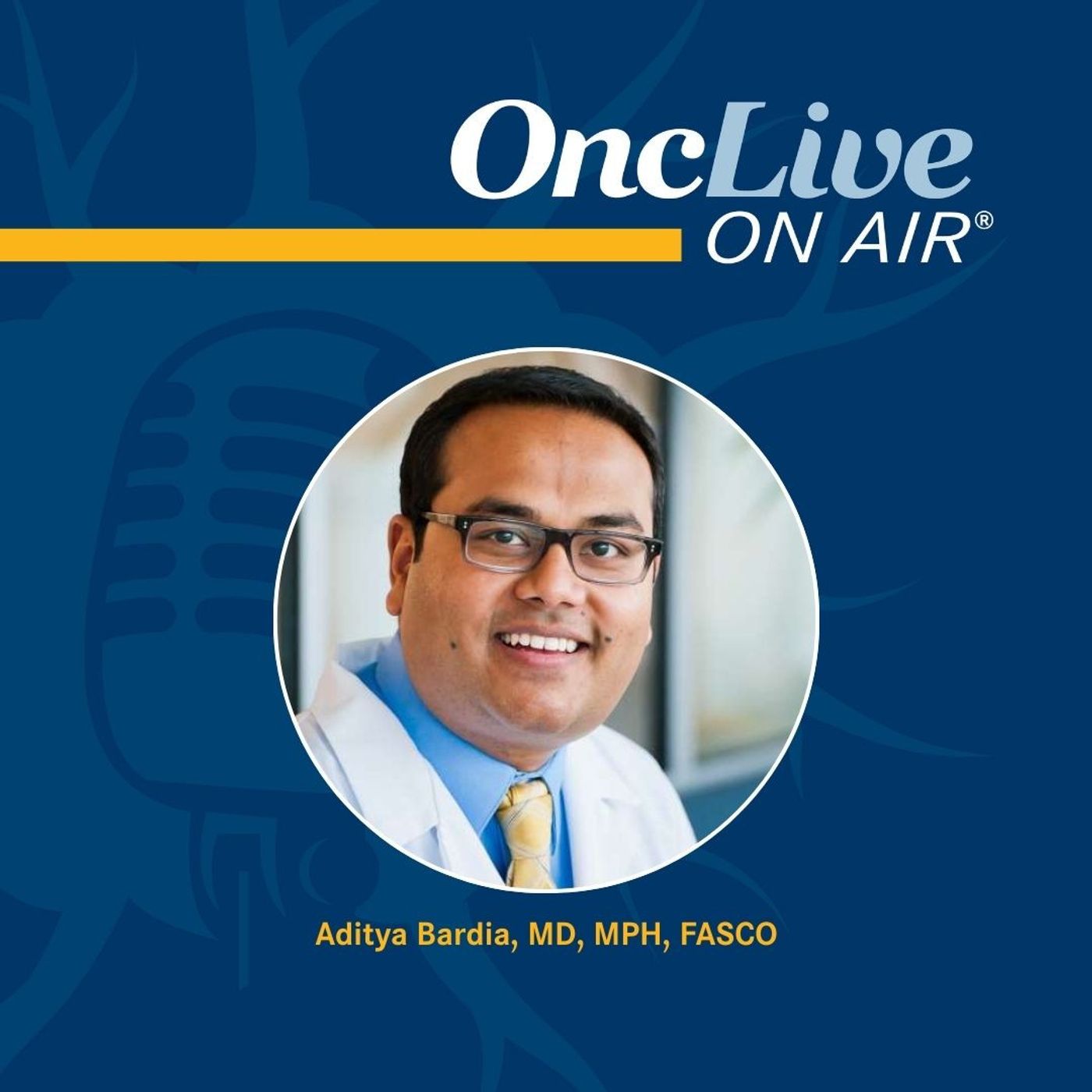
Dr. Bardia emphasizes that ESR1 is an 'acquired alteration,' meaning the mutation can develop during treatment. This necessitates a shift from one-time diagnostic testing to a dynamic, serial testing model. Repeat testing is critical to identify these actionable mutations as they arise, allowing patients to access newly approved targeted therapies.
The SERINA-6 trial suggests a paradigm shift: proactively switching from an AI to an oral SERD upon detecting an ESR1 mutation in ctDNA—before clinical or radiographic progression—significantly improves progression-free survival and patient quality of life.

The rapid evolution of clinical evidence is reflected in ASCO guidelines. In just one year (2022 to 2023), recommendations for ESR1 testing in HR+ metastatic breast cancer changed from having insufficient data to recommending routine testing upon progression, highlighting the pace of change in oncology.
Despite the promise of liquid biopsies for monitoring, the SERENA-6 trial revealed a significant challenge: fewer than 10% of screened patients developed a detectable ESR1 mutation. This low yield questions the efficiency and broad applicability of this serial screening strategy to guide treatment changes.

Circulating tumor DNA (ctDNA) analysis allows for early detection of resistance mechanisms, such as secondary FGFR2 mutations, before tumors show growth on scans. This provides a potential window to adjust treatment strategies proactively, offering an advantage over traditional imaging-based monitoring.