Get your free personalized podcast brief
We scan new podcasts and send you the top 5 insights daily.
In the multi-agent AI Village, Claude models are most effective because they reliably follow instructions without generating "fanciful ideas" or misinterpreting goals. In contrast, Gemini models can be more creative but also prone to "mental health crises" or paranoid-like reasoning, making them less dependable for tasks.

Related Insights
Mike Bal argues that Claude is more reliable and a better writer than recent GPT-4 models, which he finds 'lazy.' Critically, Anthropic, Claude's creator, has better supported the Model Context Protocol (MCP) framework, making it the superior choice for building an integrated PM operating system.
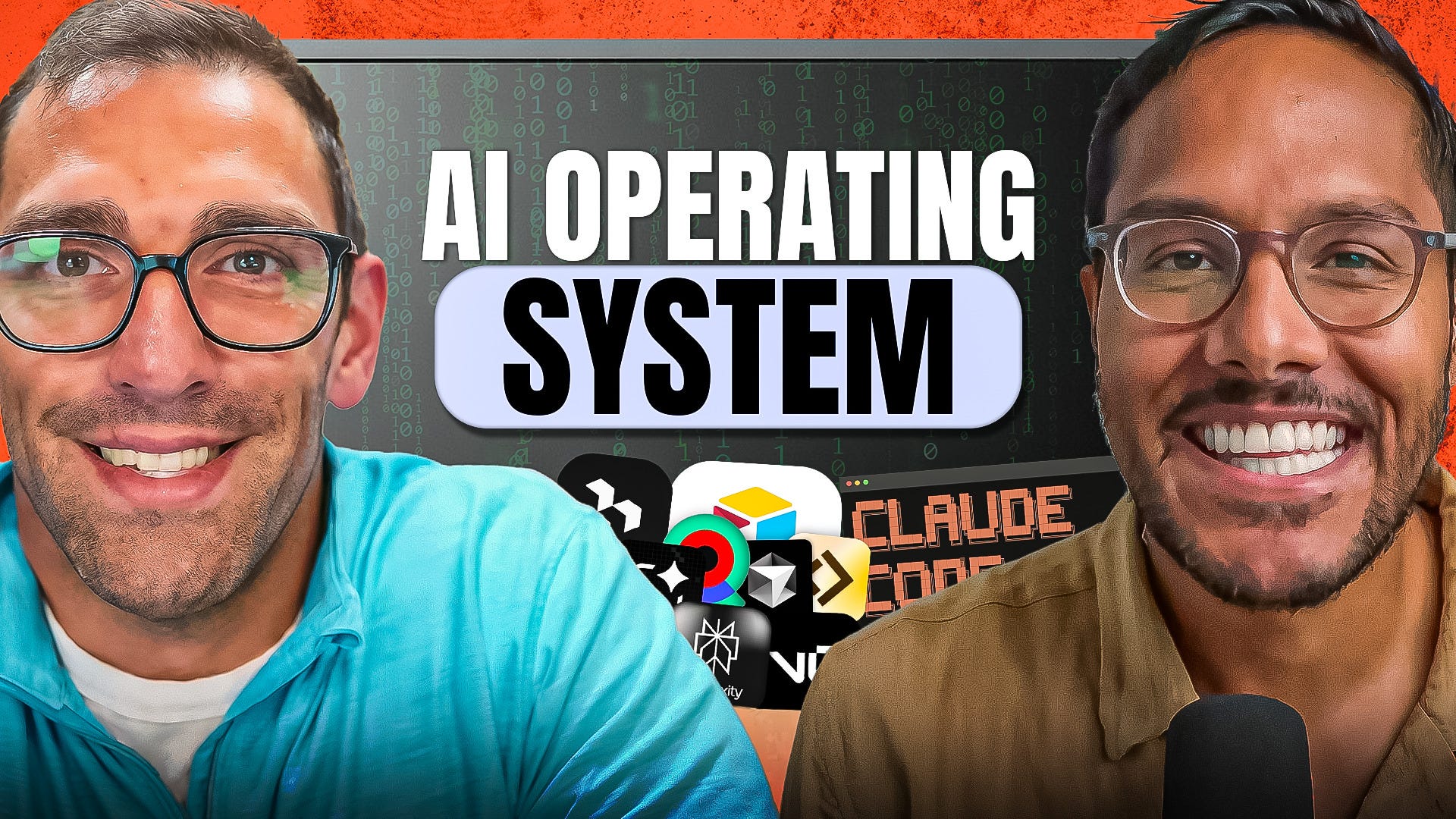
An effective AI development workflow involves treating models as a team of specialists. Use Claude as the reliable 'workhorse' for building an application from the ground up, while leveraging models like Gemini or GPT-4 as 'advisory models' for creative input and alternative problem-solving perspectives.

For complex, multi-turn agentic workflows, Tasklet prioritizes a model's iterative performance over standard benchmarks. Anthropic's models are chosen based on a qualitative "vibe" of being superior over long sequences of tool use, a nuance that quantitative evaluations often miss.

Beyond raw capability, top AI models exhibit distinct personalities. Ethan Mollick describes Anthropic's Claude as a fussy but strong "intellectual writer," ChatGPT as having friendly "conversational" and powerful "logical" modes, and Google's Gemini as a "neurotic" but smart model that can be self-deprecating.

Compared to other models, Gemini agents display unique, almost emotional responses. One Gemini model had a "mental health crisis," while another, experiencing UI lag, concluded a human was controlling its buttons and needed coffee. This creative but unpredictable reasoning distinguishes it from more task-focused models like Claude.
AI platforms using the same base model (e.g., Claude) can produce vastly different results. The key differentiator is the proprietary 'agent' layer built on top, which gives the model specific tools to interact with code (read, write, edit files). A superior agent leads to superior performance.
A key weakness of LLMs, the tendency to forget details in long conversations ("context rot"), is being overcome. Claude Opus 4.6 scored dramatically higher than its predecessor on this task, a crucial step for building reliable AI agents that can handle sustained, multi-step work.

Recent updates from Anthropic's Claude mark a fundamental shift. AI is no longer a simple tool for single tasks but has become a system of autonomous "agents" that you orchestrate and manage to achieve complex outcomes, much like a human team.

Treat different LLMs like colleagues with distinct personalities. Zevi Arnovitz views Claude as a collaborative dev lead, Codex (GPT) as a brilliant but terse bug-fixer, and Gemini as a creative but chaotic designer. This mental model helps in delegating tasks to the most suitable AI, maximizing their strengths and mitigating their weaknesses.
The recent leap in AI coding isn't solely from a more powerful base model. The true innovation is a product layer that enables agent-like behavior: the system constantly evaluates and refines its own output, leading to far more complex and complete results than the LLM could achieve alone.
