Get your free personalized podcast brief
We scan new podcasts and send you the top 5 insights daily.
The primary impact of AI in the workforce won't be universal job replacement. Instead, it will be a force multiplier that allows the most talented 10% of professionals in a given field to achieve the productivity of the other 90%, leading to a massive consolidation of roles.

Related Insights
While AI can raise the baseline for average performers, its most profound impact will be on "super-empowered individuals." The already great will use AI to achieve 10x productivity leaps, becoming "spectacularly great" in their fields.

The true disruption from AI is not a single bot replacing a single worker. It's the immense leverage granted to individuals who can deploy thousands of autonomous AI agents. This creates a massive multiplication of productivity and economic power for a select few, fundamentally altering labor market dynamics from one-to-one replacement to one-to-many amplification.
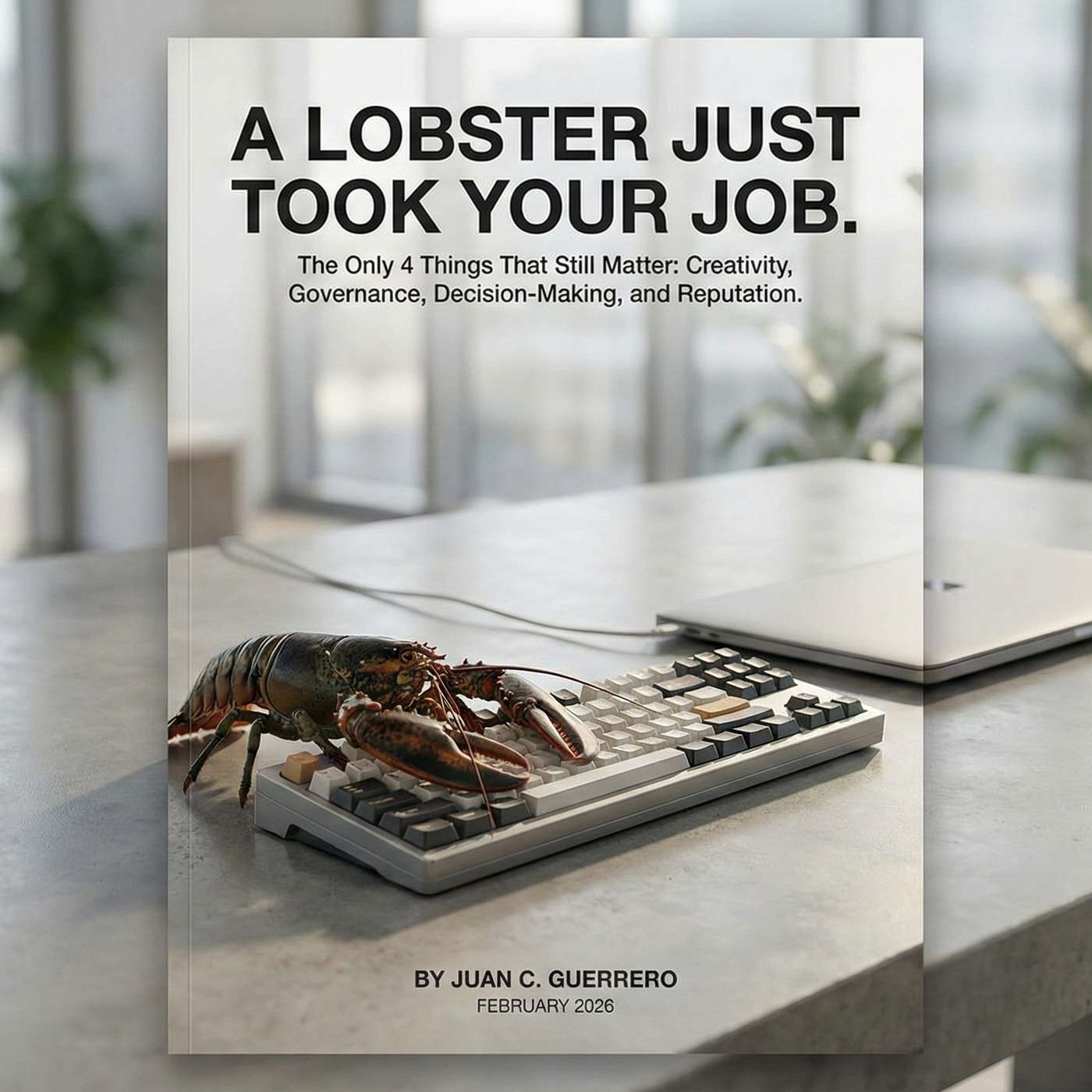
AI acts as a force multiplier for a company's best and most ambitious people, not a tool to make weak performers competent. It allows top talent to automate mundane work and focus on high-value strategy, effectively widening the performance gap between the most and least productive employees.

AI is expected to disproportionately impact white-collar professions by creating a skills divide. The top 25% of workers will leverage AI to become superhumanly productive, while the median worker will struggle to compete, effectively bifurcating the workforce.

In the near future, companies will leverage AI to demand exponentially higher productivity. Individuals unable to produce the output currently done by a team of ten will struggle to find or keep jobs. This is the real meaning of 'productivity gains'.

While AI will make average performers good, its most dramatic effect will be making great performers spectacularly great. By augmenting top talent in fields like coding, art, or science, AI enables a single individual to achieve productivity levels previously requiring large teams, creating a new class of hyper-achievers.

AI acts as a force multiplier for individuals who learn to leverage it, allowing them to achieve the output of a much larger team. The threat isn't the technology itself, but competitors who adopt it faster to gain a significant advantage.

AI will handle most routine tasks, reducing the number of average 'doers'. Those remaining will be either the absolute best in their craft or individuals leveraging AI for superhuman productivity. Everyone else must shift to 'director' roles, focusing on strategy, orchestration, and interpreting AI output.

The primary threat of AI in the workforce isn't autonomous systems replacing people. Instead, it's the competitive displacement where individuals who master AI tools will vastly outperform and consequently replace their peers who fail to adapt to the new technology.

Just as search democratized information, AI will democratize intelligence. Instead of relying on the varied capabilities of many employees, AI copilots will elevate everyone's performance to the 95th percentile. This transforms the workforce model to a few experts directing many highly capable AI agents.