Get your free personalized podcast brief
We scan new podcasts and send you the top 5 insights daily.
While adding venetoclax to a hypomethylating agent is standard for many AML patients, it is not recommended for those with P53 mutations. Despite potentially higher initial response rates, the combination does not translate into improved overall survival for this specific genetic subset, making it an ineffective long-term strategy.

Related Insights
Despite impressive data supporting HMA/Venetoclax, its application in younger, fit patients must be cautious. The pivotal VIALE-A trial excluded key subgroups like FLT3, core binding factor, and certain NPM1 patients, for whom intensive chemotherapy remains the standard.
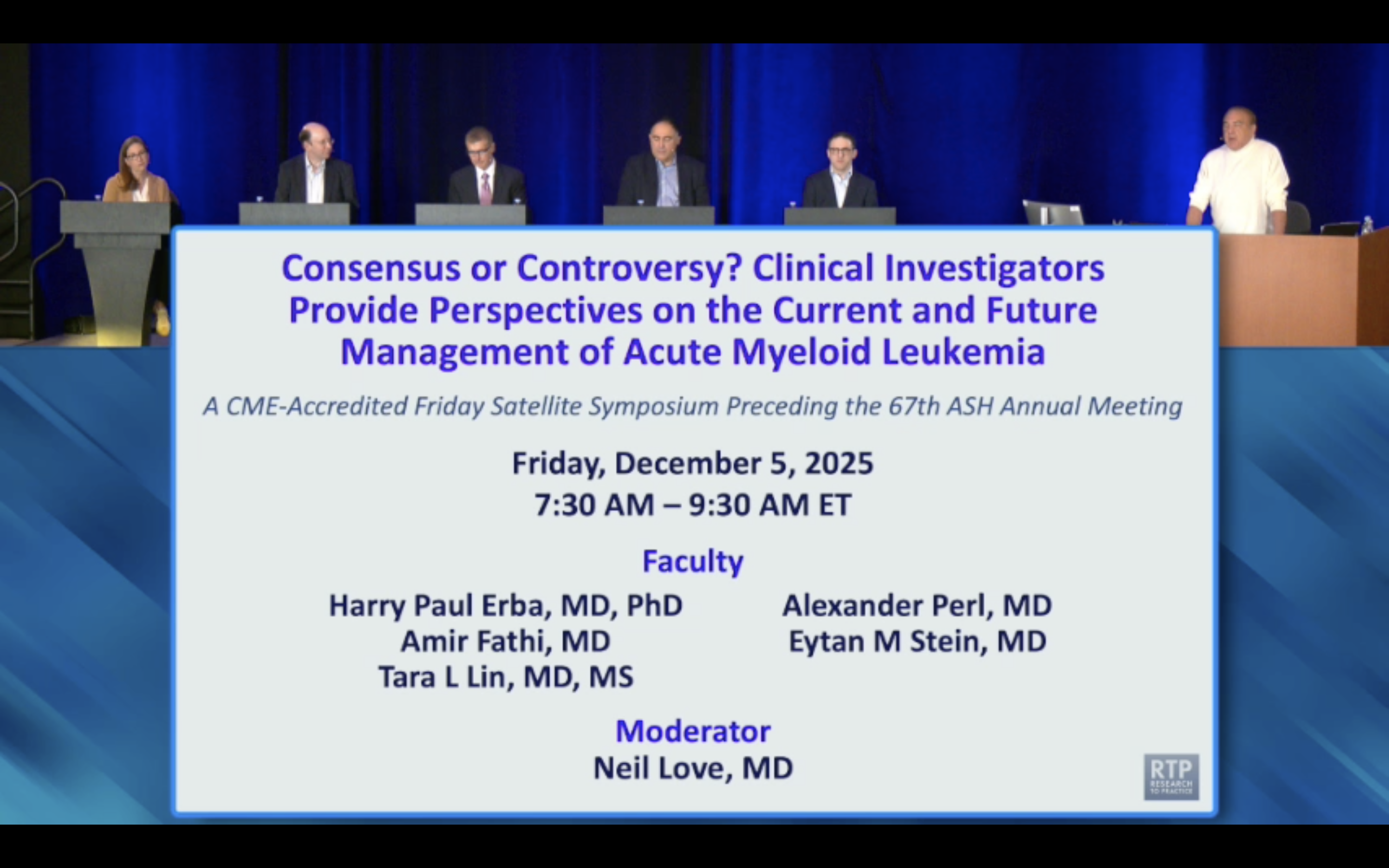
The PARADIGM trial, showing Aza/Venetoclax is superior to intensive chemo for younger, fit patients, is not a universal finding. It explicitly excluded patients with favorable-risk cytogenetics and FLT3 mutations, meaning it applies mainly to a higher-risk subset.

The FLAG-IDA plus venetoclax regimen achieves very high MRD-negative remission rates. However, its similar efficacy in both frontline and first salvage settings suggests it might be more strategically deployed as a salvage therapy, avoiding its high toxicity in all patients upfront.
For IDH1-mutated AML patients who have failed venetoclax—a notoriously difficult-to-treat population with a 3-4 month median survival—Eludacidinib has demonstrated some of the best-reported outcomes. This carves out a clear clinical niche for the drug in this specific salvage setting.

The RUBY trial surprisingly revealed that patients with p53-mutated tumors, a subset of the generally less responsive pMMR group, derive significant benefit from adding immunotherapy to chemotherapy, challenging previous assumptions about this molecular subtype.

The use of lower-intensity hypomethylating agents (HMA) with venetoclax is expanding beyond just chemo-ineligible AML patients. Clinicians now consider it a primary strategy for chemotherapy-fit patients if their tumor genomics suggest it may be as good or better than intensive chemo, marking a significant shift in treatment decision-making.
Initial studies combining menin inhibitors with venetoclax/azacitidine showed high remission rates but also high mortality. Using each agent at its full, 28-day dose caused severe, fatal myelosuppression, forcing protocol amendments to shorten drug exposure to manage toxicity.
The standard of care for AML has shifted from immediate induction chemotherapy to a "wait and profile" approach. Rushing to treat with a general therapy like HMA-Venetoclax before getting molecular results can be detrimental if the patient has a subtype highly curable with specific intensive chemotherapy.
While adding a menin inhibitor to the azacitidine/venetoclax doublet for older/unfit AML patients increases response rates, it leaves little reserve for marrow function. This can lead to increased risk of early, fatal complications like infection or bleeding, requiring careful dose management.

TP53-mutated AML carries an extremely poor prognosis, significantly worse than other adverse-risk subtypes. When TP53 patients are excluded from analyses, the survival gap between the remaining adverse-risk and intermediate-risk patients narrows considerably, clarifying risk stratification.