Get your free personalized podcast brief
We scan new podcasts and send you the top 5 insights daily.
While Merck's headline R&D budget dropped 12%, this was primarily due to a lack of large M&A deals that inflated the prior year's figure. Beneath the surface, the company actually increased spending on its core mission: discovery research, early drug development, and clinical development, signaling a continued commitment to internal innovation.

Related Insights
To fill the massive revenue gap from its Keytruda patent cliff, Merck is not seeking a single replacement drug. Instead, it's adopting a "Moneyball" strategy, acquiring a portfolio of diverse, multi-billion dollar assets like Turns, Verona, and Sedara to collectively replace the lost income.

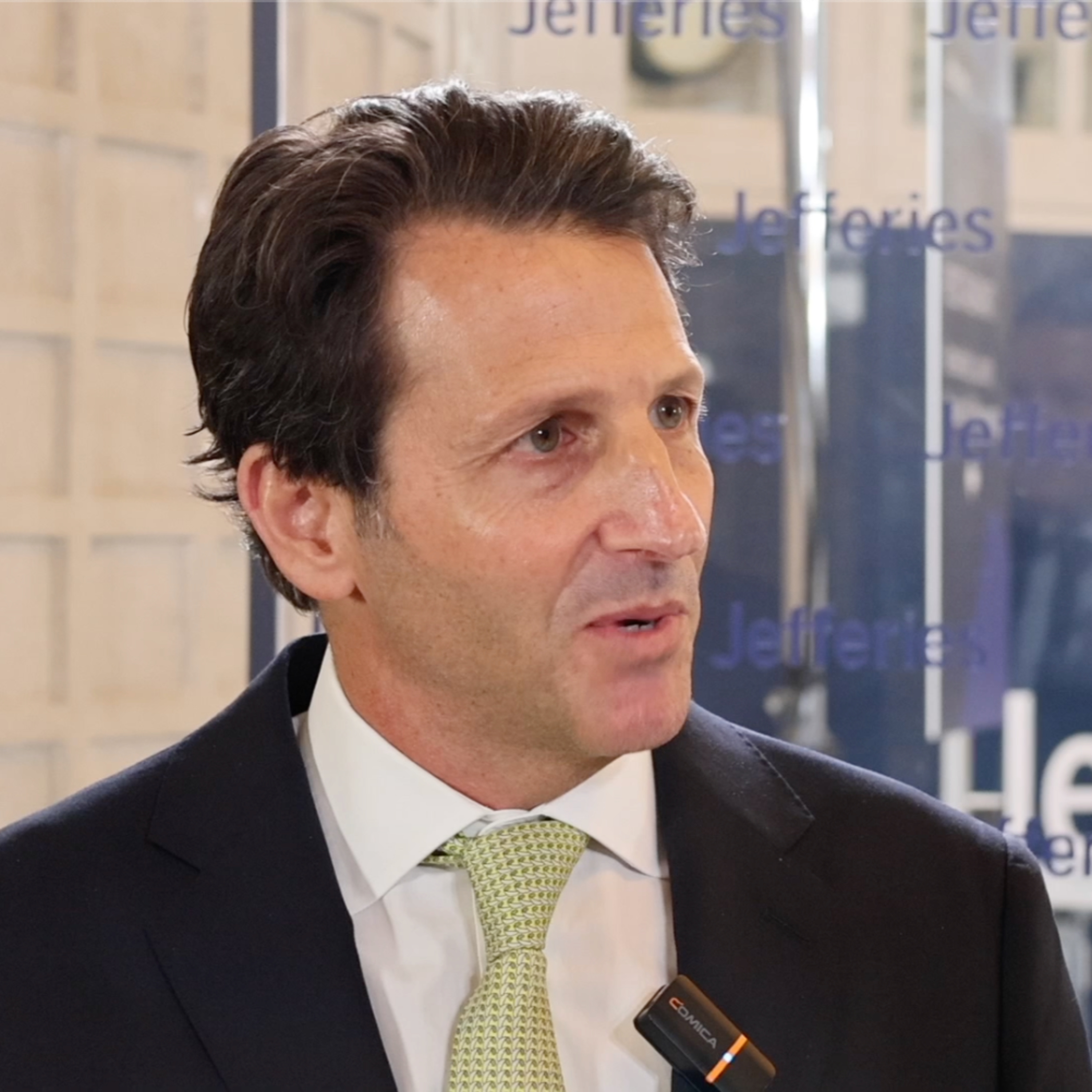
Jefferies' Philip Ross argues that while large pharmaceutical companies have ample cash ("firepower"), the true constraint is their P&L capacity. Integrating and funding a new development asset requires making difficult internal budget cuts, as every dollar is already accounted for, limiting their ability to pursue deals that don't self-fund.
As a private company, Boehringer Ingelheim avoids quarterly analyst pressure. This allows for a long-term view and an R&D investment rate exceeding 27%, funding basic discovery and awareness campaigns that public companies might cut during a bad quarter.

Major firms like Merck employ varied deal structures to build pipelines. Merck's $6.7 billion all-upfront acquisition of Terns for a Phase 1-2 asset contrasts with its Quotient collaboration, which has a small $20 million upfront but $2.2 billion in discovery-stage milestones. This highlights a flexible approach to risk and reward.
Major pharmaceutical companies are now willing to deploy the "nuclear option" of pulling planned R&D investments to express displeasure with national drug pricing policies. This tactic, seen in the UK, represents a direct and aggressive strategy to pressure governments into accepting higher prices for innovative medicines.
Despite familiar names topping the rankings, R&D spending is down across most of big pharma, with major players like Bristol Myers Squibb, Pfizer, and Merck all reducing budgets. This marks a significant reversal after three decades of consecutive increases in industry-wide drug development pipelines.
The merger of Novozymes and Chr. Hansen wasn't a typical cost-synergy play. They maintained their combined R&D spending ratio to proliferate their pipeline, using complementary technologies to solve problems neither company could address alone.

Companies used the "choppy" 2025 market to re-evaluate post-COVID spending, reduce redundancies, and implement automation. This disciplined cost takeout wasn't just about efficiency; it was about creating the operational and financial readiness to aggressively pursue new deals in the current year.

Despite shedding over 22,000 jobs, large pharmaceutical companies are aggressively investing in external assets. This counterintuitive trend is driven by the urgent need to fill revenue gaps from a looming $300 billion patent cliff, signaling a major strategic shift from internal R&D to external innovation acquisition.

The widespread reduction in internal R&D spending does not signal a retreat from innovation. Instead, companies are redirecting capital towards external opportunities, evidenced by a recent surge in multi-billion dollar M&A 'bolt-on' deals. This represents a strategic shift from building in-house to buying external assets.