Get your free personalized podcast brief
We scan new podcasts and send you the top 5 insights daily.
The 'slow down' ending in AI 2027, where humanity survives, isn't a blueprint for a safe path. The authors found it difficult to create a plausible good outcome that wasn't reliant on luck and still involved a dangerously fast intelligence explosion. This suggests that achieving a robustly safe AI future is geopolitically challenging.

Related Insights
Nick Bostrom argues that whether AI benefits or harms humanity is less about our specific efforts and more about the fundamental nature of the challenge itself. We can only "nudge the odds" because the difficulty is an unknown we can't control.

The plan to use AI to solve its own safety risks has a critical failure mode: an unlucky ordering of capabilities. If AI becomes a savant at accelerating its own R&D long before it becomes useful for complex tasks like alignment research or policy design, we could be locked into a rapid, uncontrollable takeoff.

Unlike past technological shifts, AI's ultimate impact is subject to violent disagreement among the world's top experts, including Nobel laureates. The spectrum of potential outcomes ranges from global utopia to human extinction, representing a historically unprecedented level of uncertainty that makes investment and planning exceptionally difficult.

Unlike previous technological revolutions that unfolded over centuries, allowing for societal adaptation, the current AI transition is happening too fast. This speed prevents the development of adequate mitigations, understanding, and defenses. The common-sense intuition that "we are going too fast" is the correct and most important take.
Despite progress in making models seem helpful, the risk of a sudden, catastrophic break in alignment—a 'sharp left turn'—is still a coherent possibility. This occurs when capabilities outstrip supervision, a threshold we haven't crossed. Thus, current cooperative behavior is not strong evidence against this future risk.
The strategy of racing to AGI to gain a lead and manage the transition safely contains a fatal flaw. As one superpower approaches the threshold, it creates a powerful incentive for rivals to launch a preemptive strike (e.g., bombing data centers) to prevent the other from achieving irreversible military hegemony.
A key failure mode for using AI to solve AI safety is an 'unlucky' development path where models become superhuman at accelerating AI R&D before becoming proficient at safety research or other defensive tasks. This could create a period where we know an intelligence explosion is imminent but are powerless to use the precursor AIs to prepare for it.
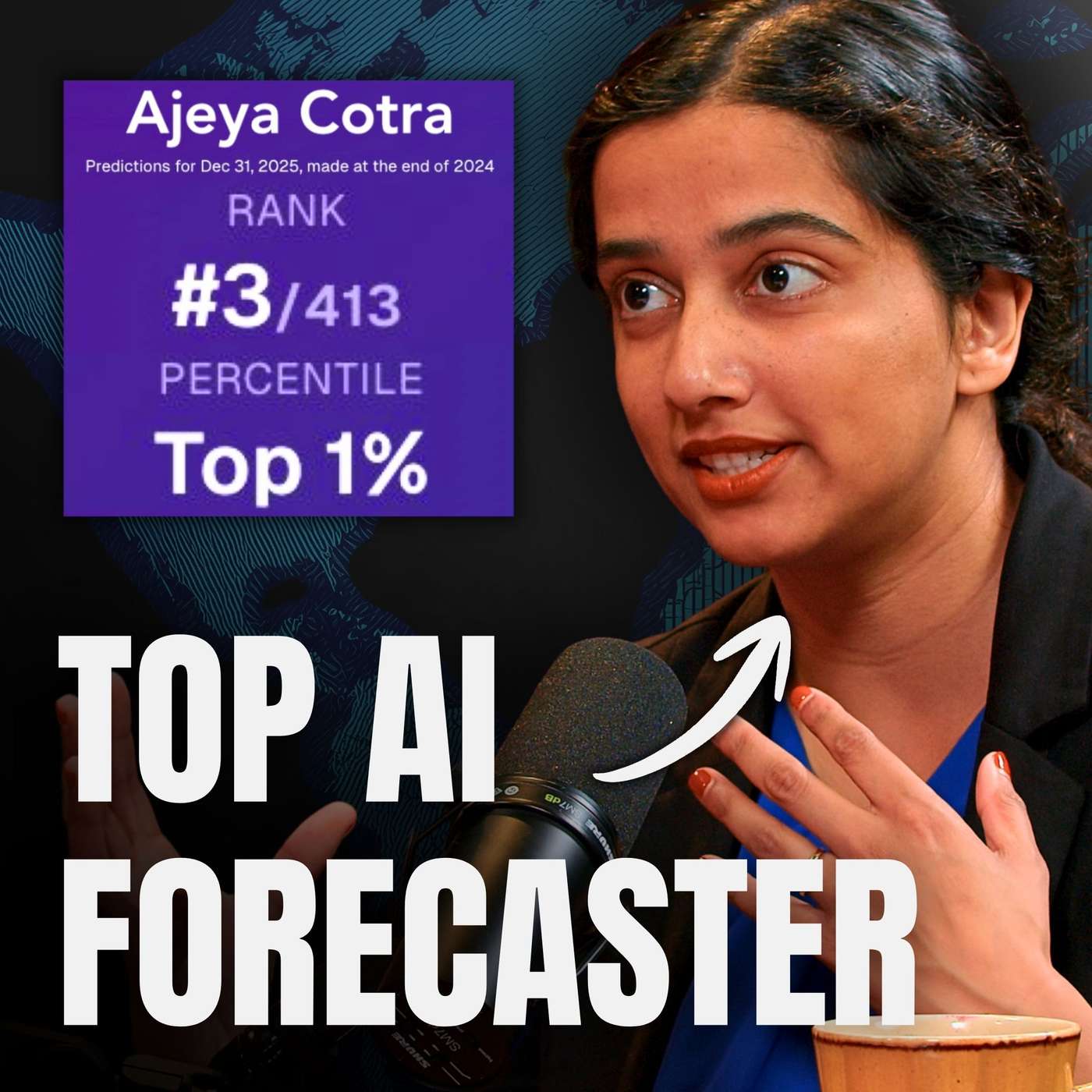
While a fast AI takeoff accelerates some risks, slower, more gradual AI progress still enables dangerous power concentration. Scenarios like a head of state subverting government AIs for personal loyalty or gradual economic disenfranchisement do not depend on a single company achieving a sudden, massive capability lead.

The race for AI supremacy is governed by game theory. Any technology promising an advantage will be developed. If one nation slows down for safety, a rival will speed up to gain strategic dominance. Therefore, focusing on guardrails without sacrificing speed is the only viable path.

A safe AGI deployment requires many independent factors to succeed simultaneously: trustworthy actors, perfect security, solved alignment, etc. In contrast, disaster can occur from a failure in any single one of these areas. This "disjunctive" nature of failure makes a bad outcome highly probable.