Get your free personalized podcast brief
We scan new podcasts and send you the top 5 insights daily.
Beyond R&D, StarCloud's $250M funding secures expensive launch vehicle bookings years in advance. It also demonstrates financial strength to large data center partners, who are unwilling to commit their own resources to pilot projects without seeing a massive balance sheet, signaling long-term viability.

Related Insights
Beyond rockets and Starlink, SpaceX's IPO is driven by the capital needed for its most ambitious goal: a fleet of space-based AI data centers. This venture is too expensive for private markets, forcing the public offering despite Elon Musk's previous reservations about short-termist investors.
Until launch costs drop, Starcloud's initial customers are military and earth observation satellites that are bottlenecked by data downlink capacity. By processing data in space, Starcloud solves this problem and can charge premium rates, building a sustainable business while waiting for the larger market to become viable.

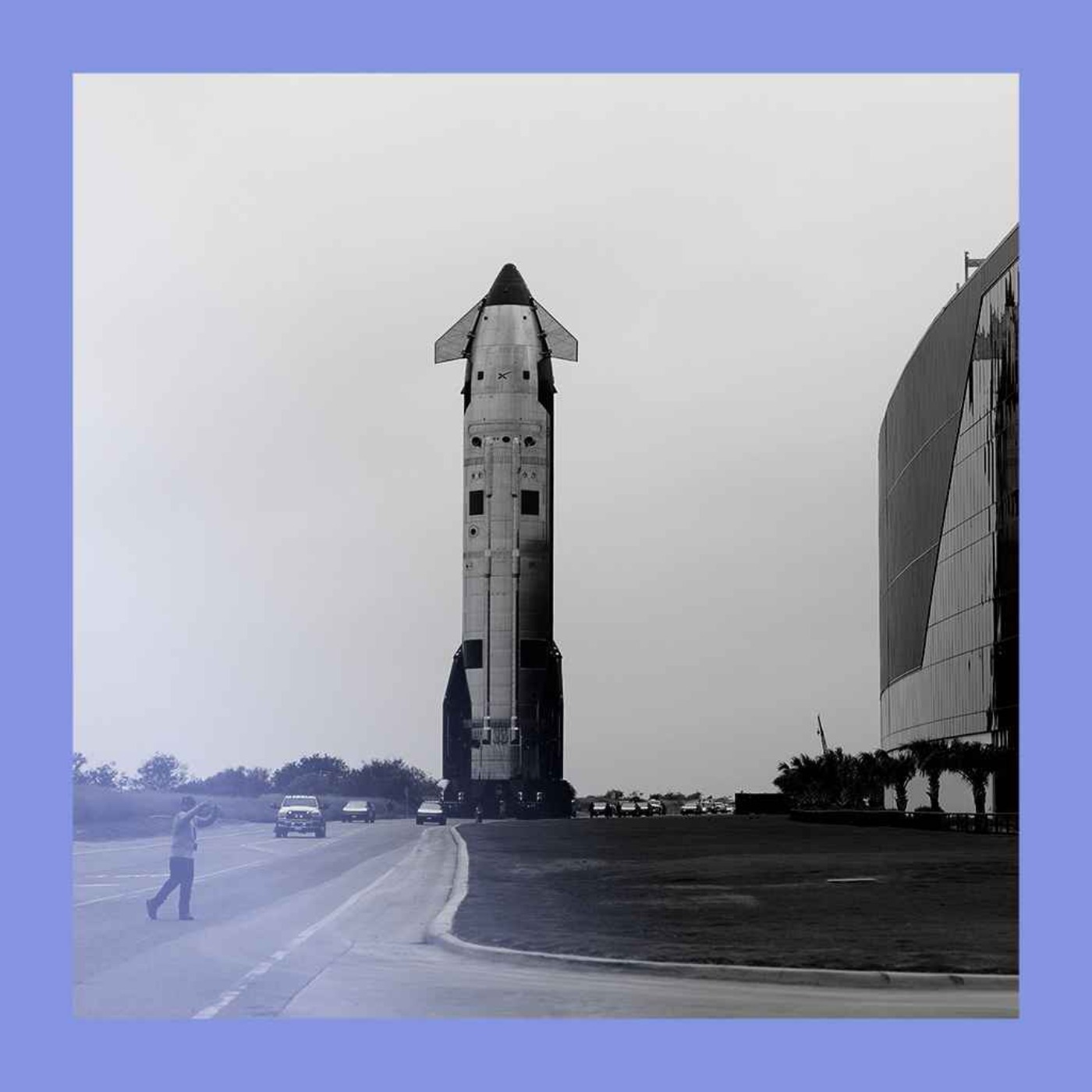
The entire strategy of building data centers in space is only economically feasible because SpaceX's Starship is projected to increase launch capacity by 20 times and drastically lower costs. This specific technological leap turns a sci-fi concept into a viable business model.
Contrary to speculation, SpaceX's IPO narrative around space-based data centers is not a marketing ploy to cover slowing growth. The company believes it's the cheapest long-term compute solution and requires public capital to fund the massive, capital-intensive vision.

Starcloud provides core infrastructure—a "box" with power, cooling, and connectivity—but lets customers install their own chips. This makes them an infrastructure provider like Equinix, not a cloud provider like AWS. This strategy offloads the massive capital cost of chips and focuses on their core competency: building satellites.
The company initially explored space-based solar but realized beaming power to Earth is highly inefficient. Since most new energy powers data centers anyway, they pivoted to moving the data centers to the power source in space, eliminating the massive energy loss from transmission.
While the long-term vision for orbital data centers like Starcloud is to provide cheaper compute globally, the initial, viable business model focuses on serving other space-based clients. Government agencies and Earth observation constellations are the primary customers, as this market is sustainable with current launch costs.
SpaceX is reportedly targeting a $1.5 trillion IPO to raise $30 billion. This capital isn't just for rockets but to fund a new AI infrastructure business: data centers in space. This represents a significant strategic shift, leveraging its launch dominance to compete in the AI compute market by acquiring massive quantities of GPUs.

Recent viability for orbital data centers doesn't stem from new server technology, but from SpaceX's Starship rocket. Its success in dramatically lowering the cost of launching mass into orbit is the critical, non-obvious enabler that makes the entire concept economically plausible for the first time.
A Beijing startup securing $8.4B in credit lines for space-based data centers reveals a national strategic priority. This massive state-backed investment shows China is planning decades ahead to overcome future terrestrial constraints on land, power, and cooling for large-scale AI compute infrastructure.