Get your free personalized podcast brief
We scan new podcasts and send you the top 5 insights daily.
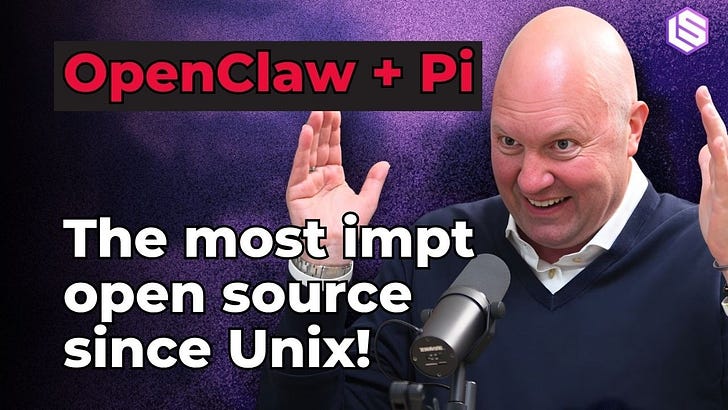
Andreessen presents the modern AI agent's architecture—a language model combined with a Unix shell and file system—as a major software breakthrough. This modular, extensible design mirrors the powerful Unix mindset, enabling agents that are independent of specific models and can modify themselves.

Related Insights
The new paradigm for building powerful tools is to design them for AI models. Instead of complex GUIs, developers should create simple, well-documented command-line interfaces (CLIs). Agents can easily understand and chain these CLIs together, exponentially increasing their capabilities far more effectively than trying to navigate a human-centric UI.

While GUIs were built for humans, the terminal is more "empathetic to the machine." Coding agents are more effective using CLIs because it provides a direct, scriptable, and universal way to interact with a system's tools, leveraging vast amounts of pre-trained shell command data.
The true building block of an AI feature is the "agent"—a combination of the model, system prompts, tool descriptions, and feedback loops. Swapping an LLM is not a simple drop-in replacement; it breaks the agent's behavior and requires re-engineering the entire system around it.
Early agent development used simple frameworks ("scaffolds") to structure model interactions. As LLMs grew more capable, the industry moved to "harnesses"—more opinionated, "batteries-included" systems that provide default tools (like planning and file systems) and handle complex tasks like context compaction automatically.
In architectures like OpenClaw, an agent's state and memory are stored in a file system, not the model itself. This means your agent is its files. You can swap the underlying LLM and the agent retains its identity and capabilities, much like recompiling code for a new chip.
Jensen Huang frames the open-source agent framework OpenClaw not merely as a tool, but as the fundamental blueprint for a new computing paradigm. It defines a personal AI computer with its own memory system, skills (APIs), resource management, and scheduling, representing the "operating system of modern computing."

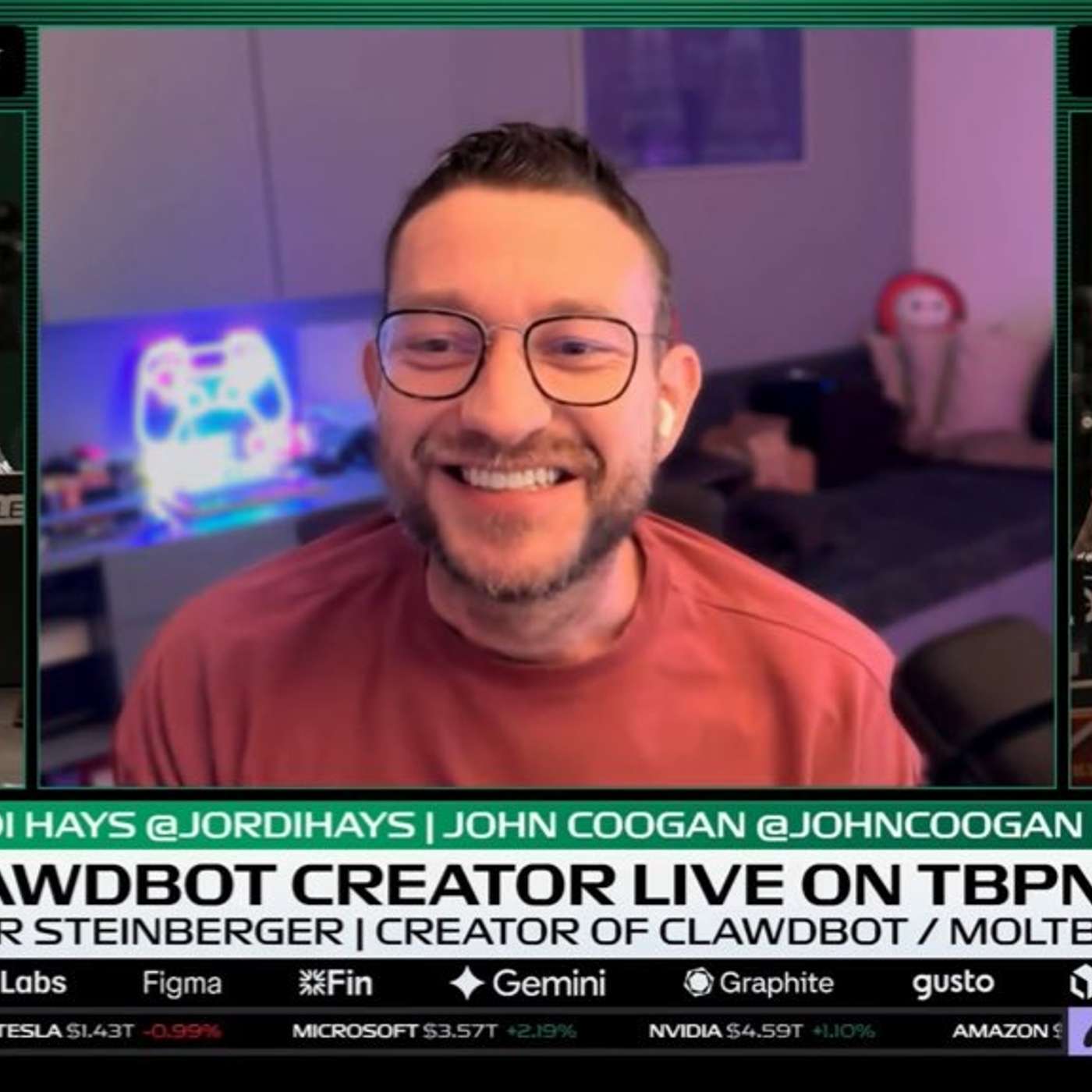
Instead of designing tools for human usability, the creator built command-line interfaces (CLIs) that align with how AI models process information. This "agentic-driven" approach allows an AI to easily understand and scale its capabilities across numerous small, single-purpose programs on a user's machine.
The architectural breakthrough of AI agents is the fusion of LLMs with the classic UNIX mindset. It uses a shell, file system, and cron jobs, making the agent's state (its files) independent of the specific LLM. This allows for model-swapping, migration, and self-modification.
A new software paradigm, "agent-native architecture," treats AI as a core component, not an add-on. This progresses in levels: the agent can do any UI action, trigger any backend code, and finally, perform any developer task like writing and deploying new code, enabling user-driven app customization.

The key innovation behind Claude Code wasn't a more advanced language model, but rather granting it simple permissions: the ability to read/write local files and execute basic Unix commands. This allowed it to overcome the stateless nature of LLMs and chain complex operations together, unlocking emergent capabilities.
