Get your free personalized podcast brief
We scan new podcasts and send you the top 5 insights daily.
The profound success of anti-CD38 antibodies like daratumumab isn't just due to their direct anti-myeloma effect. A key part of their efficacy comes from altering the tumor microenvironment by reducing immunosuppressive T-regulatory cells and expanding anti-tumor T-cell clones, creating a synergistic effect.

Related Insights
Antibody-drug conjugates (ADCs) can cause immunogenic cell death, remodeling the tumor microenvironment and enhancing antigen presentation. This mechanism could potentially make PD-L1 negative ('cold') tumors responsive to immune checkpoint inhibitors, creating a strong rationale for investigating ADC-immunotherapy combinations in this patient population.

In combination with bispecifics like teclistamab, daratumumab not only targets myeloma cells but also enhances the partner drug's efficacy by reducing immunosuppressive T-regulatory (Tregs) and B-regulatory (Bregs) cells, making the primary therapy more effective.
A defining characteristic of antibody-drug conjugates is not just their response rate, but their remarkable duration of response. Patients who respond often maintain that response for a significantly longer period than with standard chemotherapy, a benefit likely attributable to the ADC's effect on the tumor microenvironment.

The drug exhibits a multimodal mechanism. It not only reverses chemoresistance and halts tumor growth but also 'turns cold tumors hot' by forcing cancer cells to display markers that make them visible to the immune system. This dual action of direct attack and immune activation creates a powerful synergistic effect.

Instead of focusing solely on T-cells, Create's platform first targets myeloid cells, which constitute up to 60% of some solid tumors. Programming these cells transforms the tumor microenvironment, enabling a 5-10x influx of CD8 T-cells. This overcomes a key barrier for T-cell therapies in solid tumors.

Unlike older IMiDs where T-cell effects are secondary, CELMoDs have a powerful, independent pro-T-cell mechanism. This dual action is so significant that in the future, CELMoDs will be prescribed not just for their direct anti-myeloma effects, but specifically to enhance the efficacy of T-cell therapies like CAR-T and bispecific antibodies.

To combat immunosuppressive "cold" tumors, new trispecific antibodies are emerging. Unlike standard T-cell engagers that only provide the primary CD3 activation signal, these drugs also deliver the crucial co-stimulatory signal (e.g., via CD28), ensuring full T-cell activation in microenvironments where this second signal is naturally absent.

While immunotherapy was a massive leap forward, Dr. Saav Solanki states the next innovation frontier is combining it with newer modalities. Antibody-drug conjugates (ADCs) and T-cell engagers are being used to recruit the immune system into the tumor microenvironment, helping patients who don't respond to current immunotherapies.

Beyond their direct anti-myeloma effects, CELMoDs potently activate the immune system. This positions them as ideal partners for immunotherapies like CAR T and bispecifics, with the potential to restore immune function and overcome resistance to T-cell redirecting therapies.

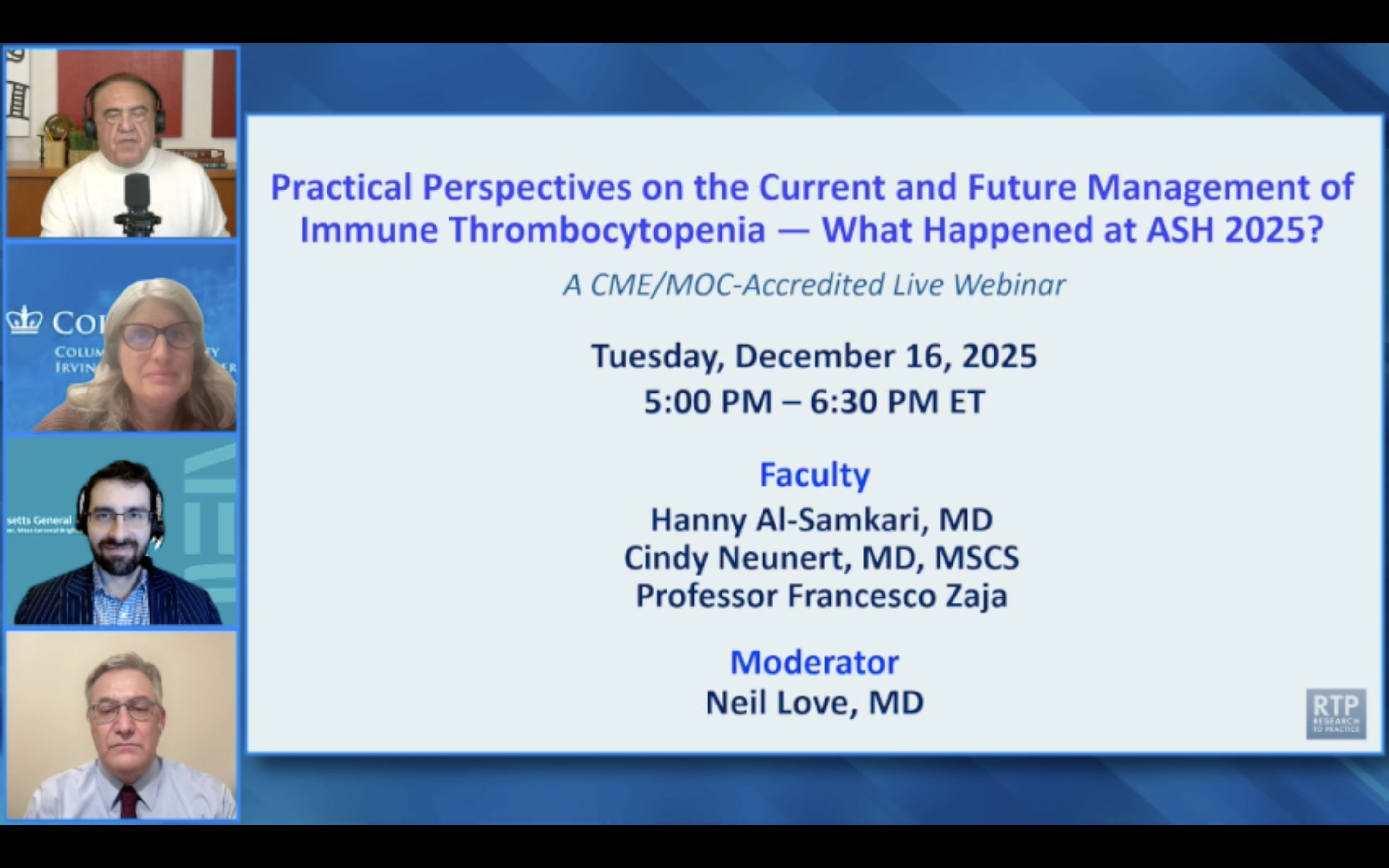
In cases of severe ITP unresponsive to standard therapies, the anti-CD38 monoclonal antibody daratumumab can be highly effective. It works by eliminating the long-lived plasma cells responsible for secreting platelet autoantibodies, a mechanism distinct from other ITP treatments.