Get your free personalized podcast brief
We scan new podcasts and send you the top 5 insights daily.
In combination with bispecifics like teclistamab, daratumumab not only targets myeloma cells but also enhances the partner drug's efficacy by reducing immunosuppressive T-regulatory (Tregs) and B-regulatory (Bregs) cells, making the primary therapy more effective.

Related Insights
The future of advanced prostate cancer treatment may involve combining ADCs with bispecific T-cell engagers. This strategy could use ADCs for a short duration to deliver a potent hit, followed by immunotherapy to achieve durable remission, potentially reducing toxicity and enabling earlier use.

The drug exhibits a multimodal mechanism. It not only reverses chemoresistance and halts tumor growth but also 'turns cold tumors hot' by forcing cancer cells to display markers that make them visible to the immune system. This dual action of direct attack and immune activation creates a powerful synergistic effect.

A therapeutic approach called "T-cell engagers" or "BiTEs" uses engineered antibodies with two different heads. One side binds to a cancer cell, while the other binds to a nearby T-cell. This effectively brings the killer cell and the target together, leveraging the body's existing immune cells without genetic modification.

An innovative strategy for solid tumors involves using bispecific T-cell engagers to target the tumor stroma—the protective fibrotic tissue surrounding the tumor. This novel approach aims to first eliminate this physical barrier, making the cancer cells themselves more vulnerable to subsequent immune attack.

Successful immunotherapies like anti-PD-1 work by shifting the battlefield's arithmetic. They enhance the efficiency of each T-cell, allowing one cell to destroy five or ten cancer cells instead of three. This turns the fight into a 'numbers game' that the immune system can finally win.

Unlike older IMiDs where T-cell effects are secondary, CELMoDs have a powerful, independent pro-T-cell mechanism. This dual action is so significant that in the future, CELMoDs will be prescribed not just for their direct anti-myeloma effects, but specifically to enhance the efficacy of T-cell therapies like CAR-T and bispecific antibodies.

To combat immunosuppressive "cold" tumors, new trispecific antibodies are emerging. Unlike standard T-cell engagers that only provide the primary CD3 activation signal, these drugs also deliver the crucial co-stimulatory signal (e.g., via CD28), ensuring full T-cell activation in microenvironments where this second signal is naturally absent.
While immunotherapy was a massive leap forward, Dr. Saav Solanki states the next innovation frontier is combining it with newer modalities. Antibody-drug conjugates (ADCs) and T-cell engagers are being used to recruit the immune system into the tumor microenvironment, helping patients who don't respond to current immunotherapies.
Bi-specific T-cell engagers (BiTEs) are highly immunogenic because the mechanism activating T-cells to kill cancer also primes them to mount an immune response against the drug itself. This 'collateral effect' is an inherent design challenge for this drug class.

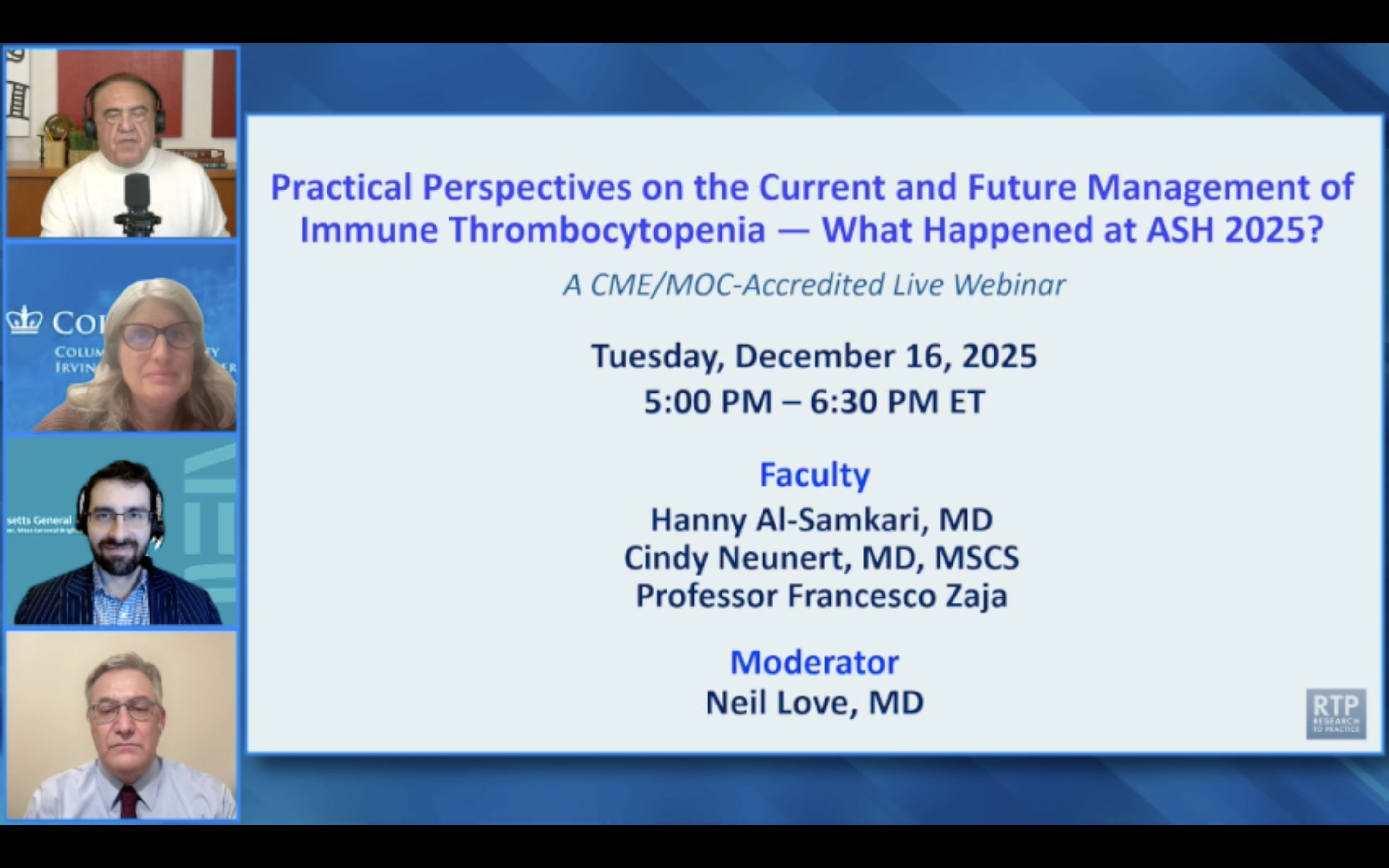
In cases of severe ITP unresponsive to standard therapies, the anti-CD38 monoclonal antibody daratumumab can be highly effective. It works by eliminating the long-lived plasma cells responsible for secreting platelet autoantibodies, a mechanism distinct from other ITP treatments.