Get your free personalized podcast brief
We scan new podcasts and send you the top 5 insights daily.
Daniel Kahneman's motivation for participating in Michael Lewis's book was not self-promotion but a sense of duty. He felt that after Tversky's death and his own Nobel Prize, Tversky's contributions were unfairly overshadowed. He cooperated to "redress" this imbalance and bring his late collaborator "back into the picture," correcting a historical distortion.

Related Insights
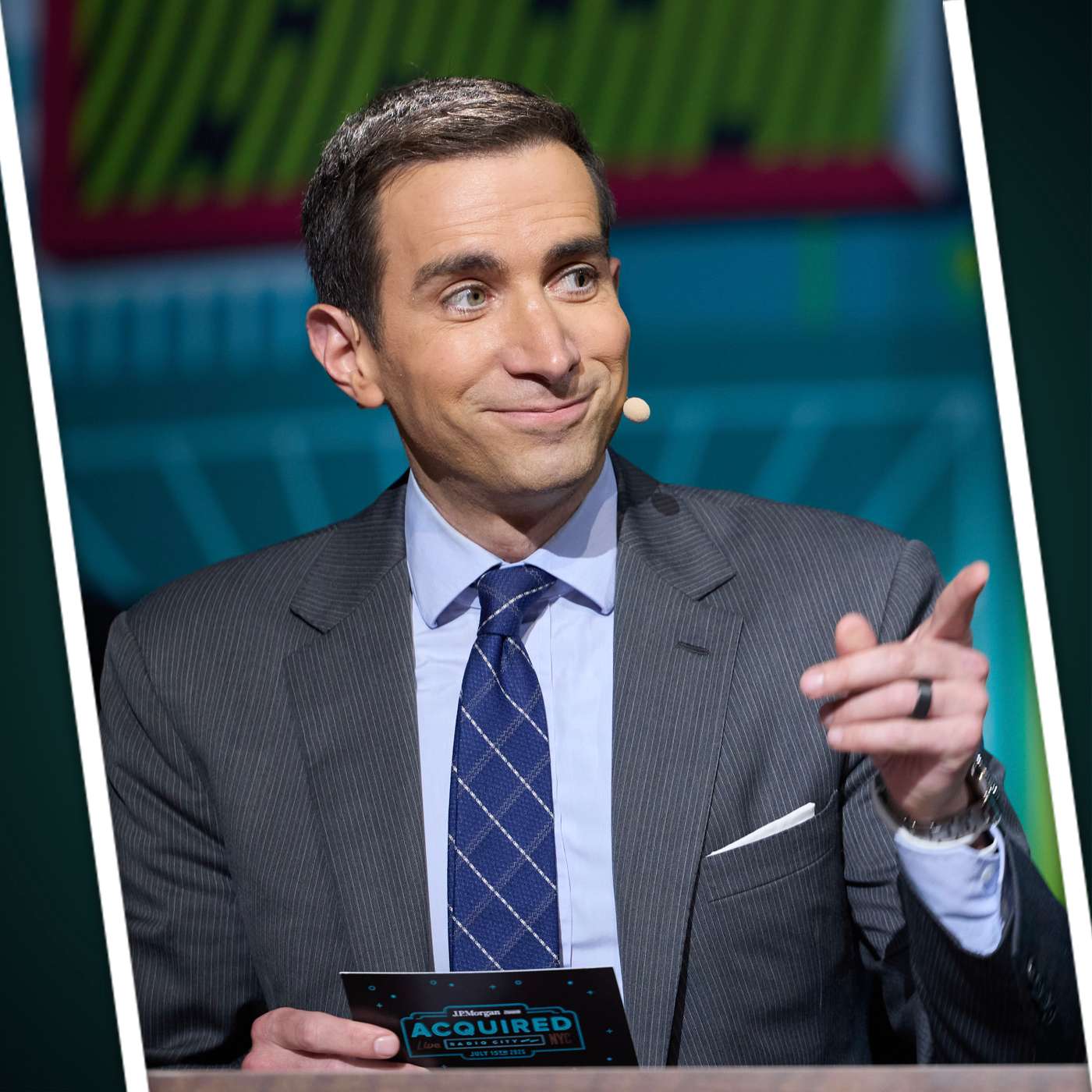
Andrew Ross Sorkin argues against the conventional wisdom of professional detachment. He observes that the most successful people take everything personally because they care immensely about the quality of their work. This personal stake, while sometimes painful, is what drives them to achieve greatness.
Work by Kahneman and Tversky shows how human psychology deviates from rational choice theory. However, the deeper issue isn't our failure to adhere to the model, but that the model itself is a terrible guide for making meaningful decisions. The goal should not be to become a better calculator.

Oliver Sacks confessed in private journals to inventing details in his famous books. The motivation wasn't fame, but a misguided way to project his own struggles (loneliness, sexuality) and interests onto his patients, essentially "working out his own shit through them."

Daniel Kahneman shares an anecdote about university admissions staff who stopped grading essays independently because hiding scores revealed "so much disagreement." This shows a deep-seated organizational tendency to avoid confronting "noise" (inconsistency), prioritizing the comfort of consensus over the discomfort of inaccuracy.
Daniel Kahneman and Amos Tversky developed their theories by studying their own cognitive biases. They created simple questions or "riddles" where they knew the logical answer but still felt an intuitive pull toward the wrong one. This self-reflective methodology allowed them to craft experiments that were compelling to non-psychologists like economists.
Beyond the desire for success, the intense fear of embarrassment and public failure can be an incredibly potent motivator. For high-profile individuals, the social cost of failure is so high that it creates a forcing function to succeed at all costs.

When emotionally invested, even seasoned professionals can ignore their own expertise. The speaker, a researcher, sought validation from biased sources like friends instead of conducting objective market research, proving that personal attachment can override professional discipline.

Daniel Kahneman argues that psychology is a foundational discipline for economics because economic models require assumptions about human behavior (the "economic agent"). However, psychology does not depend on economic assumptions. This fundamental asymmetry explains why behavioral economics has flourished, but there's no equivalent 'economic psychology' revolutionizing its parent field.
Despite its popularity, Daniel Kahneman concedes that behavioral economics typically achieves only small changes that cost virtually nothing. He believes the field has been "too persuasive," leading to inflated corporate expectations about its power to solve big problems. True, significant behavior change remains extremely difficult.
After publishing a famous paper, economist Emily Oster spent years gathering better data that invalidated her own findings. She then published a new paper retracting her original conclusion—a rare and commendable act of intellectual honesty that should be celebrated.