Get your free personalized podcast brief
We scan new podcasts and send you the top 5 insights daily.
In the IN-MIND trial for relapsed follicular lymphoma, the tafasitamab-lenalidomide-rituximab arm had zero cases of histologic transformation to a more aggressive lymphoma. This contrasts with nine cases in the control arm, suggesting the CD19-targeting antibody may eradicate precursor cells responsible for this dreaded complication.

Related Insights
The phase 3 EPCOR FL-1 trial showed that adding epcoritamab to the lenalidomide/rituximab (R-squared) backbone profoundly improved progression-free survival in relapsed follicular lymphoma. Presented as the most important FL abstract at ASH, this result is expected to establish a new standard of care in this setting.
For third-line follicular lymphoma, where both CAR-T and bispecifics are approved, experts are leaning towards CAR-T. The long-term follow-up data for CAR-T suggests a potential for cure, making it a more compelling option for eligible patients despite logistical challenges.

A novel trial design used mosinutuzumab monotherapy first in frontline follicular lymphoma, adding lenalidomide only for patients without a complete response. This adaptive approach successfully spared about two-thirds of patients from the added toxicities of lenalidomide while still achieving very high overall efficacy.
In follicular lymphoma, the treatment goal is durable remission with manageable toxicity, not necessarily a cure. Therefore, clinicians frequently prefer using a bispecific antibody first, reserving the more complex and toxic CAR-T cell therapy for transformed disease or after a bispecific fails.
Unlike some targeted therapies that lead to antigen loss, treatment with the CD19-directed antibody tafasitamab does not appear to eliminate CD19 expression on lymphoma cells. This is a critical finding, as it preserves the target for subsequent potent therapies like CD19-directed CAR T-cells.
New BiTEs like Survatamig are achieving high response rates (73-78%) in heavily pre-treated ALL patients, including those who have already relapsed after receiving blinatumomab or CAR-T cell therapy. This indicates that resistance to one CD19-targeting agent does not preclude a deep response to another with a different molecular design.
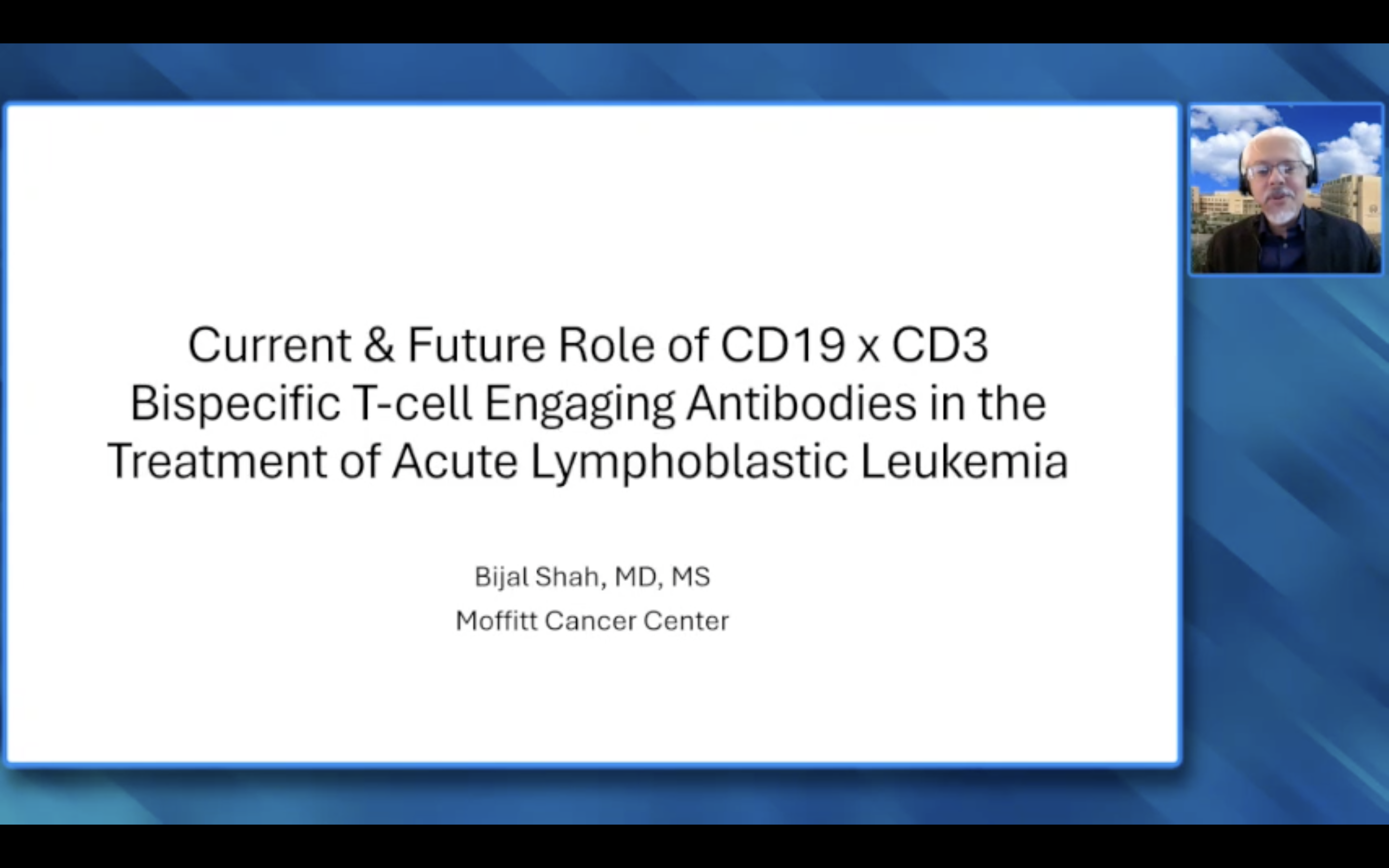
Genomic risk factors like TP53 mutations can predict immunotherapy failure mechanisms. In a case of TP53-mutated ALL, treatment with blinatumomab led to relapse with CD19-dim or negative disease. This suggests the underlying genomics predispose the cancer to shed its target antigen under therapeutic pressure.

When choosing between novel combinations in relapsed follicular lymphoma, a logical strategy is to use tafasitamab-lenalidomide-rituximab (Tafa-R2) first. After progression, single-agent epcoritamab remains highly effective. The reverse is not true, as tafasitamab monotherapy would not be effective after epcoritamab-R2 failure, making the initial choice critical.
A 15-year follow-up of a SWOG clinical trial shows a significant portion of follicular lymphoma patients treated with R-CHOP remain disease-free. This challenges the long-held belief that the disease is incurable, shifting the paradigm towards a curative intent.
In heavily pretreated relapsed/refractory follicular lymphoma, it's crucial to perform a tumor biopsy to check for CD20 expression before choosing a CD20-targeting bispecific antibody. Prior treatments can lead to loss of the antigen, which would render the bispecific ineffective.