Get your free personalized podcast brief
We scan new podcasts and send you the top 5 insights daily.
With at least 60 producers launching some 500 models in a year, China's domestic EV market is intensely competitive. This environment acts as a 'fittest gym', producing technologically advanced and price-competitive companies that are formidable global players when they export.
Related Insights
Brian Gu explains that China's rapid innovation cycle isn't just about work ethic. It's a combination of deep software/internet talent being applied to automotive engineering, a hyper-competitive market that punishes slowness, and consumers who eagerly adopt new features, creating a rapid feedback loop.
China's harsh, deflationary economic environment and intense domestic competition, while causing many companies to fail, effectively hones a select few into highly resilient and efficient champions. These survivors are now prepared for successful global expansion.
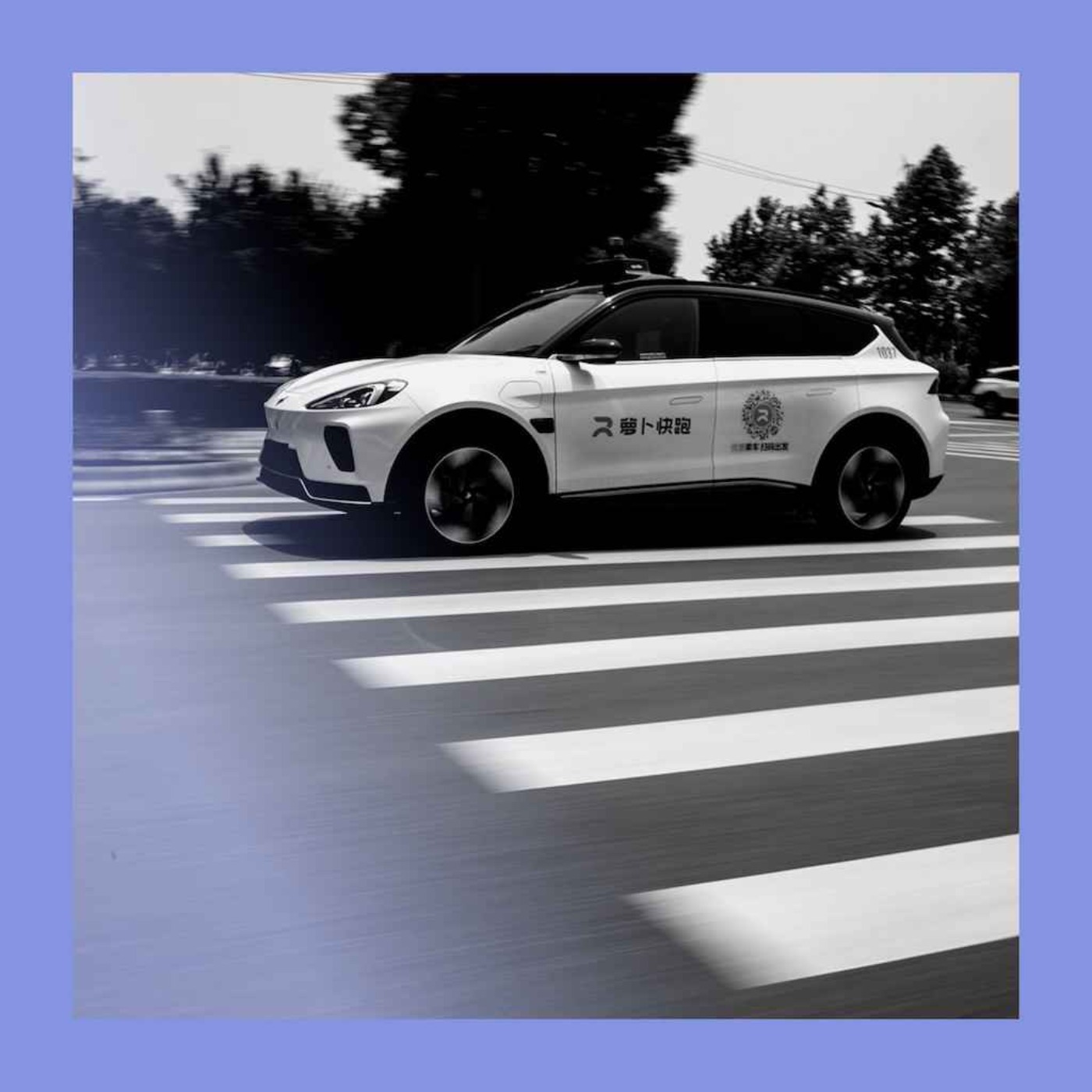
While government support helps, China's rapid adoption of Level 2+ smart driving is primarily driven by fierce domestic EV competition. In a crowded market where over half of new car sales are electric, automakers use advanced autonomous features as the most effective means to differentiate and attract consumers.

Unlike the U.S. government's recent strategy of backing single "champions" like Intel, China's successful industrial policy in sectors like EVs involves funding numerous competing companies. This state-fostered domestic competition is a key driver of their rapid innovation and market dominance.

Uber's CEO argues China's EV dominance is a product of a unique hybrid model. The government sets a top-down strategic goal, but then over 100 domestic companies engage in "brutal," bottoms-up competition. The winners, like BYD, emerge battle-tested and highly innovative.

China's government designates strategic industries, and provinces subsidize local firms to become national champions. This hyper-competition, while creating overcapacity and unprofitability, forces surviving companies to become technologically superior and globally competitive. The state then helps the winners consolidate and scale.
![John Arnold - China, Energy Markets and Fixing America's Systems - [Invest Like the Best, EP.461] thumbnail](https://megaphone.imgix.net/podcasts/8d466670-1755-11f1-baf2-dfb3d97a3978/image/4ec9ac82b5c7a937e9e90aa69d037805.jpg?ixlib=rails-4.3.1&max-w=3000&max-h=3000&fit=crop&auto=format,compress)
For the first time, a major Chinese automaker (BYD) is selling more cars abroad than in its hypercompetitive home market. This critical milestone demonstrates that Chinese industrial giants can successfully pivot to global markets to escape intense domestic price wars, setting a precedent for other sectors.

Contrary to the view of a monolithic state, China's economic strength comes from intense competition between its provinces. This hyper-local market forces companies to become incredibly resilient, and only the strongest, like BYD, survive to dominate globally.

The hyper-competitive Chinese EV market acts as a crucible, forcing companies to innovate at an extreme pace. Brian Gu argues that any company that can survive this domestic “gym” develops the resilience and technological edge required to become a leading player on the global stage.
Contrary to the Western perception of a monolithic state-run system, China fosters intense competition among its provinces. Provincial leaders are incentivized to outperform each other, leading to massive, parallel innovation in industries like EVs and solar, creating a brutally efficient ecosystem.
