Get your free personalized podcast brief
We scan new podcasts and send you the top 5 insights daily.
Firms like Sequoia investing in direct competitors (OpenAI and Anthropic) shows that late-stage venture has evolved. When taking small, non-board seat stakes for hundreds of millions, firms act like public market funds, buying a portfolio of category leaders without the information access that would create a true conflict.

Related Insights
Leaked exchanges show OpenAI leadership felt "betrayed" when early investor Reid Hoffman started rival Inflection AI. This prompted them to consider asking new investors for a "soft promise" not to fund competitors, a highly unusual and restrictive term in venture capital.
OpenAI embraces the 'platform paradox' by selling API access to startups that compete directly with its own apps like ChatGPT. The strategy is to foster a broad ecosystem, believing that enabling competitors is necessary to avoid losing the platform race entirely.

Top AI labs like Anthropic are simultaneously taking massive investments from direct competitors like Microsoft, NVIDIA, Google, and Amazon. This creates a confusing web of reciprocal deals for capital and cloud compute, blurring traditional competitive lines and creating complex interdependencies.

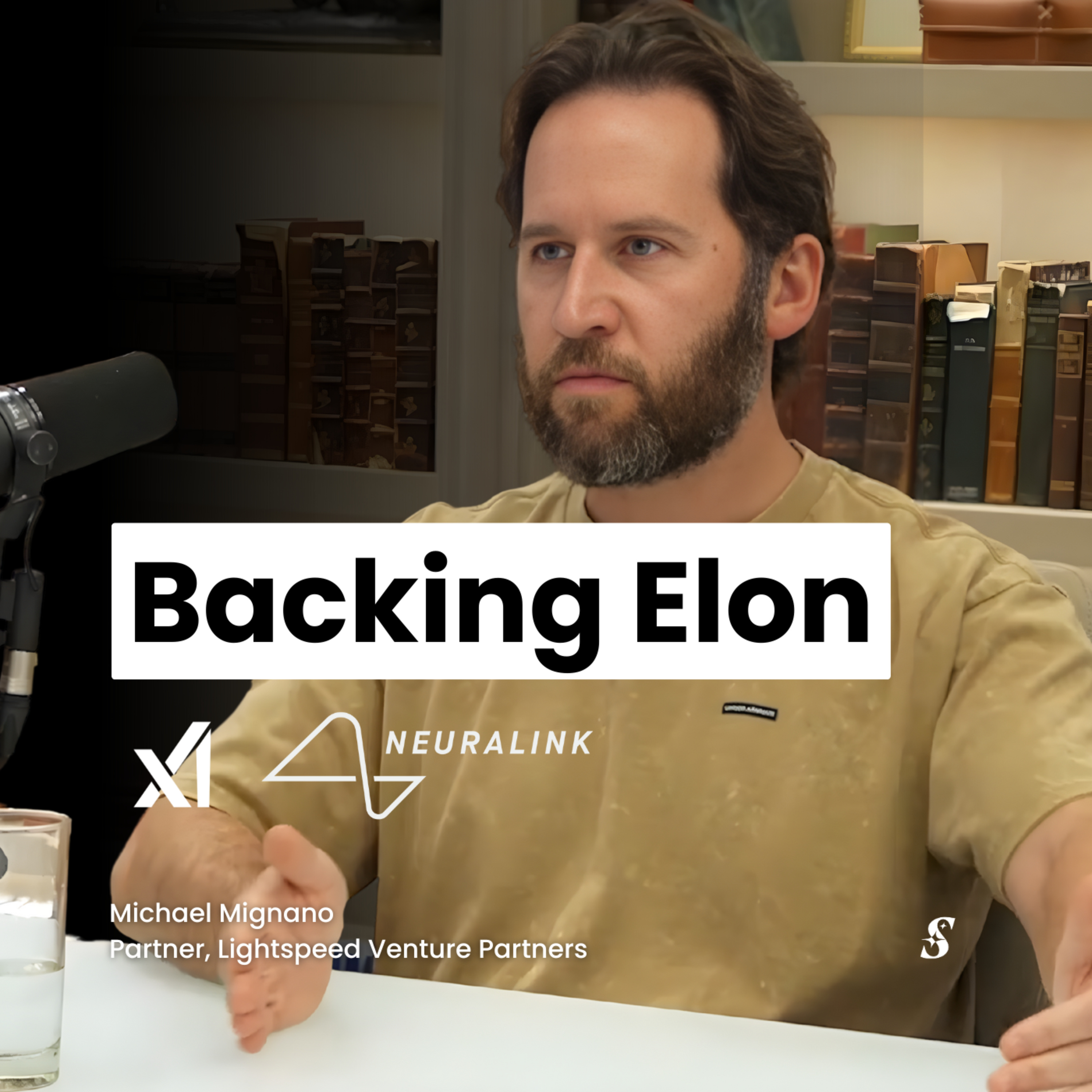
Lightspeed justifies investing in competing LLMs (xAI, Anthropic, Mistral) by viewing them as distinct software platforms targeting different markets (consumer, enterprise, open-source), not as interchangeable competitors. This framing enables a portfolio approach to the foundational AI layer.
Venture investors aren't concerned when a portfolio company launches products that compete with their other investments. This is viewed as a positive signal of a massive winner—a company so dominant it expands into adjacent categories, which is the ultimate goal.

AI companies raise subsequent rounds so quickly that little is de-risked between seed and Series B, yet valuations skyrocket. This dynamic forces large funds, which traditionally wait for traction, to compete at the earliest inception stage to secure a stake before prices become untenable for the risk involved.
The strategy of acquiring incumbent companies to accelerate AI adoption is creating a new investment category. Unlike private equity, which optimizes existing assets for efficiency, this new class focuses on fundamentally transforming them into something entirely new.

The current market is unique in that a handful of private AI companies like OpenAI have an outsized, direct impact on the valuations of many public companies. This makes it essential for public market investors to deeply understand private market developments to make informed decisions.

Major AI labs like OpenAI and Anthropic are partnering with competing cloud and chip providers (Amazon, Google, Microsoft). This creates a complex web of alliances where rivals become partners, spreading risk and ensuring access to the best available technology, regardless of primary corporate allegiances.

Conventional venture capital wisdom of 'winner-take-all' may not apply to AI applications. The market is expanding so rapidly that it can sustain multiple, fast-growing, highly valuable companies, each capturing a significant niche. For VCs, this means huge returns don't necessarily require backing a monopoly.