Get your free personalized podcast brief
We scan new podcasts and send you the top 5 insights daily.
High-growth platform Lovable is developing its own specialized AI models by adapting and continuously training open-weight alternatives. This strategy allows it to create tailored solutions, increase usage on its proprietary models, and reduce dependency on major third-party AI labs.

Related Insights
Startups can compete with large AI labs by capturing unique user interaction data from specialized workflows. This proprietary "user signal" enables post-training of models for specific tasks, creating a defensible advantage that labs, lacking that specific context, cannot easily replicate.

As the model landscape changes rapidly, AI application companies must operate an internal "model factory." Decagon Labs continuously fine-tunes new open-source models for their specific use cases, creating a system to quickly leverage advancements and maintain a performance edge.

Innovative AI startups are moving beyond proprietary APIs to build defensible businesses. They use open-source models to gain the deep control needed for custom fine-tuning, post-training, and unique deployment methods—capabilities that closed-source vendors do not offer and are essential for differentiation.
As AI application layers become easier to clone, the sustainable competitive advantage is moving down the tech stack. Companies with unique, last-mile user interaction data can build proprietary models that are cheaper and better, creating a data flywheel and a moat that is difficult for competitors to replicate.

As AI makes building software features trivial, the sustainable competitive advantage shifts to data. A true data moat uses proprietary customer interaction data to train AI models, creating a feedback loop that continuously improves the product faster than competitors.

The key advantage of labs like OpenAI isn't just pre-training, but their ability to continuously post-train models on product-specific data. This tight feedback loop between the model and the product is their real competitive moat, which Prime Intellect aims to democratize for all companies.

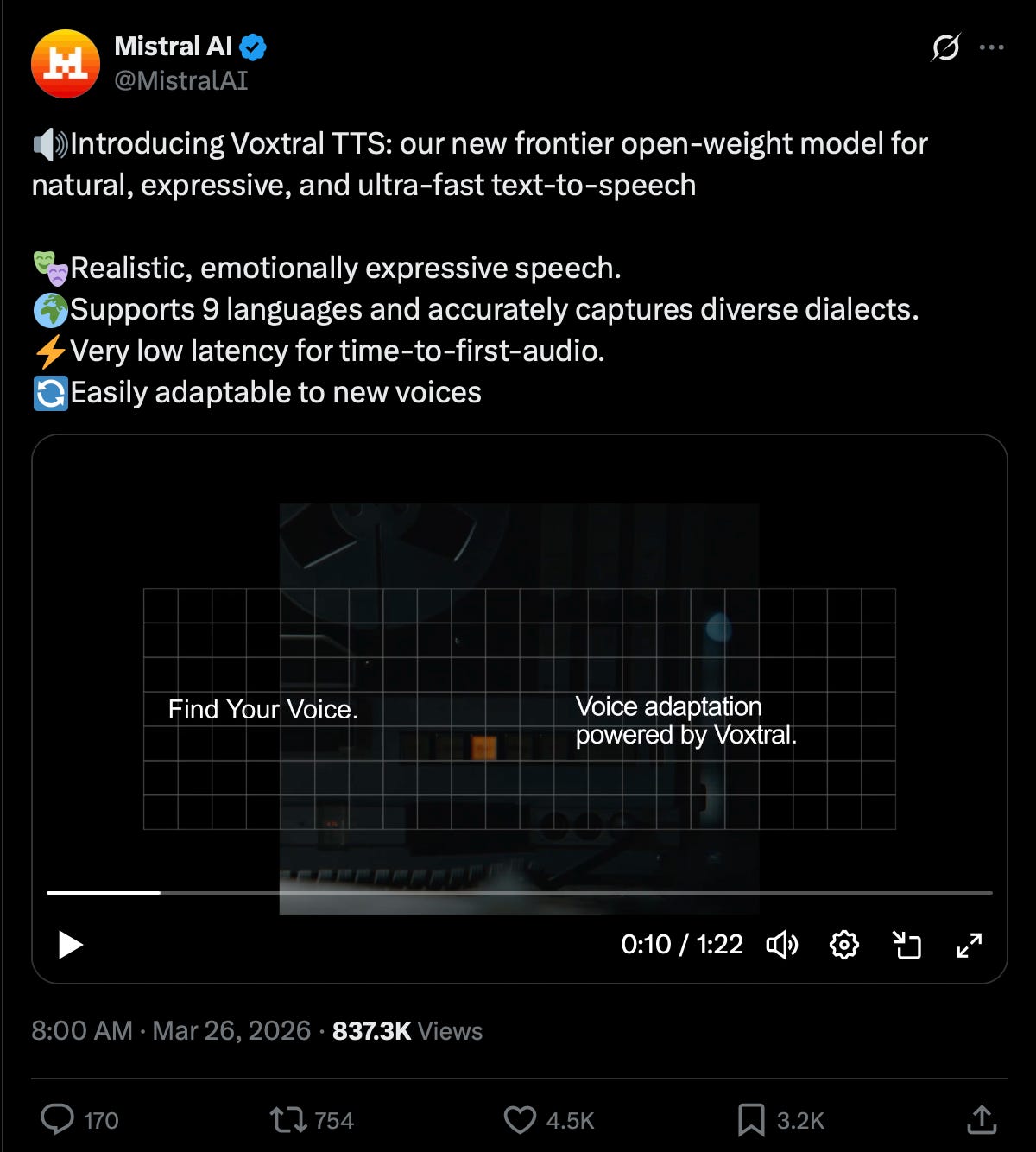
Enterprises using generic closed-source models fail to leverage their unique, domain-specific data collected over decades. Mistral argues that fine-tuning an open-weight model on this private data creates a significant competitive advantage that simply providing context at inference time cannot replicate.
If a company and its competitor both ask a generic LLM for strategy, they'll get the same answer, erasing any edge. The only way to generate unique, defensible strategies is by building evolving models trained on a company's own private data.

The common critique of AI application companies as "GPT wrappers" with no moat is proving false. The best startups are evolving beyond using a single third-party model. They are using dozens of models and, crucially, are backward-integrating to build their own custom AI models optimized for their specific domain.
To escape platform risk and high API costs, startups are building their own AI models. The strategy involves taking powerful, state-subsidized open-source models from China and fine-tuning them for specific use cases, creating a competitive alternative to relying on APIs from OpenAI or Anthropic.