Get your free personalized podcast brief
We scan new podcasts and send you the top 5 insights daily.
Clinicians face a strategic dilemma where using an ADC off-label for a patient with a low-expressing biomarker (e.g., TDXD for HER2 1+) could provide benefit but also render that patient ineligible for a future clinical trial of a potentially more effective ADC. This highlights a tension between immediate access and optimizing long-term treatment sequencing.

Related Insights
The introduction of ADCs into frontline ovarian cancer treatment creates a new challenge: conflicting biomarkers. A patient's tumor might be positive for both HER2 (an ADC target) and a BRCA mutation (a PARP inhibitor target), forcing clinicians to choose between two effective targeted therapies without clear guidance.
As multiple new drugs like antibody-drug conjugates (ADCs) become available for SCLC, the critical research question will shift from *if* they work to *when* they should be used. Future biomarker strategies must focus on optimizing treatment sequences, considering factors like the drug's target and payload.

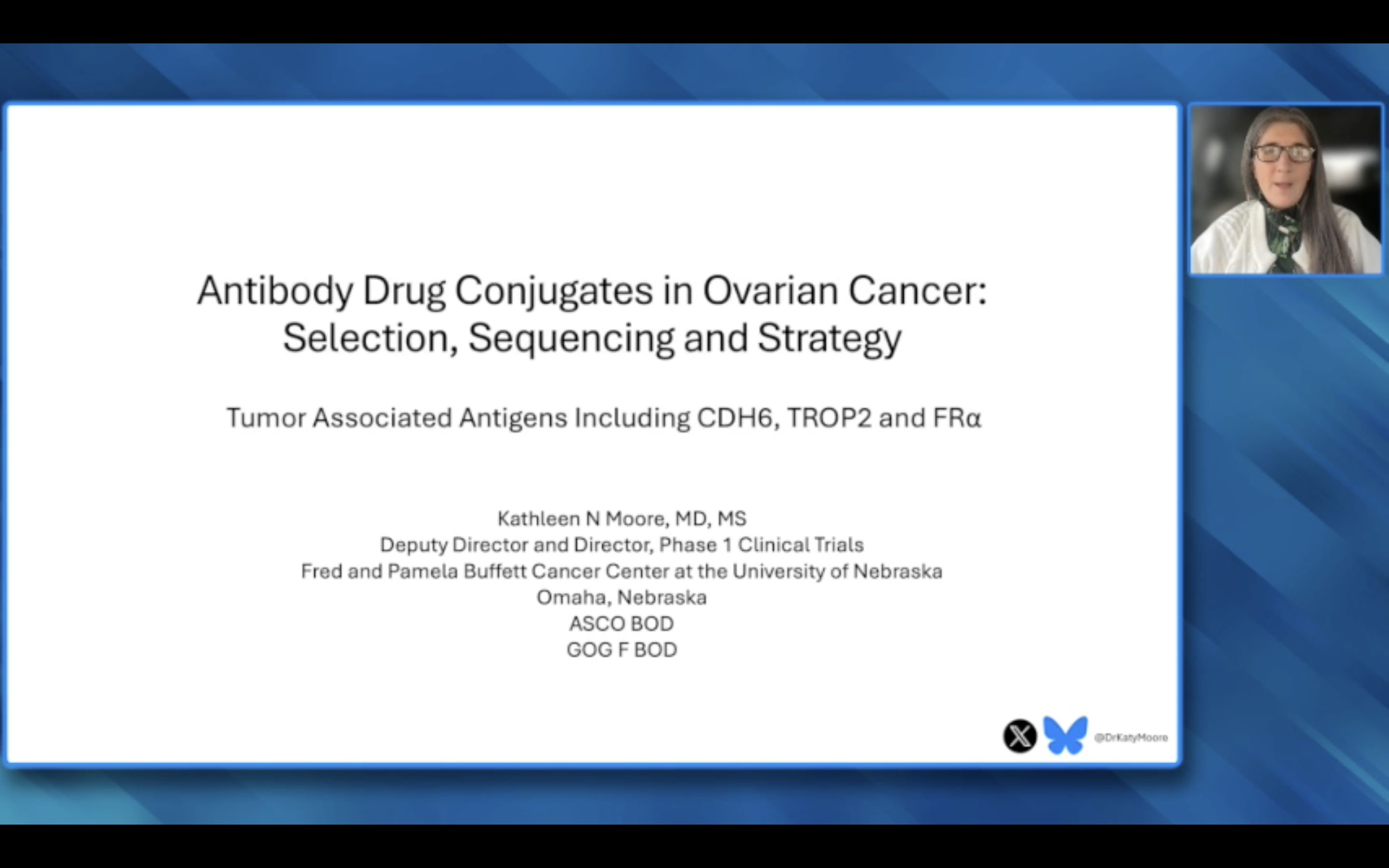
A "tsunami" of antibody-drug conjugates (ADCs) are in development for ovarian cancer, but many share the same TOP1 inhibitor payload. This creates a significant future clinical challenge: after a patient progresses on one such ADC, it is unknown if another with the same payload will be effective, creating an urgent need for sequencing data.

Unlike early ADCs requiring high biomarker expression (e.g., mirvetuximab), next-generation agents show efficacy even in low-expressing tumors. This allows for broader, "all-comer" clinical trial inclusion criteria instead of biomarker-gated entry, potentially expanding patient access to these novel therapies.
In the ASCENT-07 trial, investigators may have prematurely switched patients from the standard chemotherapy arm to superior, commercially available ADCs at the first hint of progression. This real-world practice can mask an experimental drug's true benefit on progression-free survival.

A significant clinical challenge is the sequencing of antibody-drug conjugates (ADCs). Retrospective data from large databases indicates that using a second TROP2-targeted ADC after a first one provides very limited efficacy, highlighting an urgent need for prospective trials to define optimal sequencing strategies and overcome resistance.
Experts question if HER2 status truly predicts ADC efficacy in urothelial cancer. The benefit seen across low-expression levels suggests HER2's main role may be simply to target the chemo payload to cancer cells, rather than indicating a specific biological dependency.

Emerging data shows that a second ADC, particularly one with the same payload, often has limited efficacy. This suggests clinicians must be highly strategic in selecting the first ADC, as it may be their most impactful opportunity for this class of drugs.
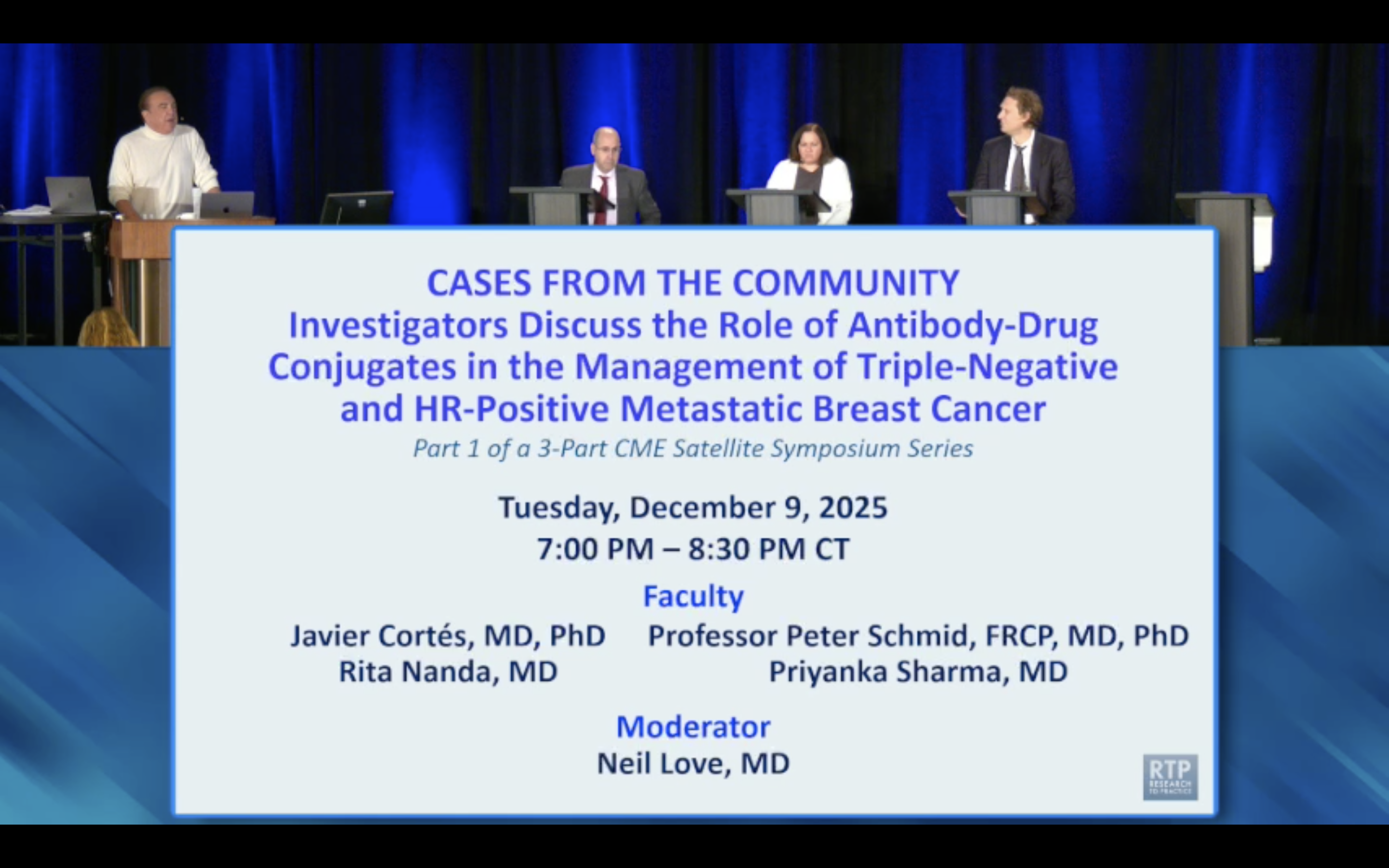
Contrary to concerns about cross-resistance between HER2 antibody-drug conjugates (ADCs), retrospective data shows TDM-1 remains effective after progression on TDXD. This suggests the different cytotoxic payloads are key, allowing for effective sequencing and challenging the assumption that progression on one ADC class member precludes using another.

As multiple effective Antibody-Drug Conjugates (ADCs) become available, the primary clinical challenge is no longer *if* they work, but *how* to use them best. Key unanswered questions involve optimal sequencing, dosing for treatment versus maintenance, and overall length of therapy, mirroring issues already seen in breast cancer.