Get your free personalized podcast brief
We scan new podcasts and send you the top 5 insights daily.
Sameer Dholakia says therapeutics is the greatest potential impact of AI, with automated wet labs and models reasoning over massive datasets. He cites Dario Amodei's view that the next decade could deliver biological progress that would otherwise take fifty years, and he believes that compression is underappreciated.

Related Insights
The convergence of AI, massive health datasets, and genomics is creating a new paradigm in medicine. Instead of lengthy human trials, AI will prove drug solutions and create personalized therapeutics by analyzing an individual's condition against millions of data points, dramatically accelerating medical breakthroughs.

AI's impact isn't one magic bullet. It will accelerate drug discovery by enhancing multiple stages simultaneously: biasing protein drug candidates to fold correctly, improving their targeting and stability, and enabling the synthesis and testing of massive libraries in parallel. This multi-pronged optimization will create an exponential effect.
For a decade, AI failed to produce developable therapeutics. In the last two years, however, new models have matured, making AI-driven drug design and discovery an explosive and attractive investment area for the first time.

The current, tangible role of AI in medicine is its ability to detect subtle patterns in large datasets, radically accelerating drug discovery. Breakthroughs like AlphaFold, which predicts protein shapes, are the true near-term game-changers for aging research, while molecular manufacturing remains distant.

The future of AI in drug discovery is shifting from merely speeding up existing processes to inventing novel therapeutics from scratch. The paradigm will move toward AI-designed drugs validated with minimal wet lab reliance, changing the key question from "How fast can AI help?" to "What can AI create?"
AI's primary value in early-stage drug discovery is not eliminating experimental validation, but drastically compressing the ideation-to-testing cycle. It reduces the in-silico (computer-based) validation of ideas from a multi-month process to a matter of days, massively accelerating the pace of research.

Traditional drug discovery is a slow, sequential "waterfall" process with expensive gates. AI models that generate promising candidates quickly are transforming this into an agile, iterative loop, much like the revolution in software development. This dramatically reduces the cost of early experimentation.
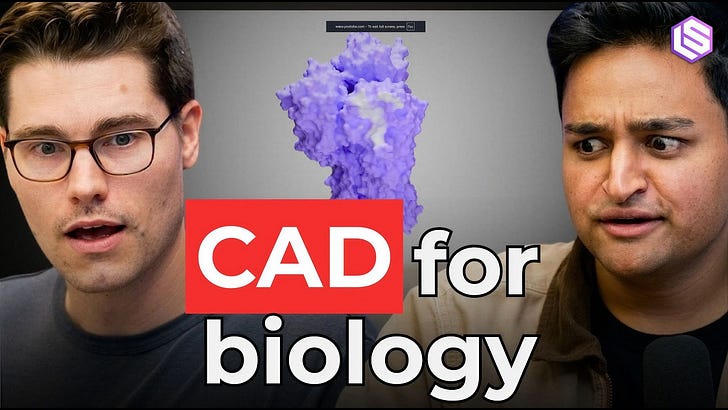
Beyond accelerating timelines, AI's real value lies in its ability to design molecules for targets previously considered 'hard-to-drug.' These models operate on different principles than traditional lab methods and are indifferent to historical challenges, opening up entirely new therapeutic possibilities.

While many focus on AI's business applications, its most profound benefit will be in science. Leaders like Google's Demis Hassabis believe AI will solve humanity's hardest problems in math, physics, and biology, with the potential to cure all diseases within a decade.
A major biotech revolution is underway as AI now enables effective 'in silico' (simulated) experiments. This shift from physical "wet labs" to cheap, infinitely scalable simulations drastically cuts time and cost for drug discovery, making audacious goals like curing cancer scientifically plausible.