Get your free personalized podcast brief
We scan new podcasts and send you the top 5 insights daily.
The greater threat from AI isn't job displacement, but the acceleration of a long-standing trend: reducing humans to standardized, predictable components in a larger system. Call center scripts and assembly lines mechanized humans long before AI, making them easy to replace.

Related Insights
The current panic over AI stems from a limited view of human capability, a byproduct of an Industrial Age that prized machine-like efficiency. As AI automates those tasks, we are being forced to rediscover core human skills like imagination, creativity, and collaboration that have driven progress for millennia, thus underestimating our own adaptability.

The immediate threat in the job market isn't autonomous AI but competitors who master AI tools to become more effective. Career survival and advancement depend not on fearing AI, but on becoming the most proficient user of it in your field to augment your skills and output.
The true disruption from AI is not a single bot replacing a single worker. It's the immense leverage granted to individuals who can deploy thousands of autonomous AI agents. This creates a massive multiplication of productivity and economic power for a select few, fundamentally altering labor market dynamics from one-to-one replacement to one-to-many amplification.
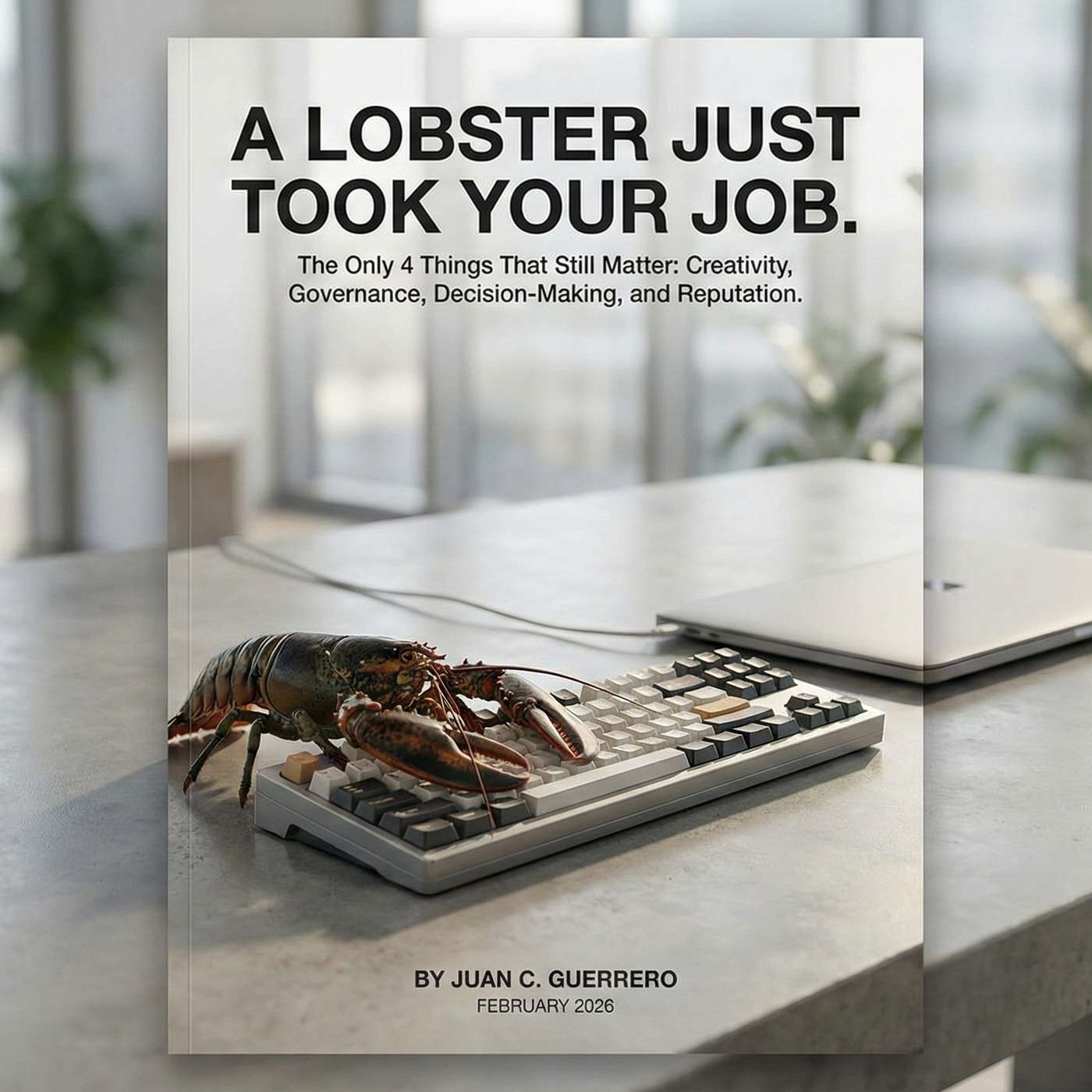
The threat isn't that AI will take jobs, but that people who fail to adopt AI tools will be replaced by those who do. The distinction is crucial: technology doesn't replace people, but people become replaceable when they can no longer prove their value in an AI-augmented organization.

The immediate threat from AI is not automated job replacement, but competitive obsolescence. Professionals who refuse to learn and integrate AI into their workflow will be outcompeted and replaced by peers who leverage it as a tool. Adopting AI is a defensive necessity.

The true danger of AI is not a cinematic robot uprising, but a slow erosion of human agency. As we replace CEOs, military strategists, and other decision-makers with more efficient AIs, we gradually cede control to inscrutable systems we don't understand, rendering humanity powerless.

The true risk from AI isn't the elimination of titles like "Product Owner," but the automation of repetitive functions. Individuals who merely process tickets or code without understanding business context are becoming obsolete, regardless of their official role.

The most dangerous long-term impact of AI is not economic unemployment, but the stripping away of human meaning and purpose. As AI masters every valuable skill, it will disrupt the core human algorithm of contributing to the group, leading to a collective psychological crisis and societal decay.

A dangerous category of modern work treats humans as "endpoints"—connectors between two automated systems. These roles don't augment human creativity but make jobs more robotic and structured, essentially turning people into extensions of a machine and making them more easily replaceable.

The primary threat of AI in the workforce isn't autonomous systems replacing people. Instead, it's the competitive displacement where individuals who master AI tools will vastly outperform and consequently replace their peers who fail to adapt to the new technology.
