Get your free personalized podcast brief
We scan new podcasts and send you the top 5 insights daily.
AI agents like ChatGPT Work, built on coding assistant frameworks, are "software-brained." They focus on delivering a final product, ignoring the crucial iterative process of research, exploration, and learning that defines most knowledge work, creating a fundamental disconnect for non-coders.

Related Insights
The transformative power of AI agents is unlocked by professionals with deep domain knowledge who can craft highly specific, iterative prompts and integrate the agent into a valid workflow. The technology itself does not compensate for a lack of expertise or flawed underlying processes.

The debate over using HTML versus Markdown to communicate with AI agents reveals a deeper shift. The primary job of a knowledge worker is no longer to complete a task, but to create the optimal conditions, context, and scaffolding for an AI agent to perform the work effectively.

Specialized coding models often fail because a developer's workflow isn't just writing code; it's a complex conversation involving brainstorming, compliance, and web research. The best coding assistants are the most generalist models because every complex task has AGI-like qualities.
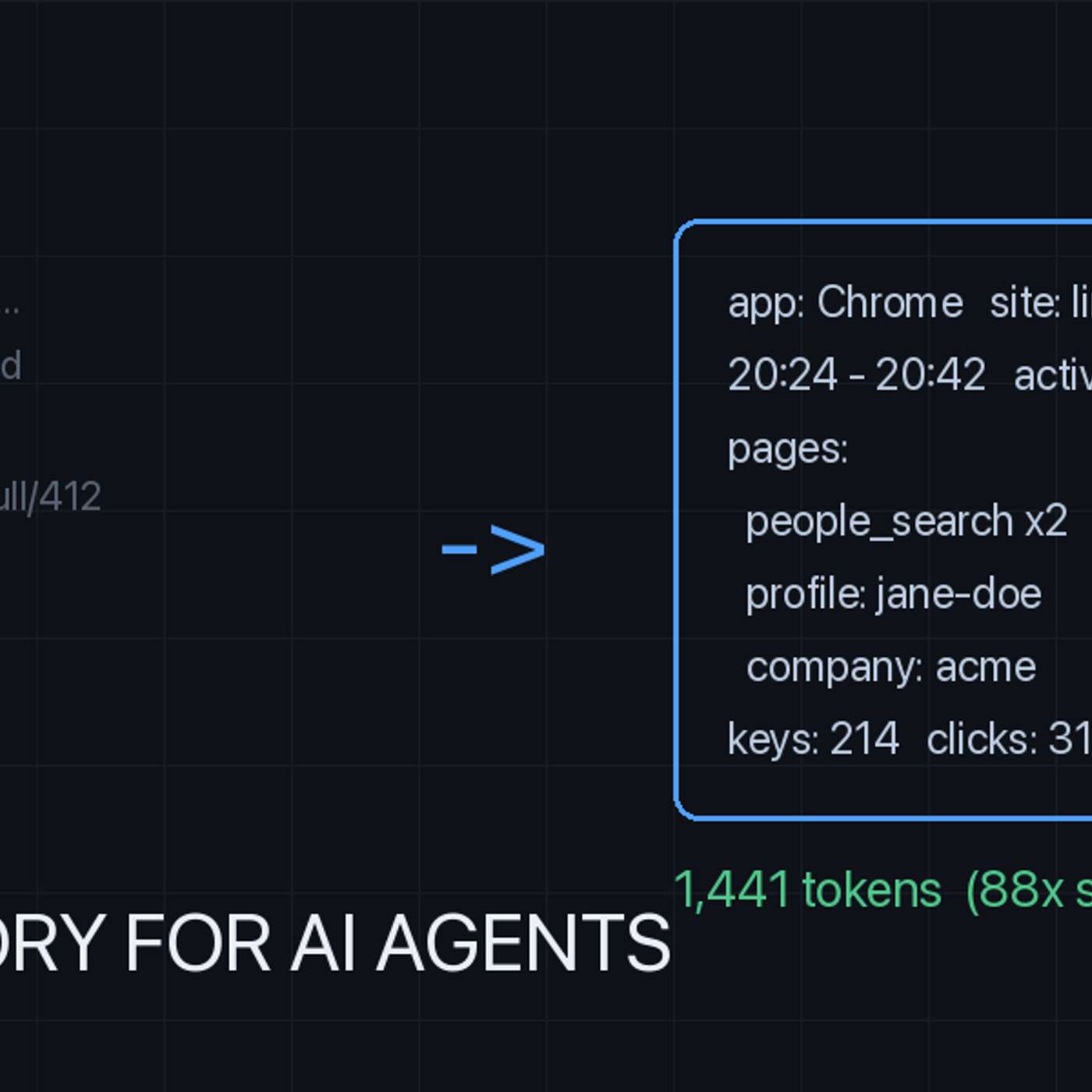
Current AI agents focus on "conversation memory" (what you tell them), completely missing the vast context of a user's actual work—like code commits, browsing sessions, or abandoned emails. This creates a significant blind spot in their understanding of user context and intent, as most work happens outside the chat window.
Karpathy found AI coding agents struggle with genuinely novel projects like his NanoChat repository. Their training on common internet patterns causes them to misunderstand custom implementations and try to force standard, but incorrect, solutions. They are good for autocomplete and boilerplate but not for intellectually intense, frontier work.

The idea of an AI agent coding complex projects overnight often fails in practice. Real-world development is highly iterative, requiring constant feedback and design choices. This makes autonomous 'BuilderBots' less useful than interactive coding assistants for many common projects.
Developers fall into the "agentic trap" by building complex, fully-automated AI coding systems. These systems fail to create good products because they lack human taste and the iterative feedback loop where a creator's vision evolves through interaction with the software being built.

Unlike coding, where context is centralized (IDE, repo) and output is testable, general knowledge work is scattered across apps. AI struggles to synthesize this fragmented context, and it's hard to objectively verify the quality of its output (e.g., a strategy memo), limiting agent effectiveness.
The real breakthrough for AI agents is not just building software, but applying coding abilities—like tool use and scripting—to tasks in marketing, law, and research. This evolution transforms agents from developer tools into general-purpose knowledge work assistants for all employees.

Despite marketing claims, current AI agents cannot truly learn or improve over time like a human employee. They operate by consulting static knowledge bases, not by gaining experience. This "narrative gap" between public perception and actual capability is a major industry challenge.
