Get your free personalized podcast brief
We scan new podcasts and send you the top 5 insights daily.
While Democrats and Republicans have different reasons for distrusting Big Tech, they find common ground in their fears for children. Both progressive activists and conservative senators express identical concerns that AI chatbots are replacing real human interaction, stunting children's ability to navigate normal social cues.

Related Insights
The political landscape for AI is not a simple binary. Policy expert Dean Ball identifies three key factions: AI safety advocates, a pro-AI industry camp, and an emerging "truly anti-AI" group. The decisive factor will be which direction the moderate "consumer protection" and "kids safety" advocates lean.

Despite hyper-partisanship, the core principles of the Biden administration's AI Bill of Rights have been adopted in proposals by red states like Oklahoma and Florida. This suggests a surprising bipartisan consensus is emerging around the need to protect citizens from specific AI harms.
Influencers from opposite ends of the political spectrum are finding common ground in their warnings about AI's potential to destroy jobs and creative fields. This unusual consensus suggests AI is becoming a powerful, non-traditional wedge issue that could reshape political alliances and public discourse.

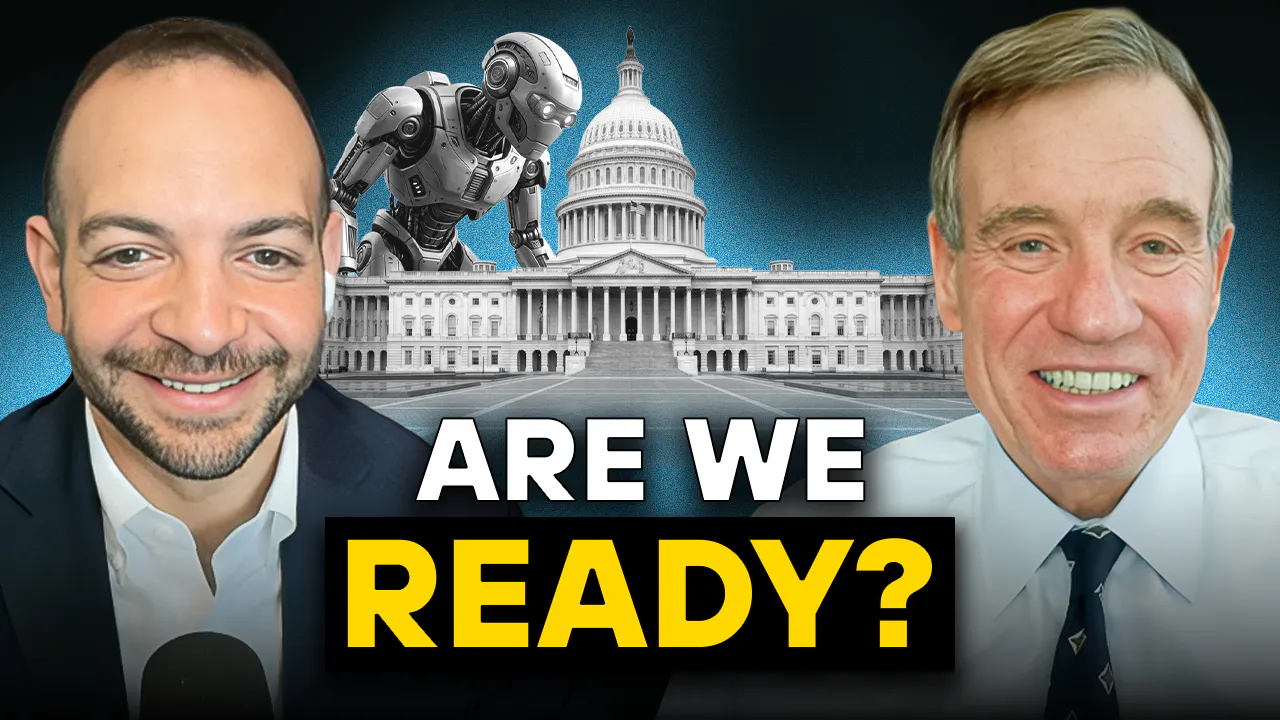
Senator Warner identifies a telling shift in societal fears. He notes conversations among parents have evolved from worrying about globalization, to social media's psychological effects, to a new terror that their children, despite doing everything right, won't have jobs because of AI. This reflects a major political shift.
A new populist coalition is emerging to counter Big Tech's influence, uniting politicians from opposite ends of the spectrum like Senator Ed Markey and Rep. Marjorie Taylor Greene. This alliance successfully defeated an industry-backed provision to block state-level AI regulation, signaling a significant political realignment.

The economic and societal impact of AI is forcing politicians across the aisle to collaborate. From co-sponsoring legislation on AI-driven job loss to debating state vs. federal regulation, AI is creating common ground for lawmakers who would otherwise rarely work together.

Beyond sensational failures like inappropriate content, the more insidious risk of AI companions is their core design. An endlessly accommodating chatbot that never challenges a child could stunt the development of crucial social skills like negotiation, compromise, and resilience, which are learned through friction with other humans.
The administration's AI policy framework leads with "protecting children and empowering parents." This suggests the document is structured more for political appeal and addressing public anxieties than as a purely technical or economic policy proposal, framing the debate around a popular, bipartisan issue.

Unlike divisive issues like immigration, concern over AI's impact on jobs, society, and security is shared by Republicans, Democrats, unions, and religious groups. A politician who effectively channels this widespread anxiety could ride a powerful populist wave, making it a key political opportunity.

Public backlash against AI isn't a "horseshoe" phenomenon of political extremes. It's a broad consensus spanning from progressives like Ryan Grimm to establishment conservatives like Tim Miller, indicating a deep, mainstream concern about the technology's direction and lack of democratic control.
